


Adjusting to New Porcelain Veneers and How Long It Takes

A new smile can feel unfamiliar before it feels natural. Speaking with new porcelain veneers may feel different at first, and the time it takes to get comfortable varies from person to person. A slightly different mouth feel or temporary shift in speech can be part of that adjustment.
It’s natural to notice small changes as you get used to veneers. The feel of your front teeth, your bite, and the way certain sounds come out may all seem different at first. With time, speaking may feel more effortless.
Learn what can affect the adjustment period, which changes are typical, and what may help you settle into speaking clearly. You’ll also find out when ongoing speech changes, discomfort, or an uneven bite warrant a dental follow-up.
Table of Contents
Changes in mouth feel
Porcelain veneers can make your mouth feel different as your tongue and lips adapt to new tooth contours. Reshaping them to improve speech can change their thickness, edge, or angle, so a dentist should assess the cause before altering a restoration.
Speech Changes During Veneer Adjustment
A speech change during veneer adjustment is a difference in how sounds feel or come out. Front teeth help shape airflow, so even a subtle change in their position can affect articulation. You may notice a lisp or a different sensation when speaking, especially with words that use the front teeth. Ongoing difficulty or an uneven bite deserves attention, not repeated self-adjustment.
Temporary Changes to S and Z Sounds
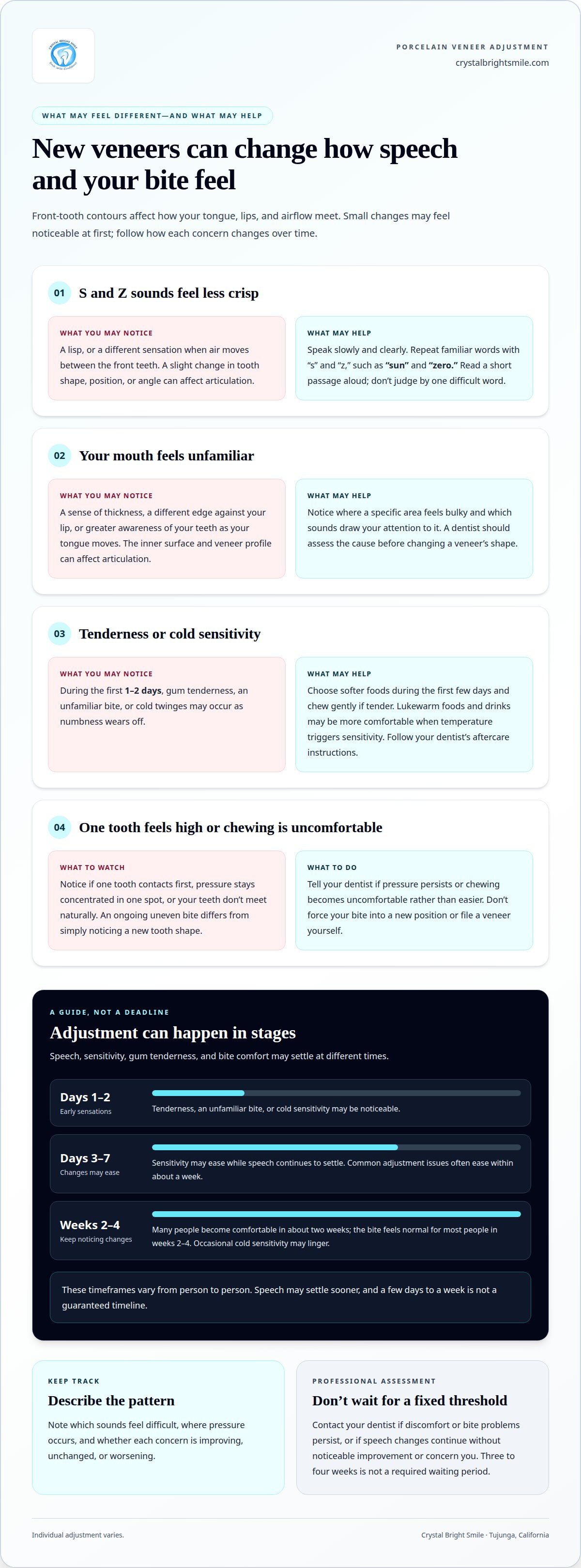
The s and z sounds can feel different when new front-tooth contours change the airflow channel. A small change in tooth thickness, length, or angle can affect how air moves between the teeth. These sounds may seem less crisp. Speaking slowly and clearly gives you a chance to notice how your tongue and lips meet the new shape. Don’t judge the result by one difficult word.
Porcelain and composite veneers can both change the contour of the front teeth. The material alone doesn’t determine how speech feels; the shape, placement, and relationship between teeth also matter. Veneers cover the front surfaces, and their edges can affect the space used to form sounds. A small difference in that space may feel noticeable to your tongue even when others hear little change.
Changes in mouth feel can include a sense of thickness, a different edge against the lip, or greater awareness of your teeth as your tongue moves. The inner, or palatal, surface is especially relevant to articulation. A veneer’s profile and edge can be designed to limit changes to that surface. If a specific area feels bulky, note where it is and which sounds draw your attention to it.
Exercises for Adjusting Speech
Simple speech practice means repeating familiar words slowly and clearly while noticing how sounds form. Read a short passage aloud, then repeat words containing s and z, such as “sun” and “zero.” This gives your tongue time to adapt to the new contours without rushing. Practice should feel comfortable, not forceful. It won’t correct a veneer that feels too thick or changes your bite.
Reshaping a veneer to improve speech can affect its contour and how it meets neighboring teeth. Because a change may further alter airflow or your bite, don’t file or adjust a veneer yourself. A dentist can assess the speech concern and restoration before deciding whether an adjustment is appropriate. These issues differ from simply becoming aware of a new, permanent shape, and that distinction can help guide follow-up.
Typical adjustment period
Most people adapt to common veneer changes in about one to two weeks, though speech may settle sooner. The adjustment period depends on how the new tooth contours affect speaking, bite comfort, and sensitivity.
Reasons Veneers Require Adjustment
Veneers can feel unfamiliar because their custom contours change how the tongue, lips, and teeth meet. Even a small shift in front-tooth length or angle can affect speech, while sensitivity can make biting feel different. Noticing a change doesn’t always mean the veneers need reshaping. The type and duration of the concern can help distinguish adaptation from a fit or bite issue.
During the first 1-2 days, patients may notice gum tenderness, an unfamiliar bite, or cold twinges as numbness wears off. The sensation can change as tenderness eases and the mouth gets used to the new surfaces. Softer foods during the first few days can make chewing more comfortable; crunchy, crispy, or tough foods may feel less comfortable during this early period.
Bite Comfort During Adjustment
Bite comfort means your upper and lower teeth meet without one spot feeling unusually high or taking extra pressure. A new restoration can feel prominent at first, but an ongoing uneven bite is different from simply noticing a changed tooth shape. Pay attention to a specific tooth that contacts first, discomfort while chewing, or a feeling that your teeth don’t meet naturally. These details help explain your concern at follow-up.
For the first few days, choose softer foods and chew gently if your teeth feel tender. Don’t force your bite into a new position or try to adjust a veneer yourself. If pressure remains concentrated on one tooth, or chewing becomes uncomfortable rather than easier, tell your dentist. A persistent bite concern may need professional assessment, not more time to adapt.
Typical Adjustment Period Duration
Common adjustment issues often ease within about a week, while many people become comfortable with their veneers in about two weeks, give or take. Speech may return to normal within a few days to a week. These timeframes can differ because sensitivity, gum tenderness, tooth contours, and bite feel don’t always settle together.
Think of the period in stages: days 1-2 can bring tenderness or cold sensitivity; days 3-7 may bring easing sensitivity while speech continues to settle. In weeks 2-4, the bite feels normal for most people, although occasional cold sensitivity may linger. Notice whether each concern is improving, unchanged, or worsening. That simple timeline makes it easier to describe the pattern at a follow-up.
To support comfort, choose lukewarm foods and drinks if temperature triggers sensitivity, and follow your dentist’s aftercare instructions. If you’re concerned about how a veneer’s fit relates to comfort, explore porcelain veneer care as part of your next steps.
Dental follow-up if discomfort persists
Contact your dentist if veneer discomfort or other problems show no improvement. A few days is not a fixed threshold for seeking follow-up. For speech changes, discuss them with a dental professional if they persist without noticeable improvement; three to four weeks is not a required waiting period.
A brief adjustment in speech differs from a concern that stays the same or worsens. Track when sounds feel difficult, such as words with “s” or “z,” and whether the change improves from day to day. Those details help your dentist understand how speech is affected in daily conversation.
Ongoing discomfort, tooth sensitivity, or an unstable bite also warrants follow-up. For example, note if one tooth seems to touch first when you close your mouth, or if cold drinks keep triggering sensitivity. These symptoms can have different causes, so an examination can assess the veneer and the tooth beneath it.
Speech: Write down which sounds remain difficult and when the change began.
Bite: Note whether one area feels high during chewing or when your teeth meet.
Sensitivity: Record whether cold, heat, or brushing triggers tooth sensitivity.
Discomfort: Describe its location and whether it is easing, unchanged, or worsening.
Bring these observations to your scheduled dental follow-up. Planned visits give the dental team an opportunity to monitor recovery and address questions. If a concern arises between visits, contact the office rather than waiting for a routine appointment, especially if pain or bite instability continues.
Veneer placement involves removing a small amount of enamel from the front of the treated tooth. This can contribute to temporary sensitivity, but persistent or worsening sensitivity deserves assessment. Tell the dentist which tooth reacts and whether the trigger is a cold drink, hot food, or routine brushing.
Don’t try to file, reshape, or remove a veneer at home. An adjustment changes the restoration’s shape, and a dentist needs to assess how it relates to your bite and speech. If you feel a sharp edge or a distinct change in tooth contact, describe the exact spot instead of attempting a fix.
At follow-up, explain the timeline clearly: when the veneer was placed, when the speech change or discomfort began, and how it has changed since. Share practical examples, such as difficulty speaking on the phone or discomfort while eating. A clear timeline helps distinguish an improving adjustment from an ongoing concern that needs attention.
Discuss speech problems with a dental professional if they persist without noticeable improvement. Three to four weeks is not a required waiting period. Contact the office if problems or discomfort fail to improve, or when an unstable bite interferes with eating.
Adjustment to the feel of veneers
A new veneer can feel noticeable because your tongue, lips, and bite are meeting a changed tooth contour. Porcelain veneers cover the front surface, so a different edge or profile may stand out when you speak, smile, or run your tongue across your teeth. How long that awareness lasts can vary.
Touch is highly sensitive inside the mouth. A veneer that feels smooth to a finger may still seem unfamiliar against your tongue, especially near the front teeth. Properly placed veneers shouldn’t bother your tongue, but ongoing rubbing or a sharp edge deserves dental attention. Notice which tooth feels different and whether the sensation occurs during speech, swallowing, or eating.
Tooth shape is only part of the experience. Veneer placement involves removing a small amount of enamel from the front of the treated tooth, and porcelain replaces the removed enamel. The changed surface can contribute to temporary tooth sensitivity. You may notice it with a cold drink or feel discomfort when brushing near the treated area.
For temperature-related sensitivity, choose lukewarm or room-temperature food and drinks after placement. Avoiding very hot or cold items may reduce those triggers. If brushing feels uncomfortable, toothpaste made for sensitive teeth may help. Brush twice daily with non-abrasive fluoride toothpaste, using gentle pressure rather than scrubbing the veneer edges.
A smile makeover can involve several front teeth, making the overall change more noticeable than one veneer. Compare how your lips rest, how your tongue moves, and how your teeth meet before and after meals. For example, note whether one edge catches your lip or a particular tooth feels prominent when you say a familiar word. Specific observations are more useful than a general sense that your mouth feels “different.”
The key distinction is between new awareness and ongoing irritation. A smooth, unfamiliar sensation differs from a veneer that repeatedly rubs your tongue or affects your bite. Don’t try to file or reshape porcelain yourself. If one spot continues to bother you, describe its location and the movement that triggers it at a dental follow-up.
Pay attention to comfort as you adjust to the new contours. Mild sensitivity may settle, but persistent or worsening discomfort should be assessed. Gentle brushing, awareness of temperature triggers, and clear notes about specific sensations can support comfort without altering the veneer at home.
What exercises help adjust speech after getting veneers?
Gentle speech practice helps your tongue and lips become familiar with changed front-tooth contours. Focus on clear, comfortable speaking rather than forcing sounds or trying to reshape your bite. If a veneer feels sharp, bulky, or painful, exercises won’t correct its physical fit.
Begin with familiar words spoken slowly and clearly. Choose examples with sounds you find difficult, such as “sun,” “sister,” “zebra,” and “zero.” Say each word naturally, then repeat it more slowly. Notice where your tongue rests and whether air escapes differently. This practice helps you identify specific sounds without turning every conversation into a test.
Next, read a short passage aloud. A paragraph from a book, a message, or a recipe gives you connected speech instead of isolated sounds. Pause at commas and periods, then keep a steady pace. If “s” or “z” sounds seem less crisp, repeat the sentence clearly rather than speaking louder. Volume doesn’t teach your tongue a new position.
Practice familiar words: Use examples like “sun” and “zebra” to focus on s and z.
Read aloud: Choose a short passage and speak at a comfortable pace.
Use everyday conversation: Notice whether sounds feel different during a phone call or casual chat.
Keep practice gentle: Stop if speaking causes pain or increases discomfort.
Everyday conversation can also be useful practice. Read a shopping list aloud, describe a familiar task, or talk with someone you trust. These examples let you use different words and speaking rhythms. Focus on clarity, not perfection. A brief stumble on one word doesn’t mean your veneers need adjustment.
Try comparing the same short passage on different occasions. Notice whether pronunciation feels easier, stays the same, or becomes more difficult. You can jot down examples, such as difficulty with “s” in a name or “z” in a common phrase. These notes give a dental professional clearer details if you need to discuss ongoing speech changes.
Practice supports adaptation, but it can’t fix a veneer that interferes with your bite or feels too prominent. Don’t press your tongue against an edge or attempt to file the porcelain. If speech difficulty persists or concerns you, discuss it with a dental professional. Contact Crystal Bright Smile to discuss veneer concerns if speech changes or discomfort continue.
Crystal Bright Smile: Porcelain Veneers
Crystal Bright Smile provides porcelain veneers at its Tujunga, California, office for patients considering a smile change or seeking help with veneer-related concerns. A cosmetic consultation can address your goals, tooth condition, and questions about fit, speech, or comfort. Recommendations depend on an examination and your individual dental needs.
If you already have veneers and speech or bite concerns persist, share when the change began and which sounds or movements feel difficult. Clear details can help guide the conversation and next steps. For patients exploring cosmetic options, treatment planning considers appearance and dental health to support a result that feels natural to you.
Contact Crystal Bright Smile at (818) 352-8200 to discuss porcelain veneers or arrange an appointment.
Move forward with confidence in your smile
Getting comfortable with a changed smile takes attention as well as time. If adjusting to speaking with new porcelain veneers still feels difficult, use your experience to guide a focused conversation about what feels different and what you’d like to improve. Your speech, comfort, and dental goals can all inform the next discussion.
Crystal Bright Smile, located in Tujunga, California, offers porcelain veneers, Invisalign, and dental implants for different dental needs. The right treatment depends on an examination, your dental condition, and your goals. A cosmetic consultation can help you understand a suitable next step, whether you’re addressing a concern with existing veneers or exploring a smile change. Flexible financing options may be available; contact the office to learn more.
Take the next step at your pace. Contact Crystal Bright Smile to discuss your questions and arrange an appointment. A clear plan can help you feel more at ease as your smile becomes part of everyday conversation.
Frequently Asked Questions
How Long Does It Take to Adjust?
Adapting to the overall feel of veneers varies from person to person. Speech, bite comfort, and sensitivity may settle at different rates, so progress can feel uneven. For example, chewing may feel comfortable before particular words sound familiar. Keep track of which changes are improving and which remain. Contact your dentist if discomfort or bite concerns persist rather than trying to alter the veneers yourself.
Is Speech Disruption After Veneers Normal?
A temporary change in speech can happen as your tongue adapts to the new contours of your front teeth. You might notice certain words sound different. Try speaking at your usual pace without forcing your tongue into a new position. If speech difficulty continues or concerns you, discuss it with a dental professional.
Why does my bite feel off after veneers?
Your bite may feel unfamiliar because veneers change the shape or thickness of treated teeth. You may notice one tooth contacting first when you close your mouth. Pay attention to whether that happens while chewing, at rest, or both. A bite that remains uneven or uncomfortable should be assessed by your dentist, who can examine how your teeth meet and whether an adjustment is appropriate.
Will Veneers Affect the Way I Speak?
Veneers can temporarily affect speech if their contours change how air moves around your front teeth or how your tongue approaches them. The effect may be subtle, such as needing extra attention to a familiar phrase. Read a short passage aloud and notice whether the same sounds remain difficult. If speech changes persist or interfere with everyday conversations, bring specific examples to your dental appointment.
Will people be able to tell I have a lisp after getting veneers?
It’s difficult to predict what another person will notice, since speech changes vary and listeners may respond differently. A slight difference in your pronunciation may feel more prominent to you than it sounds in conversation. If you’re concerned, practice a familiar sentence and ask someone you trust whether it sounds different. Persistent difficulty, rather than self-consciousness alone, is worth discussing with your dentist.
How long does it take to adjust to speaking with new porcelain veneers?
Speech adjustment varies from person to person. The process of adjusting to speaking with new porcelain veneers depends partly on how the changed front-tooth contours affect airflow and articulation. Practice familiar words at a comfortable pace. If pronunciation remains difficult, share examples with your dentist.
Can porcelain veneers cause a lisp or affect pronunciation?
Yes, a temporary lisp or pronunciation change can occur if a veneer changes the shape or position of a front tooth. This can affect airflow during speech, especially when forming sounds that involve the teeth. Practice slowly and clearly, but don’t compensate by pressing your tongue against the veneer. If the change persists or worsens, ask your dentist to assess the restoration and your bite.
Which sounds are commonly affected by new veneers?
The “s” and “z” sounds may be noticeable because they depend on precise airflow around the front teeth. Words such as “sun” and “zebra” offer simple examples to practice. Say them at a comfortable pace and notice whether pronunciation feels different. Don’t judge your speech from one attempt. If those sounds remain difficult, describe the change during a dental follow-up.

Comments