


Can Dental Implants Look Natural? How Shade Matching Helps

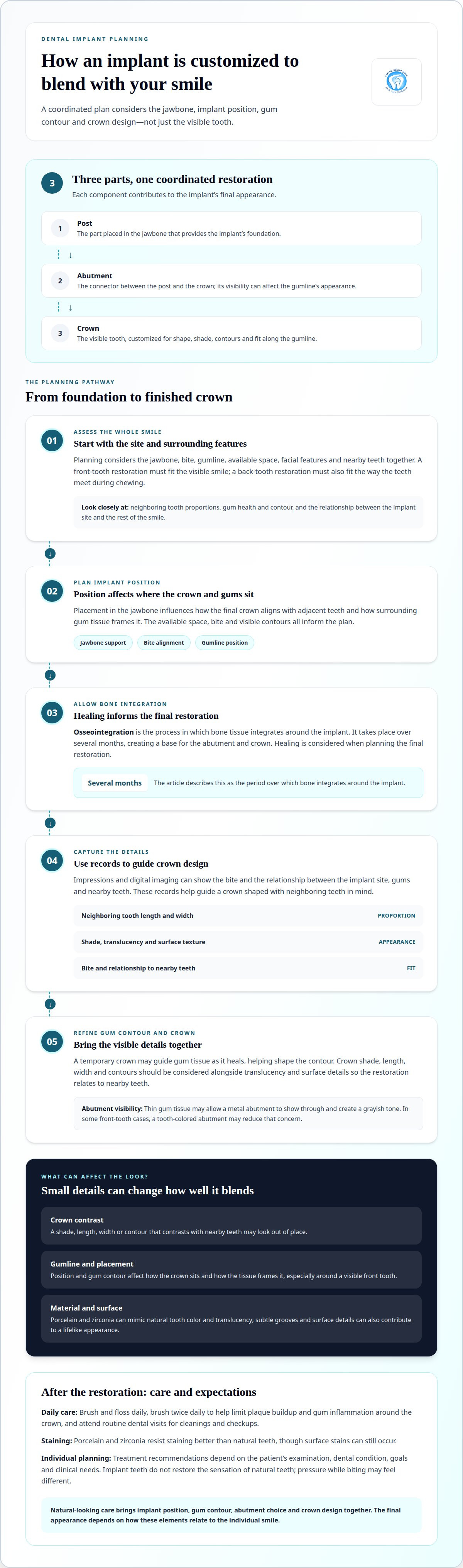
Yes, dental implants can look natural when the visible crown is shaped and shade-matched to blend with surrounding teeth. A front-tooth crown can also be customized for its color, contours, and fit along the gumline. An implant has three main components: a post, an abutment, and a crown, each contributing to its final appearance.
It’s understandable to wonder whether an implant will stand out when you smile. The aim is not simply to replace a missing tooth, but to make the restoration look harmonious with your smile.
Here, you’ll learn how implant components affect appearance, how dentists customize a crown, and why shade matching involves more than choosing a color. We’ll also cover details that matter for a front tooth, from shape and translucency to the visible gumline, so you can understand what helps an implant blend in.
Table of Contents
Can anyone tell that my front tooth is an implant?
A front-tooth implant can look natural when its crown blends with nearby teeth. Its appearance depends on the crown, abutment, gumline, and placement.
Appearance matters most in the smile zone, while back teeth face greater chewing forces. Implants in either position can also feel different from natural teeth.
Front and Back Implant Appearance
A front implant is more visible when you smile, so its color, contours, and gumline need careful attention. For example, a crown that is wider or longer than its neighbor may look out of place.
Back implants are less visible, but their crown shape still affects chewing and how the teeth meet. Implants lack the periodontal ligament found around natural tooth roots, so biting can feel more rigid. This difference in sensation can occur whether the replacement is near the front or back.
Implants, bridges, and dentures can all replace missing teeth, but they differ in support and movement. Implant teeth are anchored in the jaw, while bridges rely on adjacent teeth and dentures may shift. Their visible teeth can look lifelike, but stability affects how natural they feel.
Facial Appearance After Full-Mouth Implants
Full-mouth implant teeth can be customized in shape, color, and texture to suit a patient’s facial features and existing teeth. This planning matters because a complete set of replacement teeth frames the smile, rather than replacing just one tooth.
The final appearance depends on how the teeth relate to the lips, smile, and bite. Teeth that look natural individually may still seem mismatched if their proportions differ across the arch. A coordinated design helps the full set look cohesive.
Dental implants don’t restore the sensation of natural teeth. They lack tiny nerve endings and the periodontal ligament, so pressure while biting may feel different.
Factors Behind an Artificial Appearance
An implant can look artificial if its crown’s shade, length, width, or contours contrast with nearby teeth. Porcelain and zirconia crowns can mimic natural tooth color and translucency, while subtle grooves and surface details can help create a lifelike appearance.
Visible metal can also affect appearance. A metal abutment may show through thin gum tissue and create a grayish tone, particularly around a front tooth. In some front-tooth cases, a tooth-colored abutment can reduce that concern.
Placement matters, too. It affects how the crown sits and how the surrounding gum tissue frames it. A temporary crown may guide gum tissue during healing and help shape a natural-looking gumline.
Choosing Care for Natural-Looking Results
Natural-looking care considers implant position, gum contour, crown shape, and shade together. When discussing a front-tooth replacement, focus on how the crown will relate to neighboring teeth and the visible gumline.
In the United States, implant cost depends on the individual treatment plan and is provided after a quote request. Factors include the implant, abutment, crown, and whether bone grafting is needed.
To maintain appearance, brush and floss daily and attend routine dental visits for cleanings and checkups. Brushing twice daily helps limit plaque buildup and gum inflammation around the crown. Porcelain and zirconia resist staining better than natural teeth, though surface stains can still occur.
How Are Dental Implants Customized to Each Patient?
Customization connects the implant’s position, surrounding gums, and final restoration. A dentist considers the jawbone, bite, gumline, and facial features together, rather than treating the crown as an isolated tooth. A front-tooth restoration must fit the visible smile, while a back-tooth restoration must also fit the way the teeth meet during chewing. These details shape the treatment plan.
Gum tissue thickness can affect how the implant area looks. Thin tissue may allow a metal abutment to show through, creating a grayish tone near the gumline. A tooth-colored abutment may reduce that visibility in some front-tooth cases. Gum health and contour matter, too: a well-shaped edge around the restoration helps it blend with neighboring teeth.
Position is another key part of customization. Careful placement in the jawbone helps support surrounding gum tissue and affects where the final crown sits. If the implant is poorly positioned for the planned restoration, the crown may be harder to align with adjacent teeth and the gumline. Planning considers the available space, bite, and visible contours.
Osseointegration is the process in which the implant fuses with the jawbone. It takes place over several months as bone tissue integrates around the implant, creating a base for the abutment and crown. The dentist considers healing when planning the final restoration, so its position and shape work with the implant and surrounding tissue.
Impressions and digital imaging can help guide a custom crown. These records show the patient’s bite and the relationship between the implant site, gums, and nearby teeth. The restoration can then be shaped with surrounding teeth in mind. Matching the length and width of neighboring teeth, for instance, helps the crown sit naturally within the smile.
Gum shaping may also be part of the aesthetic plan. A temporary crown can guide gum tissue as it heals, helping create a natural-looking contour. The tissue’s shape is especially noticeable around a front tooth, where an uneven gumline can draw attention even when the crown’s color matches. Tissue thickness, health, and healing all influence the final appearance.
An advanced plan brings these elements together: jawbone support, implant position, abutment choice, gum contour, and crown design. Treatment recommendations depend on the examination, dental condition, goals, and clinical needs of each patient. For a clearer picture of how personalized implant treatment planning considers these factors, an examination can help connect appearance goals with the clinical details.
Do implants really look like natural teeth?
Dental implants can look natural and provide stable support for replacement teeth. Their function can feel familiar, though biting sensation differs from that of natural teeth.
Chewing, Speech, and Feel
An implant-supported crown is fixed in place, helping patients chew and speak much like they do with natural teeth. For example, a single implant can replace a missing tooth without the movement associated with dentures.
That stability comes from the implant’s connection with the jawbone. Unlike a traditional bridge, an implant doesn’t rely on neighboring teeth for support. This can matter when the teeth beside a gap are healthy and don’t need to support a replacement.
Function also depends on how the restoration meets the opposing teeth. A crown that contacts too early may feel different during chewing from one that fits the bite. The implant itself lacks the periodontal ligament found around natural tooth roots, so pressure may feel more rigid. Patients may notice this difference even when the crown looks lifelike.
For a full arch, implant-supported teeth can offer stability for eating, speaking, and smiling. Their contour and position are planned in relation to surrounding teeth and gums. A coordinated set of replacement teeth can support a balanced smile, while the fixed design avoids the slipping associated with conventional dentures.
Time to a Natural Appearance
A natural-looking result typically comes after healing and placement of the permanent crown. The implant must first integrate with the jawbone, so the timeline depends on healing and whether bone grafting is needed.
From implant placement to final restoration, treatment typically takes three to six months. During this period, a temporary restoration may be used while osseointegration takes place. It can provide a tooth-like appearance while the implant heals, but it isn’t the final crown.
Healing and appearance progress on related but different timelines. Gum tissue around the implant may change as it heals, affecting how the crown meets the gumline. For a front tooth, that edge is visible when speaking or smiling; for a back tooth, bite and chewing function may be more noticeable.
Once the implant has integrated and the final crown is placed, its appearance depends on how its shape, shade, and contour relate to neighboring teeth. A crown that matches those details can blend into the smile, while a mismatched contour or gumline may draw attention. The restoration’s fit and appearance are considered alongside the implant’s healing.
Bone grafting, when needed, can affect the treatment timeline because the site requires healing before restoration progresses. The dentist also considers the patient’s dental condition and treatment goals when planning each stage. This allows the steps toward a natural-looking result to account for both implant stability and the visible tooth replacement.
Shade matching
A natural-looking implant crown needs more than a close color match. Its shade, shape, and translucency should harmonize with surrounding teeth, especially when it sits beside visible front teeth. During a consultation, the dentist considers how the crown will look within the whole smile, not as an isolated sample. A crown that seems close in one detail may still look noticeably different overall.
Color is only one part of the match. Natural teeth reflect light through enamel, so a flat-looking crown may stand out even when its base shade seems similar. Porcelain crowns can be layered to imitate enamel’s translucency and light reflection. This helps the restoration appear dimensional rather than like a single block of color.
Shape matters as much as shade. The crown’s length, width, and contours should relate to nearby teeth. A crown that is too wide can disrupt the rhythm of the smile, while a different edge shape may catch the eye. Small details, including subtle grooves and surface texture, can help the restoration echo the character of natural teeth.
Shade selection also considers the surrounding teeth’s current appearance. A crown that differs by even one shade may look artificial, particularly between visible natural teeth. The dentist considers the contrast with neighboring teeth and how translucency affects the crown’s appearance under light. Matching the overall effect matters more than choosing a color in isolation.
Porcelain and zirconia are materials used for implant crowns, and both can mimic natural tooth color and translucency. Porcelain can be layered to recreate light reflection, while zirconia can also be shaped and colored for a lifelike result. Material choice depends on the individual restoration and clinical needs, not appearance alone.
Surface staining is another consideration. Porcelain and zirconia resist staining better than natural teeth, though surface stains can still occur. As a result, a crown may not change color in exactly the same way as neighboring teeth over time. Routine dental visits help monitor the restoration and surrounding teeth, so changes in appearance can be discussed as part of ongoing care.
Shade matching works best when color, contour, and translucency are considered together. A front-tooth crown draws attention to small differences, while a back-tooth restoration may be less visible when you smile. Share which details matter most to you during the consultation, such as a seamless match beside a particular tooth. The dentist can consider your preferences alongside your examination, dental condition, and restoration needs.
The components of a dental implant
A dental implant replacement has three main parts: the post, the abutment, and the crown. Each contributes to support, connection, or appearance. Understanding these parts clarifies why a natural-looking result depends on more than the visible tooth. The crown may be carefully shaped, for example, but its position still relates to the post and surrounding gumline.
The implant post sits in the jawbone and acts as the replacement tooth root. Posts are usually made of titanium and can sometimes be made of zirconia. As the bone integrates with the post, it creates the foundation for the restoration. Placement matters because the post’s position affects how the abutment and crown align with nearby teeth.
The abutment connects the post to the crown. It sits above the post, while the metal portion of the implant remains under the gum and the crown covers the abutment. This connection supports the visible restoration. For a front tooth, a tooth-colored abutment may help limit a gray appearance where gum tissue is thin; the choice depends on the individual treatment plan.
The crown is the part people see when they smile. It can be custom-made to suit the size, shape, and color of nearby teeth. A precise match considers more than shade: length, width, contours, and surface details also affect how the crown fits into the smile. Small differences can be noticeable for a missing front tooth; for a back tooth, the crown’s bite and chewing role matter, too.
These three parts work together, but they aren’t interchangeable. The post provides the jawbone-supported base, the abutment joins the components, and the crown restores the visible tooth. Unlike a traditional bridge, an implant doesn’t depend on adjacent teeth for support. The dentist plans each part around the patient’s examination, dental condition, goals, and clinical needs.
Regular care helps protect the gums and the visible restoration. Brush and floss daily, and keep routine dental visits for cleanings and check-ups. Those visits let the dentist assess the crown, gum tissue, and surrounding teeth together. If you’re considering a replacement tooth, schedule a dental implant consultation to discuss how the components fit your needs.
Crystal Bright Smile: Dental Implants
Crystal Bright Smile can help you explore whether dental implants suit your missing tooth and appearance goals. During an examination, the dental team considers your dental condition, bite, gum health, and jawbone support when shaping an individualized treatment plan. Digital technology supports personalized planning, while clear communication helps you understand how the implant and its crown fit together.
If you’re also considering changes to nearby teeth, options such as porcelain veneers or teeth whitening may be discussed when they fit your needs. Recommendations depend on your examination, goals, and clinical needs, so an implant isn’t automatically the right choice for every situation.
For an implant evaluation at Crystal Bright Smile in Tujunga, California, contact the practice to discuss your questions and next steps.
Take the Next Step Toward Your Smile
If you're wondering, can dental implants look natural in your smile? A personalized conversation can help turn that question into a clearer plan. Bring your priorities, whether you’re focused on replacing one visible tooth or considering broader changes to your smile. The right direction starts with your dental needs, not a one-size-fits-all design.
At Crystal Bright Smile, dental implant treatment can be considered alongside your goals and clinical needs. If your concerns involve alignment or the appearance of several teeth, Invisalign or porcelain veneers may also be options to discuss. A recommendation depends on an examination of your teeth, gums, and overall dental condition.
Contact Crystal Bright Smile to talk through your smile goals and possible next steps. Your questions are a good place to begin, and a thoughtful plan can help you move forward with confidence.
Frequently Asked Questions
Will Dental Implants Stay Natural-Looking Over Time?
An implant crown can retain a natural appearance over time, though its surface can still stain or wear. Porcelain and zirconia resist staining better than natural teeth, so their color may not change in the same way. Regular dental visits help identify changes around the crown, such as gum inflammation or surface staining, and allow the dentist to assess the restoration.
Considering an implant that looks real?
A dental implant can look natural when its visible restoration suits the surrounding smile, but appearance is only one part of planning. Replacing a front tooth, for example, raises different aesthetic concerns than replacing a back tooth. A consultation can connect your priorities, such as a seamless smile or comfortable chewing, with the clinical considerations identified during an examination.
How Are Dental Implants Designed to Blend In?
Design planning considers how the replacement tooth relates to your smile as a whole. The dentist can use digital imaging or impressions to examine the bite and space available for the crown. The width of the gap between neighboring teeth, for example, helps guide the restoration’s proportions. Gum health and facial features also inform the overall design.
How Does a Dentist Ensure Natural Looks With Single Tooth Implants & Bridges?
The dentist evaluates the missing tooth’s position, neighboring teeth, and how your bite comes together. A single implant is supported by its post, while a bridge relies on adjacent teeth. That difference affects treatment planning. The recommended option depends on your examination, dental condition, goals, and clinical needs, including the health of teeth beside the gap.
What Materials Make Dental Implants Look So Lifelike?
The visible crown may be made from porcelain or zirconia, while the implant post is usually titanium and can sometimes be zirconia. These are different components with different roles: the post sits in the jawbone, and the crown forms the visible tooth. Porcelain can be layered to reflect light in a way that resembles natural enamel.
What happens to the bone and gum after a front tooth is removed?
Bone resorption can begin within weeks after tooth loss, and the gum contour may change as the area heals. Those changes can influence how a later replacement meets the gumline. A temporary crown may guide the tissue during healing in some treatment plans. The condition of the site helps determine how an implant restoration is planned.
Can dental implants look and feel like natural teeth?
Yes, an implant crown can resemble a natural tooth, and the fixed restoration can support chewing and speech. The sensation isn’t identical, though. Implants lack the periodontal ligament and tiny nerve endings found around natural tooth roots, so biting pressure may feel more rigid. A patient might notice the difference when chewing firm foods.
How are dental implant color and shape matched to natural teeth?
The dentist considers neighboring teeth’s shade, width, length, and contours when planning the crown. Digital imaging or impressions can help document the bite and tooth proportions. A replacement for a narrow tooth needs different dimensions than one beside broader teeth, for example. Porcelain layering can also recreate translucency, helping the crown interact with light more like enamel.

Comments