


Can Dental Implants Stop Facial Sagging? What They Can Support

Dental implants may help limit facial sagging linked to tooth loss, but they can’t stop natural aging. If you’re wondering whether dental implants can stop your face from sagging, the key is the cause: an implant replaces a missing tooth root and helps stimulate the jawbone, but it won’t address every cause of sagging.
It makes sense to connect missing teeth with changes in appearance. Tooth loss can reduce support for your cheeks and lips, while changes in your bite can also affect facial shape. Replacing teeth may restore some of that support, although the effect depends on your oral health and treatment needs.
This article explains how tooth loss affects the jawbone, what implants may do for facial contours and wrinkles around the mouth, and how they compare with dentures for facial support. It also covers how missing teeth can affect the teeth that remain, helping you understand what implants can realistically support.
Table of Contents
Are dental implants better than dentures for facial support?
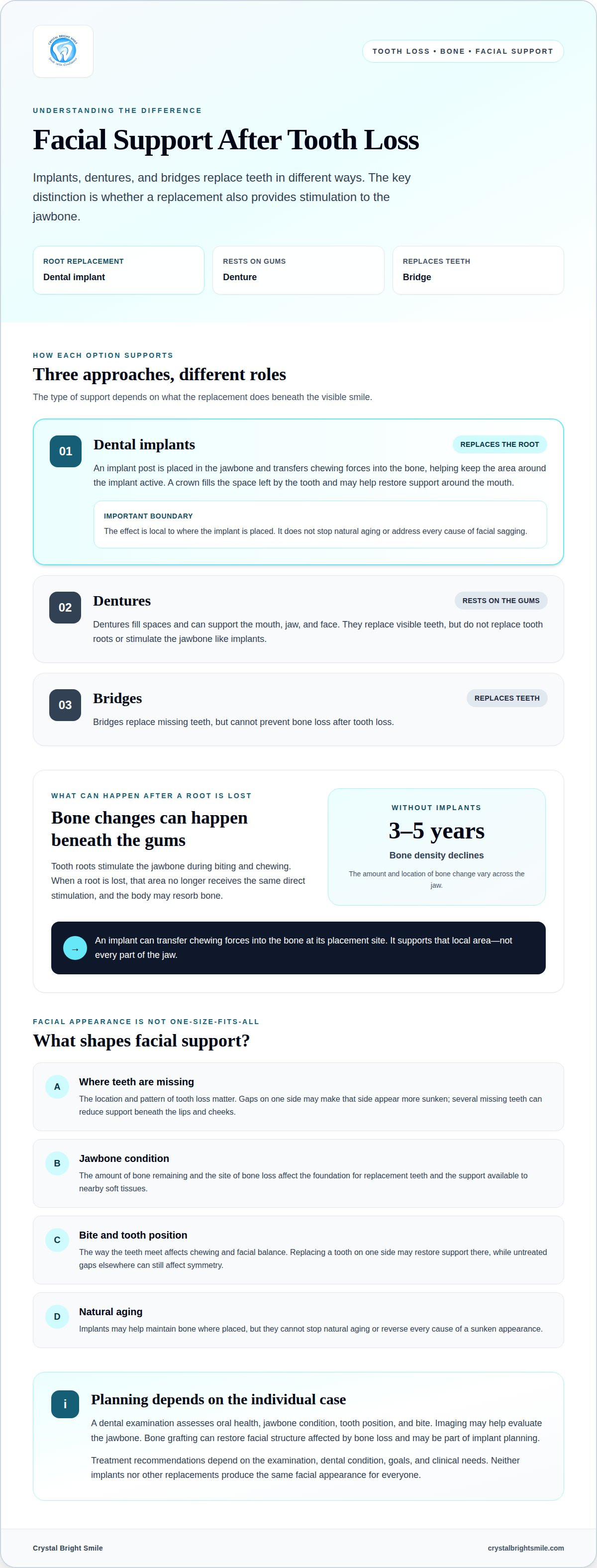
Dentures and bridges replace missing teeth and can support the mouth and face. Bone grafting can also restore facial structure affected by bone loss.
Tooth Loss and Facial Changes
Tooth loss can change facial appearance when jawbone and soft-tissue support diminish. Even one missing tooth can affect appearance, bite, and oral health. A missing back tooth, for example, may change chewing and how the teeth meet. When several teeth are missing, reduced support beneath the lips and cheeks can contribute to a sunken look.
Tooth roots normally stimulate the jawbone during biting and chewing. After a root is lost, the body may resorb bone that no longer receives that stimulation. As the jawbone changes, the lower face may look less supported. The location and pattern of tooth loss matter: gaps on one side can make that side appear more sunken.
Implants and Facial Contours
Dental implants replace missing tooth roots with posts placed in the jawbone. By transferring chewing forces into the bone, they can help maintain bone activity and support facial contours. A crown attached to an implant also fills the gap left by a tooth. Together, these may help restore support around the mouth, but they can’t stop natural aging.
Symmetry depends on where teeth are missing and how the bite fits together. Replacing a tooth on one side, for example, may restore chewing support there, while untreated gaps elsewhere can still affect balance. Tooth position and bite also influence how teeth support the lips. Treatment planning considers the jawbone, tooth placement, bite, and your goals.
Dentures offer a different kind of support. They fill spaces and support the mouth, jaw, and face, but rest on the gums rather than replacing tooth roots. They therefore don’t stimulate the jawbone like implants do or address bone loss after tooth loss. Bridges also replace teeth, but cannot prevent bone loss.
That distinction matters when facial change is connected to bone resorption. An implant may help maintain bone where it replaces a root, while a denture replaces visible teeth and provides support without root stimulation. Neither option reverses every cause of a sunken appearance. Natural aging, your bite, and the location of missing teeth all shape facial contours.
When comparing options, consider what needs support: the missing tooth, the jawbone, or the teeth that remain. A dental examination assesses oral health, the jawbone, tooth position, and bite. Those details help shape a plan around the cause of facial change, rather than assuming every denture or implant will produce the same appearance.
Jawbone resorption after tooth loss
Jawbone resorption is the gradual loss of bone after a tooth root is lost. Understanding this process explains why a missing tooth can affect facial structure, not just the visible smile.
How Tooth Loss Leads to Jawbone Resorption
Tooth roots extend below the gumline and stimulate the jawbone during biting and chewing. After a tooth is lost, the area no longer receives that direct stimulation. The body may then resorb bone that isn’t being used in the same way. This change happens beneath the gums, so a gap may look small while the underlying bone changes.
Bone density declines over 3-5 years without implants. The amount and location of bone change vary across the jaw, because each missing root leaves a specific area without normal chewing forces. For example, losing a tooth in the lower jaw affects the bone around that socket. Multiple missing teeth can leave several areas with reduced stimulation.
As the jawbone shrinks, it may provide less support for nearby soft tissues. This can contribute to changes in facial structure, including a more sunken appearance. The effect depends on where teeth are missing and how much bone remains. Visible facial change isn’t the only concern: reduced bone can also affect the foundation for future tooth replacement.
Implants and Jawbone Support
A dental implant post replaces a tooth root’s role in transmitting chewing forces. Once placed in the jawbone, it provides stimulation that mimics the action of natural roots. This helps keep the surrounding bone active and supports bone density around the implant. The effect is local, so an implant supports the area around its placement, not every part of the jaw.
Consider a tooth missing in one area. An implant can anchor a replacement tooth and transfer chewing forces into the bone at that site. By contrast, a denture rests on the gums and doesn’t stimulate the jawbone like a root does. This difference explains how implants support jawbone structure, while other replacements primarily fill the visible space.
Bone grafting can restore facial structure affected by bone loss and may be part of implant planning. The jawbone’s condition, the location of missing teeth, and the amount of bone remaining shape the approach. Imaging helps assess oral health and the jawbone before treatment. Together, these details show whether the focus should be replacing a root, rebuilding bone, or addressing both.
Implants support bone, but don’t reverse every cause of facial change or stop natural aging. Their role is specific: they replace a missing root and provide stimulation where placed. Understanding this distinction helps set realistic expectations for facial support and shows why jawbone health matters beyond appearance.
Do dental implants help with wrinkles around the mouth?
Dental implants can restore support where teeth are missing, but they don’t erase every wrinkle. Their effect on facial appearance depends on whether lost tooth support contributes to visible folds or facial sagging.
Tooth loss can reduce support for the cheeks and lips. When soft tissues lose that underlying support, folds around the mouth, including marionette folds, may become more noticeable. An implant-supported replacement can restore some soft-tissue shape by filling the gap and supporting the area. It isn’t a skin treatment, however, and won’t correct lines caused by natural aging or other factors.
Compare options by what each replaces. An implant has a post in the jawbone and supports a replacement tooth. A bridge fills a gap with replacement teeth, while traditional dentures replace missing teeth and support the mouth and face. Dentures rest on the gums, though, and don’t replace tooth roots or stimulate the jawbone like implants.
That distinction matters when facial sagging is linked to bone loss. An implant can help maintain bone stimulation at its placement site, supporting the underlying facial structure. A bridge or denture can restore the visible tooth space, but neither prevents bone loss. A fuller-looking smile doesn’t necessarily mean the jawbone has the same support it had before tooth loss.
Traditional dentures can still provide valuable support. They fill spaces left by missing teeth and support the mouth, jaw, and face. But they don’t fully resolve sagging skin or stop continued jawbone density loss. Someone with several missing teeth, for example, may notice improved lip support with a denture while bone changes continue underneath.
Bridges and dentures may need replacement every 5 to 15 years. That replacement interval differs from the question of facial support: a new appliance can restore function and appearance, but it doesn’t replace the missing root. Implants address that root-level role. Each option also has different effects on neighboring teeth, jawbone support, and daily oral health.
When comparing treatments, distinguish fine lines from changes caused by missing teeth. Consider where teeth are absent, whether the lips or cheeks seem less supported, and how your bite fits. These clues help frame the concern, but don’t establish that an implant will remove wrinkles: restoring tooth support and treating skin lines are different goals.
Implant planning considers oral health, bone condition, tooth position, and bite. A crown’s shape and placement also affect how it fills the space and supports nearby tissues. The aim is to replace the missing tooth appropriately, not promise a particular facial result. This distinction helps set realistic expectations while keeping appearance and long-term oral health in view.
How dental implants are placed and integrate with bone
Implant treatment involves planning, placement, healing, and a replacement tooth. Each stage supports the implant’s function and fit within the jaw.
At an evaluation, oral health and jawbone condition guide treatment planning. Imaging, including digital X-rays and CBCT, helps assess the mouth and jawbone. The review considers the missing tooth’s location, nearby teeth, bite, and available bone. These details affect where the post is placed and whether bone grafting is part of the plan.
A dental implant is typically made of titanium and placed into the jawbone by a surgeon. The post acts as an artificial tooth root. After placement, it integrates with bone through osseointegration, giving the replacement tooth a foundation for chewing. Implant placement can take a few hours, while the full process, including healing and a permanent crown, can take several months.
Integration takes time. Dental implants typically fuse with the jawbone over a few months. During this period, the post becomes secured within the surrounding bone. Once healing and integration support the next stage, a crown, bridge, or denture can be attached. The restoration replaces the visible tooth; the post remains beneath the gumline.
Bone grafting addresses areas where bone loss affects facial structure or implant support. A graft can rebuild a diminished foundation and help prepare the site for treatment. The location and amount of bone loss shape the plan. For example, a tooth site with reduced bone may need grafting before an implant post can be placed.
Grafting isn’t a cosmetic shortcut to a more youthful appearance. Its role is to restore bone structure affected by tooth loss and support the planned restoration. Imaging helps show the bone’s condition and where added support is needed. The treatment sequence may therefore include grafting, healing, implant placement, integration, and then the final tooth.
Bone grafting and implant candidacy depend on your examination, dental condition, goals, and clinical needs. Oral health, the jawbone’s shape and volume, and the intended tooth replacement all affect planning. A well-controlled health condition may still allow implant treatment, but the full clinical picture determines the approach. These factors matter more than facial appearance alone.
Implants can help stimulate the jawbone where a root was lost. They don’t stop natural aging or guarantee a younger facial appearance. Treatment focuses on replacing a tooth and restoring function, while bone grafting can address bone loss affecting the foundation. Understanding each stage makes the treatment’s timing and purpose clearer.
Tooth shifting and support for remaining teeth
The full implant process, including healing and a permanent crown, can take several months. Implants typically fuse with the jawbone over a few months. Changes to facial support are gradual, not an instant lifting effect, and depend on how tooth replacement restores support.
After tooth loss, nearby teeth may drift toward the open space. A tooth beside a gap, for example, can lean into it, changing alignment and how the upper and lower teeth meet. This movement can complicate chewing and affect oral health. Teeth that lose the support they need to stay in place may also be lost.
Bone changes can begin before shifting is obvious. About 25% of bone width is lost within the first year after tooth loss. By 10 years, up to 60% of bone height can be reduced if no intervention occurs. These changes can affect the foundation for replacement teeth and the support available to remaining teeth.
A dental implant is the only tooth replacement option that replaces the tooth root. Its post sits in the jawbone and transfers chewing forces there, providing stimulation similar to a natural root. That support is local to the implant site. An implant can also fill the gap, leaving nearby teeth less space to drift into.
Bridges and dentures replace visible teeth, but they don’t prevent bone loss. A bridge may rely on neighboring teeth for support, while an implant doesn’t. That distinction can help preserve the natural enamel of adjacent teeth. Dentures rest on the gums and don’t stimulate bone like tooth roots.
Timing matters. Placing an implant soon after extraction can help prevent significant bone loss. The treatment sequence depends on the tooth site, bone condition, and oral health. A dentist assesses those factors, along with your bite and replacement goals, when planning care.
A missing front tooth may affect the smile and support around the lips, while a back-tooth gap can change chewing and tooth alignment. In either case, replacing the tooth addresses the space; an implant also replaces the root. Facial changes depend on the location and extent of tooth loss, and implants don’t stop natural aging.
Restoring a gap can help protect the arrangement of the remaining teeth, but it can’t guarantee that every tooth will stay in place. Regular dental check-ups help monitor implants and jawbone condition. If you’re weighing replacement after tooth loss, schedule an implant assessment to discuss the gap, bone support, bite, and treatment goals.
Crystal Bright Smile: Dental Implants
Crystal Bright Smile offers dental implants for patients exploring tooth replacement and jawbone support. Located in Tujunga, California, the practice uses digital technology and personalized treatment planning to consider each person’s dental condition, goals, and clinical needs.
An implant consultation can help clarify whether replacing a missing tooth may support your oral health and smile. Planning considers the jawbone, bite, and position of the missing tooth. If facial sagging is your main concern, this discussion can help distinguish changes related to tooth loss from natural aging and set realistic treatment goals.
Contact Crystal Bright Smile to discuss an implant evaluation and your treatment options.
Choose a Next Step That Fits Your Smile
If you’re wondering whether dental implants can stop your face from sagging, start by identifying the cause of the change and the support your smile needs. An implant evaluation can clarify whether replacing a missing tooth may fit your plan and give you an opportunity to discuss your appearance goals and questions.
Crystal Bright Smile offers dental implants, Invisalign, and porcelain veneers. These treatments address different concerns, so recommendations depend on your examination, dental condition, goals, and clinical needs. A personalized discussion can help you understand which options fit your priorities without expecting one treatment to address every facial change.
Take the next step at your pace. Contact Crystal Bright Smile to discuss your dental goals and arrange an appointment. A clear plan can help you move forward with greater confidence and a smile that feels right for you.
Frequently Asked Questions
What is Facial Sagging?
Facial sagging describes a change in facial contours, such as less-defined cheeks or a softer jawline. It can be difficult to judge from one photograph, since angle, lighting, and expression affect how contours look. Compare photos taken in similar conditions, and note whether the change seems gradual or followed tooth loss. This context can help you describe your concern during a dental evaluation.
Will dental implants lift my face?
No. Dental implants don’t lift facial skin like a facelift. They replace teeth, and their cosmetic effect depends partly on how the planned restoration supports the lips and bite. For full-arch treatment, lip support, smile width, and vertical dimension influence appearance. Bring specific concerns, such as a changed smile or reduced lip support, to the treatment-planning discussion.
At what age do cheeks start to sag?
There isn’t a single age when cheeks begin to sag, though facial changes are commonly noticed after age 40. The timing and appearance vary. If one cheek seems different, note when you first noticed it and whether the change followed tooth loss or dental damage. That timeline offers useful context for discussing facial appearance and oral health without treating age as the only explanation.
Can implants really prevent sagging completely?
No treatment can prevent every kind of facial sagging. If you’re asking whether dental implants can stop your face from sagging completely, they can’t stop natural aging or guarantee a particular appearance. Their role is dental: replacing missing teeth and supporting the restoration. With extensive tooth loss, the position of the planned teeth and facial-support goals are important to discuss when considering expected appearance.
Can dental implants prevent facial sagging after tooth loss?
Implants may help address changes connected to tooth loss, but can’t promise complete prevention. Whether dental implants can stop your face from sagging after tooth loss depends on the dental cause and treatment plan. Start by identifying which teeth are missing, when they were lost, and whether the change is localized or affects the overall smile. These details help guide a focused discussion.
How does tooth loss cause jawbone loss and changes in facial appearance?
Tooth loss can affect the support beneath facial tissues as the jaw changes. The reason for losing a tooth also matters: trauma, severe decay, gum disease, and other dental concerns can create different treatment needs. Damage affecting several teeth, for example, may call for broader planning than an isolated gap. Sharing the cause and location of tooth loss helps clarify what needs attention.
Can dental implants preserve jawbone and facial structure?
Implants can support the jawbone at the treated site, but don’t protect every area of the face or jaw. Ongoing care matters: brushing and flossing help maintain implants, while regular dental check-ups monitor the implant and jawbone. Include follow-up and daily hygiene in your expectations. These steps support oral health, rather than guaranteeing a particular facial contour.
Do dental implants reverse existing facial sagging or restore lost facial volume?
Implants aren’t designed to restore all lost facial volume or reverse skin aging. They replace missing teeth, so any visible change relates to the dental support and restoration being addressed. If your concern is mainly loose skin or cheek volume, an implant may not address it. Tell your dentist which change matters most, such as tooth position, smile appearance, or facial fullness.

Comments