


Can You Get Dental Implants If You Smoke? Risks and Healing

Smoking doesn’t automatically rule out dental implants. You can often get dental implants if you smoke, but smoking can make healing more difficult and raise the risk of infection, implant failure, peri-implantitis, and bone loss around the implant.
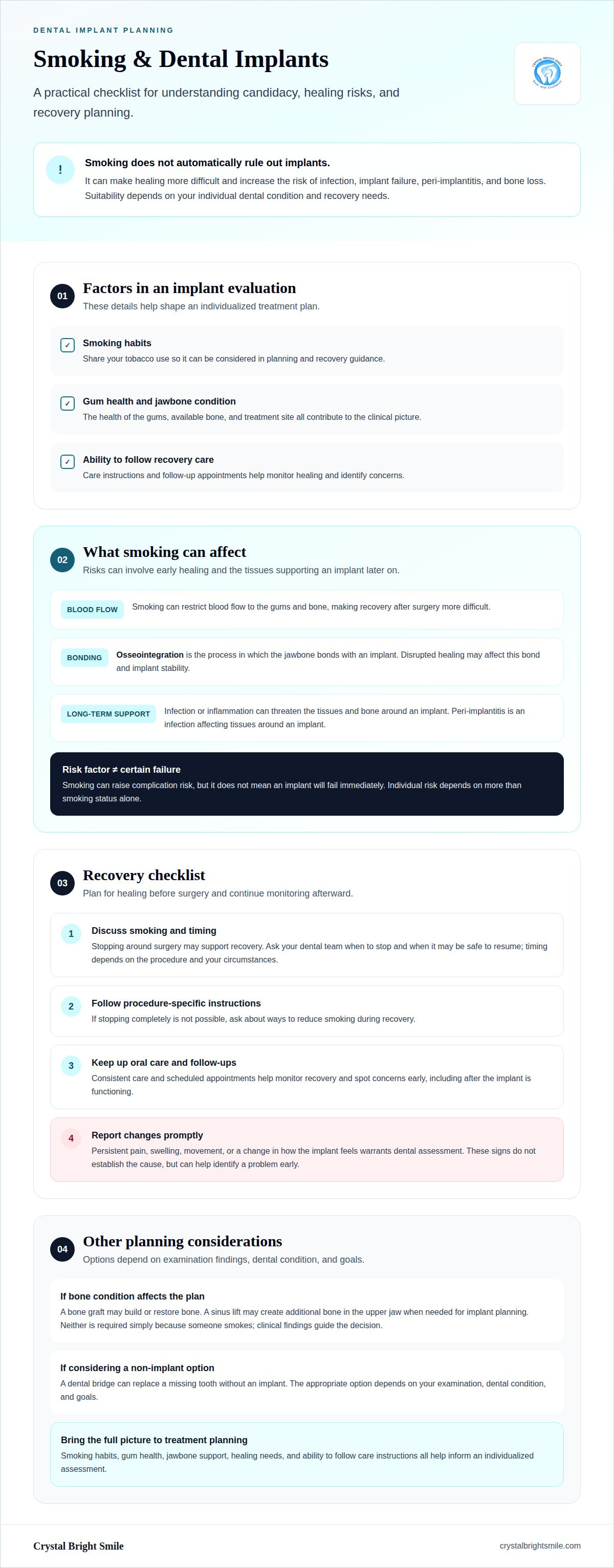
It’s understandable to wonder whether smoking means you have to give up on restoring your smile. It doesn’t automatically rule out dental implants. Suitability depends on factors such as your smoking habits, gum health, bone condition, and ability to follow care recommendations during healing.
Nicotine can affect blood flow and healing around an implant, while inflammation can threaten the supporting bone. Good oral care and follow-up appointments help monitor recovery. You’ll also learn why reducing or stopping smoking around treatment can matter, so you can discuss your options with a clearer picture of the risks.
Table of Contents
Can Smoking Negatively Impact Dental Implants?
Smoking doesn’t automatically disqualify you from dental implants, but it can increase treatment risks and affect planning. Your oral health, smoking habits, bone condition, and recovery needs all help determine whether treatment is suitable.
Smoking and Implant Eligibility
Whether you can get dental implants if you smoke depends on your overall dental condition, not an automatic rule. Some smokers can receive implants, but a dentist considers gum health, jawbone support, tobacco use, and your ability to follow care instructions. Share your smoking habits during the examination so they can be included in your individual treatment plan.
A dental bridge can replace a missing tooth without an implant. The right option depends on your examination, dental condition, and goals.
Smoking alone doesn’t mean you need extra treatment. A bone graft or sinus lift may be considered if your bone condition and implant plan call for it. The decision depends on clinical findings, not smoking status alone.
Smoking Effects on Healing and Osseointegration
Osseointegration is the process in which the jawbone bonds with an implant. Smoking can restrict blood flow to the gums and bone, making recovery after surgery more difficult. The surrounding tissues need to heal while the jawbone supports the implant.
When healing is disrupted, complications such as infection or implant instability may become more likely. Your smoking habits, gum health, and the condition of the treatment site all contribute to the clinical picture. Discussing these factors early helps the dental team plan around your needs.
Smoking Cessation Before and After Surgery
Stopping smoking around surgery may support recovery. The appropriate timing can depend on your procedure and individual circumstances, so discuss when to stop and when it may be safe to resume with your dental team.
Your dental team can explain how smoking may affect recovery at different stages. Follow your procedure-specific instructions and discuss a realistic quitting plan before surgery. If you can’t stop completely, ask your dental team about ways to reduce smoking during recovery.
Risks to Bone Grafts and Sinus Lifts
A bone graft builds or restores bone, while a sinus lift creates additional bone in the upper jaw when needed for implant planning. Smoking can make healing in these surgical areas more challenging and may affect tissue recovery.
These procedures may be considered when bone condition affects the implant plan. Your examination helps determine whether either is appropriate and what recovery support may be needed. Share your tobacco use before treatment planning so it can be considered alongside the surgical needs and healing demands of a graft or sinus lift.
Can smoking cause immediate implant failure?
Smoking doesn’t mean an implant will fail immediately, but it can increase the risk of complications. The timing and cause of failure matter: problems can develop while the implant bonds with the jawbone or later, after it begins functioning.
Failure Rates for Smokers and Non-Smokers
Implant failure rates compare how often implants fail among people who smoke and those who don’t. Research generally finds a higher risk for smokers, but an individual’s outcome depends on more than smoking status alone.
There isn’t one rate that applies to every patient. Studies may differ in follow-up periods, smoking habits, implant sites, and definitions of failure. For an individual, gum health, jawbone condition, oral hygiene, and healing all help shape risk. A rate from a group can’t predict exactly what will happen to one implant.
Smoking is a risk factor, not proof that an implant will fail. One person who smokes may have a different risk profile from another because their oral health, tobacco exposure, and ability to follow recovery instructions may differ. These factors are more useful for planning than treating a group statistic as a personal forecast.
Osseointegration and Implant Failure
Osseointegration is the process by which the jawbone bonds with an implant, creating support for its function. If this bond doesn’t develop well, the implant may remain unstable and fail before it becomes a reliable base for a replacement tooth.
Smoking can reduce blood flow and oxygen reaching the gums and bone. During healing, this can make it harder for tissues to recover and for bone to integrate with the implant. Infection or inflammation at the surgical site can add further stress, especially if healing is already compromised.
For example, an implant that moves instead of becoming stable may need assessment before a final tooth is attached. Persistent pain, swelling, or a change in how the implant feels also warrants prompt dental attention. These signs don’t establish the cause, but they can help identify a problem early.
Short- and Long-Term Failure Risks
Short-term failure occurs during early healing, while long-term failure can develop after an implant has been functioning. Smoking can affect both periods: early on, it may hinder healing and osseointegration; later, it can contribute to infection, inflammation, or loss of supporting jawbone.
This distinction matters because an implant that initially feels stable still needs ongoing care. Continued smoking can affect the tissues around it after surgery, while plaque buildup and gum inflammation can threaten support over time. Keep scheduled follow-ups and report changes rather than waiting for discomfort to worsen.
A dental evaluation can consider smoking habits, implant stability, and jawbone support together. For an individualized assessment of dental implant treatment, share your tobacco use and any healing concerns during the appointment.
Peri-implantitis risk
Smoking can raise the risk of peri-implantitis, an infection affecting tissues around an implant. The concern goes beyond gum irritation: inflammation can damage the bone that supports the implant.
How Peri-implantitis Affects Implant Support
Peri-implantitis is an inflammatory infection around an implant that can break down supporting bone. As bone support weakens, the implant may become less stable, threatening its function and long-term success.
Smoking is associated with a higher risk. Smokers are reported to be 2.5 to 3 times more likely to develop peri-implantitis than non-smokers. That comparison describes groups, not a personal prediction. Your oral health, cleaning habits, and smoking exposure also matter.
Peri-implantitis can develop around an implant even after the surgical site has healed. Ongoing inflammation, for example, may gradually affect the bone around an implant that once felt stable. Continued attention matters beyond the immediate recovery period after implant surgery.
Infection, Smoking, and Daily Habits
Infection and inflammation can damage tissues around an implant and contribute to bone loss. Smoking can make the surrounding tissues more vulnerable, while plaque left along the gumline can add irritation. These factors can overlap, so smoking is not the only influence on peri-implant health.
Make careful cleaning part of your daily routine. Brush the implant area gently but thoroughly, and clean between teeth where plaque can collect. Follow the oral-care instructions provided for your implant. If a cleaning technique feels difficult, ask for guidance at a scheduled appointment rather than leaving that area untouched.
Quitting smoking removes ongoing exposure to tobacco smoke, while reducing it may be a practical step if you’re not ready to quit. Neither change replaces daily cleaning or professional monitoring. Address several risks together, including tobacco exposure, plaque, and signs of inflammation.
Long-Term Monitoring and Follow-Up
Professional monitoring helps identify changes around an implant before they become more advanced. Smokers may need monitoring more often than the standard six-month cleaning schedule. Professional cleanings every 3-4 months are recommended for smokers with implants, allowing the dental team to assess the tissues and review home-care habits.
Keep follow-up appointments even when the implant feels comfortable. Report persistent tenderness, swelling, or bleeding around the implant, since these changes may call for an assessment. Regular visits also provide an opportunity to review smoking habits and tailor oral-care guidance to your needs.
Long-term care combines routine cleaning, professional assessment, and attention to changes around the implant. Consistent follow-ups and discussions about quitting smoking can help address risks to the supporting tissues over time.
Oral care and follow-up appointments during healing
Healing after implant placement involves the gums and jawbone, so recovery care continues beyond surgery day. For smokers, surgical planning, gentle cleaning, and regular follow-up appointments help the dental team monitor the site as it heals.
Plan Around Smoking and Recovery
Tell the dental team about cigarette use, vaping, and nicotine products before implant surgery. This information helps shape the surgical plan and recovery guidance around your health and habits. Nicotine restricts blood flow, and cigarette smoke can expose healing tissues to substances that make recovery more difficult. Vaping also delivers nicotine, so it isn’t a risk-free substitute during healing.
Follow the specific post-surgical instructions you receive. If antibiotics are prescribed, take them as directed; medication and careful home care serve different purposes. Don’t change how you use medication or begin a nicotine replacement product without discussing it with the dental team.
Healing Milestones After Placement
Healing develops in stages, rather than ending when the gum looks better. The first 1-3 days after placement support blood clot formation and initial wound closure. During weeks 1-2, soft tissue heals around the implant site. Early bone integration begins over 2-8 weeks, while the bone continues adapting around the implant.
These milestones explain why a comfortable-looking gumline doesn’t show the full picture. Follow-up appointments let the dental team assess healing and discuss concerns before treatment progresses. Report new swelling, persistent tenderness, or bleeding instead of waiting for the next visit.
Daily Oral Care and Saliva
Brush twice daily, taking care around the surgical area and following instructions for the healing site. Avoid forceful brushing directly over tender tissue; ask for guidance if you’re unsure how to clean near the implant. Daily plaque removal matters because buildup around the gumline can irritate the tissues.
Saliva moistens the mouth and helps clear food particles. If dryness makes brushing or eating uncomfortable, mention it at a follow-up rather than ignoring the change. A clean, comfortable mouth supports your daily routine, and the dental team can tailor care advice to the implant site and stage of recovery.
Keep Follow-Up Care on Schedule
Smokers with implants should schedule professional cleanings every 3-4 months rather than every 6 months. These visits give the dental team a chance to assess the tissues around the implant, review oral hygiene, and identify changes that may need attention.
Keep each appointment, even if the implant feels normal. Healing continues beneath the gumline, and consistent monitoring can track changes that aren’t obvious at home. Share any changes in smoking or nicotine use, since they can inform recovery discussions and ongoing care.
Bone loss around dental implants
Bone loss around an implant can reduce the support that keeps it stable. Smoking matters because it can raise the risk of peri-implantitis, an infection that damages tissues and bone around the implant. The effect may develop gradually, so an implant that feels comfortable can still need regular professional assessment.
One study cited in the research found smoking increased bone loss around dental implants by 0.16 mm yearly. That figure describes a study finding, not a prediction for every patient. The amount of bone change can depend on the health of the tissues, tobacco exposure, oral care, and whether inflammation develops around the implant.
Bacteria in plaque can collect near the gumline and contribute to inflammation. If infection affects the tissues around an implant, peri-implantitis can break down the supporting bone. As that support diminishes, the implant may become less stable. This explains why bone loss is more than a measurement: it can affect the implant’s ability to remain secure.
Tobacco use can add risk by restricting blood flow to gum and bone tissues. Reduced blood flow can make healing harder, while ongoing smoking may continue to affect tissues after the initial surgical recovery. If you smoke, share that with your dentist so it can inform discussions about healing, bone support, and ongoing care.
Bone loss may not be visible at home. A dentist can assess the tissues around the implant during an examination and determine whether further evaluation is needed. Mention new tenderness, swelling, or bleeding around the implant. These observations don’t establish bone loss, but they help your dental team decide what to assess.
Protecting the bone means addressing several factors, not focusing on tobacco alone. Keep the implant area clean, follow your recommended professional care schedule, and discuss smoking reduction or quitting with your dental team. If you have an implant and are concerned about bone support, schedule an implant evaluation to discuss your oral health and care needs.
Crystal Bright Smile: Dental Implants
Crystal Bright Smile provides dental implants for patients exploring ways to replace missing teeth. An evaluation considers your dental condition, gum and bone health, smoking habits, goals, and clinical needs to shape a personalized treatment plan.
Share whether you smoke or use nicotine, and discuss concerns about healing or bone support. This helps the dental team consider your situation and explain factors that may affect implant treatment. Candidacy and recommendations depend on your individual examination and oral health.
If you’re considering dental implants, Crystal Bright Smile in Tujunga, California, can help you understand your options and next steps. Contact the office to arrange an appointment.
Choose a Confident Next Step
If you’re wondering, “Can you get dental implants if you smoke?”, use the question to start a practical conversation about your oral health and goals. Be open about tobacco or nicotine use, and share what changes you feel ready to make during treatment. An examination can help determine whether implants suit your dental condition and clinical needs.
If an implant isn’t the right option for you, other ways to improve your smile may be worth discussing. Crystal Bright Smile also offers Invisalign and porcelain veneers, with recommendations tailored to your teeth, goals, and overall dental health. The next step is a plan built around your needs, not a one-size-fits-all answer.
Contact Crystal Bright Smile to talk through your concerns and arrange an appointment. Contact Crystal Bright Smile and take the next step toward a smile that feels right for you.
Frequently Asked Questions
Are Dental Implants Not Possible for Smokers?
No. Smoking doesn’t automatically rule out implant treatment, though it can affect healing and the risk of complications. A dental assessment can consider gum health, bone support, current tobacco use, and medical factors that affect recovery. Be candid about cigarettes, vaping, and nicotine products so these details can inform discussions about treatment timing and suitable tooth-replacement options.
Will vaping affect implants the same way as smoking?
Vaping can still affect healing, especially when the product contains nicotine. Nicotine restricts blood flow, which matters to tissues healing around a newly placed implant. Vaping also exposes the mouth to aerosol, so it shouldn’t be treated as a safe workaround during recovery. Tell the dental team what you vape, including whether it contains nicotine, before planning surgery or aftercare.
How Long Should You Wait Before Smoking?
After implant surgery, discuss with your dental team how long to avoid smoking; a longer smoke-free period may be preferable. The first days involve wound closure, followed by healing of the gum tissue and bone integration. Resuming cigarettes as soon as discomfort eases doesn’t mean the site has finished healing. Follow your procedure’s post-surgical instructions and discuss a realistic plan before surgery.
How long should I avoid smoking after getting implants?
Discuss an appropriate smoke-free timeline with your dental team after implant placement while the implant bonds with the jawbone. The healing course varies, so use follow-up visits to discuss progress and the timing of any changes. If abstaining feels difficult, raise that before surgery; a plan to reduce smoking or discuss nicotine alternatives is more useful than concealing continued use.
What About Vaping?
Avoid vaping during implant recovery, particularly if it delivers nicotine. Nicotine can restrict blood flow even without cigarette smoke, so switching devices doesn’t remove the concern for healing. If you vape to manage cigarette cravings, tell the dental team before surgery. Nicotine patches, gum, or lozenges avoid exposing the surgical site to smoke and heat, but discuss their use as part of your recovery plan.
Can smokers get dental implants?
Yes, some people who smoke can receive implants after an individual evaluation. Smoking is one factor among several: the dentist also considers your gum and jawbone condition, oral hygiene, and ability to follow care instructions. If a missing tooth is the concern, a bridge may be another option to discuss. Your examination and goals help guide the right treatment.
How does smoking affect dental implant success and failure rates?
Smoking is associated with a higher risk of implant complications and failure than not smoking, but a single percentage can’t describe every patient. Studies vary, and individual risk depends on factors such as smoking exposure, gum health, bone condition, and follow-up care. For a useful discussion, ask how these factors apply to your treatment plan rather than treating a group statistic as a personal forecast.
How long before dental implant surgery should you stop smoking?
Discuss with your dental team when to stop smoking before implant surgery. Planning ahead gives you time to discuss cravings, nicotine replacement, and obstacles to remaining smoke-free during recovery. Share your usual cigarette or vaping habits during the pre-surgical assessment, including recent changes. This helps the dental team consider your tobacco exposure alongside your oral health and surgical plan.

Comments