


Deep Cleaning for Gum Disease in Sunland: Costs and Care

Bleeding gums can signal a problem that routine cleaning may not reach. Deep cleaning for gum disease in Sunland usually means scaling and root planing, a dental treatment that removes plaque and hardened tartar beneath the gumline, then smooths tooth roots. It’s typically used for periodontitis, while mild gingivitis is generally addressed with standard cleanings and careful home care.
If you’re concerned about tender gums, bleeding when you brush, or persistent bad breath, it’s natural to want to know what treatment involves before deciding. This guide explains why deep cleaning may be recommended, how it works, what recovery can feel like, and how costs and insurance coverage are determined.
You’ll also learn how the extent of gum disease can shape the treatment plan, why ongoing maintenance matters, and what to discuss at an exam. Clear information can help you feel prepared to talk through your options at your next dental visit.
Table of Contents
What is scaling and root planing?
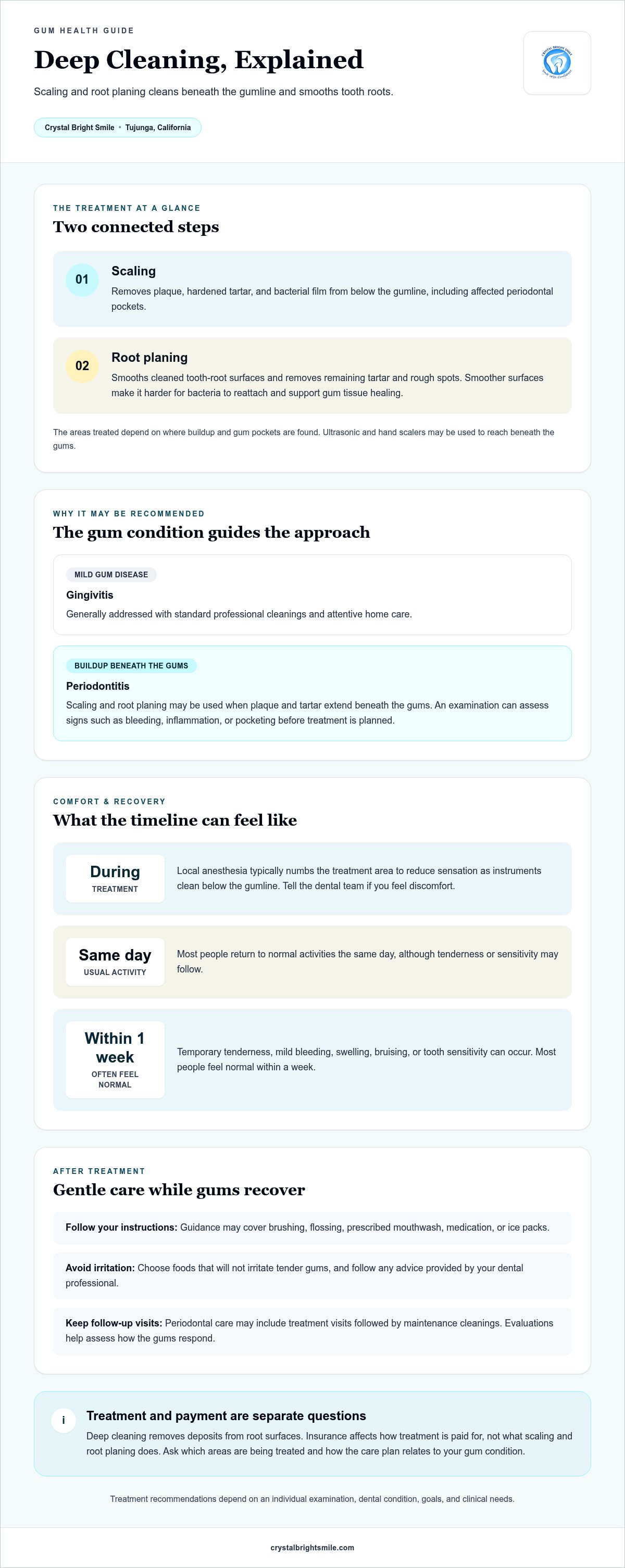
Scaling and root planing is a deep-cleaning treatment that removes plaque, tartar, and bacteria beneath the gumline. It targets tooth-root surfaces that a routine cleaning may not reach.
Tartar and Bacteria Removal
During scaling, a dental professional removes hardened tartar and bacterial film from below the gumline. Ultrasonic and hand scalers can reach periodontal pockets, the spaces between teeth and gums. The key difference is depth: this treatment addresses buildup on root surfaces, not just visible parts of the teeth.
Treatment Steps
The procedure focuses on areas affected by gum disease. Scaling clears deposits from beneath the gums, then root planing smooths the cleaned tooth roots. Smoother surfaces make it harder for bacteria to reattach and support gum tissue healing around the roots. The areas treated depend on where buildup and pockets are found.
Root planing is more than polishing. It removes remaining tartar and rough spots from root surfaces, creating a cleaner area for healing. When gum tissue pulls away and forms pockets, bacteria can collect in those spaces. Removing deposits beneath the gumline addresses a source of irritation that brushing alone cannot reach.
Deep cleaning is not needed for every gum concern. Mild gum disease, or gingivitis, is generally managed with standard professional cleanings and attentive home care. Periodontitis may call for scaling and root planing when buildup extends beneath the gums. An examination can identify signs such as bleeding, gum inflammation, or pocketing before treatment is planned.
Recovery can include temporary tenderness, mild bleeding, swelling, bruising, or tooth sensitivity. Most people return to normal activities on the same day and feel normal within a week. Follow the care instructions provided after treatment, including any guidance about brushing, flossing, prescribed mouthwash, or medication. Avoid irritating foods while the treated gums are tender.
Keep treatment and payment questions separate. Deep cleaning removes deposits from root surfaces; insurance affects how treatment is paid for, not what scaling and root planing does. Ask which areas are being treated and how the proposed care plan relates to your gum condition.
Does Dental Deep Cleaning Hurt?
Local anesthesia helps make scaling and root planing more comfortable while tartar is removed from gum pockets. Sensations during treatment and soreness afterward are separate parts of the experience.
Anesthesia and Comfort
A dental professional typically numbs the treatment area with local anesthesia before deep cleaning begins. This reduces sensation while instruments reach below the gumline, where pockets may hold tartar and bacterial buildup. Tell the dental team which areas feel sensitive and if you feel discomfort during treatment. Your feedback helps them respond as they clean each area.
Ultrasonic and hand scalers have different roles in removing deposits. The instruments work beneath the gums, while local anesthesia helps make that process more comfortable. Sedation dentistry may also be available for patients who feel anxious. The approach depends on the treatment area and the patient’s comfort needs.
Post-Treatment Soreness
Numbing helps during the procedure, but it doesn’t prevent all tenderness afterward. As the anesthetic wears off, treated gums may feel sore or swollen, and teeth may be temporarily sensitive. Mild bleeding or bruising can also occur. These effects differ from the sensation of instruments working below the gumline.
Follow the aftercare instructions provided for your treatment. Guidance may include using ice packs, choosing foods that won’t irritate tender gums, brushing and flossing, and using prescribed antibacterial mouthwash. If medication is prescribed, follow its directions. Avoid smoking during recovery and attend recommended follow-up appointments.
Before treatment, share relevant details such as sensitive teeth, previous difficulty with dental procedures, or anxiety about instruments. Ask which areas will be numbed and how you can signal discomfort during the appointment. Discussing these concerns in advance gives the dental team a chance to address them before scaling begins.
How do Sunland dental offices compare on deep-cleaning reviews, pricing, and availability? Compare recent reviews for comments about communication and comfort, request a written estimate based on the treatment areas, and consider appointment access alongside the proposed care plan. Reviews and fees alone don’t show whether a plan addresses your gum pockets and buildup.
If deep cleaning doesn’t control gum disease, the next step depends on pocket depth and changes to the supporting bone. Gum surgery may be considered when pockets are too deep to reach or bone has been lost. Follow-up evaluations help assess how the gums respond and whether further treatment is needed.
Local anesthesia can support comfort during cleaning, while post-treatment tenderness calls for gentle care and clear aftercare instructions. Discuss comfort concerns, the areas being treated, and how your gums will be monitored before the procedure starts.
What can I expect from deep teeth cleaning?
A deep-cleaning plan accounts for the affected gum areas, appointment schedule, and recovery. Periodontal care may involve treatment visits followed by maintenance cleanings.
Treatment Steps and Comfort
During the appointment, the dental professional cleans below the gumline and around affected roots. Local anesthesia can help make treatment more comfortable while plaque and tartar are removed. Depending on the areas involved and gum condition, the team may divide treatment across visits.
Afterward, expect some temporary tenderness or sensitivity. Gums may feel sore for a short time, and mild soreness can last several days. Some patients also experience light bleeding or swelling. Follow the care instructions provided, including guidance on brushing and flossing, and avoid foods that irritate tender tissue.
Visits and Appointment Length
Most patients complete deep cleaning in one or two appointments. A visit typically lasts 45 minutes to an hour. The mouth is divided into four quadrants, and treatment may cover one or two quadrants per visit. In mild cases, all four quadrants may be treated in one session.
The schedule depends on how much of the mouth needs treatment. If buildup affects only a limited area, treatment may be completed in one visit. More widespread periodontal concerns may call for separate appointments. Ask which areas are planned for each visit so you understand the sequence and can allow time for recovery.
Gum tenderness after treatment can make eating and brushing feel different for a short time. Choose softer, non-irritating foods while the tissue settles, and follow the recommended home-care routine. If you receive instructions for prescribed mouthwash or medication, follow them as directed. Contact the dental office if a concern arises during recovery.
Deep cleaning begins treatment, but periodontal disease needs ongoing attention. Maintenance visits are often recommended every three to four months after scaling and root planing. These cleanings help monitor gum health and remove new deposits before they accumulate below the gumline. Keep the follow-up schedule, even if bleeding or tenderness has eased.
Periodontal maintenance frequency can change as gum health and home-care habits develop. For patients who maintain good oral health, cleanings may later return to six-month intervals. The transition depends on continued monitoring and the condition of the gums. At follow-up, discuss changes in bleeding, sensitivity, or brushing comfort, since those details help guide the next care interval.
Deep cleaning costs and insurance coverage
Your costs depend on the areas treated and your dental benefits. Compare the treatment estimate with your plan’s deductible, coverage, and remaining annual benefits.
Insurance Coverage Options
Dental insurance may help pay for deep cleaning, but coverage varies by plan. Many plans pay 50% to 80% of costs after the deductible. Your share may also depend on the number of quadrants treated and your plan’s limits. Review the estimated patient responsibility, not just the stated coverage percentage.
Third-party dental discount plans typically offer discounts of 20% to 50% on periodontal procedures. These plans are different from insurance, so understand how their discounts apply before budgeting. Compare the terms alongside your insurance benefits, and account for any deductible or remaining annual maximum.
Deep-Cleaning Costs
There is no universal fee for deep cleaning. The estimate depends on the extent of periodontal disease, the areas with plaque and tartar below the gumline, and how many areas need care. Treating more of the mouth can affect the total compared with addressing limited buildup.
The price depends on the case and is provided after a quote request; factors include the affected areas, treatment extent, and insurance benefits. Ask for an itemized estimate that separates the procedure from other recommended care. This makes it easier to see what insurance may contribute and what you may owe.
Before scheduling, gather your insurance details and ask your plan about periodontal treatment benefits. Review the deductible, reimbursement percentage, annual maximum, and any plan requirements for coverage. These details can affect your share, even when patients receive similar treatment.
Insurance coverage is not the same as clinical need. The dental examination identifies where plaque and tartar extend below the gumline, while the treatment plan describes the areas requiring cleaning. Review both: the clinical plan explains the proposed care, and the benefit estimate shows how your plan may process it.
For example, a plan covering treatment in several areas may have a different estimated patient share from one addressing fewer areas. The number of visits can also affect when charges occur, while the total treatment scope remains an important cost factor. Ask how the estimate reflects the planned areas and whether it includes all recommended periodontal care.
Keep copies of the estimate and insurance response, then compare them before treatment. If the plan’s payment differs from the estimate, review the explanation of benefits to see how the claim was processed. Distinguishing the total fee, insurance contribution, and patient responsibility helps you plan without treating an estimated payment as guaranteed.
Deep cleaning for moderate to severe gum disease
As gum disease progresses, plaque and tartar can collect below the gumline and deepen periodontal pockets. Scaling and root planing is a first-line treatment for periodontitis, helping remove this buildup where routine dental cleaning cannot reach.
What signs and stages of gum disease may call for deep cleaning? Mild gingivitis can cause red, tender, or bleeding gums and is generally treated with standard cleanings and careful home care. Periodontitis can involve deeper pockets, receding gums, persistent bad breath, or loose teeth, and may damage supporting bone.
The difference matters. Gingivitis affects gum tissue, while periodontitis can progress beyond the gums and affect the structures supporting teeth. Persistent bleeding during brushing, painful chewing, or shifting teeth are reasons to arrange a dental examination. A dentist can assess your gums, and digital X-rays can help identify changes to teeth or supporting bone.
During scaling and root planing, the dental professional cleans deposits from beneath the gumline and smooths root surfaces. Local anesthesia supports comfort during treatment. The goal is to remove bacterial deposits from pockets and give inflamed gum tissue a cleaner surface around the teeth. The areas treated depend on pocket depth and where deposits are present.
To find deep cleaning for gum disease in Sunland, look for a dental office that evaluates periodontal health and provides scaling and root planing. Ask whether the examination assesses pocket depth and whether the proposed treatment addresses the affected areas. The need for specialist care depends on the clinical findings.
Moderate or severe gum disease needs more than a one-time cleaning plan. Follow-up assessments help track gum response, bleeding, and pocket changes. Periodontal disease is managed over time, so ongoing professional maintenance and daily brushing and flossing remain part of care. Report changes in bleeding or gum tenderness between visits.
Untreated periodontitis can lead to deeper pockets and progressive bone loss. If pockets are too deep to clean or bone has been lost, gum surgery may be considered; exposed roots from advanced recession may call for gum grafting. These options address different problems, so pocket depth, bone support, and recession inform the treatment plan.
The practical takeaway: bleeding gums don’t automatically mean deep cleaning is needed. A dental exam can distinguish mild gingivitis from periodontitis by assessing gum inflammation, pocketing, and supporting bone. If scaling and root planing is recommended, ask which areas need treatment and how follow-up will monitor your gum health.
Crystal Bright Smile: Dental Implants
Crystal Bright Smile provides periodontal scaling and root planing and dental implants in Tujunga, serving nearby Sunland, La Crescenta, Montrose, Shadow Hills, and Lake View Terrace.
If you’re considering implants after addressing gum health, recommendations and candidacy depend on an examination, your dental condition, goals, and clinical needs. Dental crowns and bridges may also be considered as restorative options based on these individual factors.
Contact Crystal Bright Smile to discuss your dental care.
Take the Next Step Toward Healthier Gums
If you’re considering deep cleaning for gum disease in Sunland, use your next dental visit to clarify the care plan and your long-term goals. Understanding what needs attention now can help you make informed decisions about future restorative or cosmetic care.
Crystal Bright Smile offers dental implants, Invisalign, and porcelain veneers. Recommendations and candidacy depend on your examination, dental condition, goals, and clinical needs. Discuss which options align with your priorities and how they fit into your overall oral health plan.
Contact Crystal Bright Smile to talk about your dental care. A considered next step can help you move forward with greater confidence and a plan tailored to your smile.
Frequently Asked Questions
Why Is Deep Cleaning Gums Necessary?
Deep cleaning may be recommended when an examination identifies periodontal disease that needs care beyond a routine cleaning. Ask what findings support the recommendation and which areas the proposed plan covers. You can also ask how the plan differs from a standard cleaning on your treatment estimate. These details help explain why a particular approach is being suggested for your gums.
Can deep cleaning stop gum disease from progressing?
Scaling and root planing can help manage periodontitis, but it doesn’t guarantee that the disease won’t progress. Ask how your dental team will assess your response, such as by comparing gum measurements at later visits. Note any changes you notice between appointments, including bleeding or discomfort, and share them at follow-up.
Does It Hurt?
Local anesthesia is generally used to make the procedure more comfortable, though individual experiences vary. Before treatment, tell the dental team if anxiety or a previous dental experience makes you uneasy. Agree on a simple signal to pause during the appointment. This gives you a clear way to communicate if you need a moment or want to discuss how you’re feeling.
Does a deep cleaning provide real results?
Follow-up examinations, rather than appearance alone, help assess results. Ask how your dental team will compare your gum condition over time and what changes might prompt a revised care plan. Keep a simple record of appointments and symptoms you notice at home, so you have specific points to discuss instead of relying on memory.
Does insurance cover deep cleaning procedures?
Some dental plans contribute toward periodontal procedures, but coverage depends on the terms of your policy. Before treatment, ask for a written estimate and review it alongside your plan’s benefit information. Check the estimate’s expected patient share, and keep the insurer’s response with your treatment paperwork. This helps distinguish an estimate from the final claim decision.
What is deep cleaning (scaling and root planing) for gum disease?
Scaling and root planing is the clinical name for a periodontal procedure that treats deposits on tooth roots beneath the gums. If you see the term on a treatment plan, ask which areas it refers to and whether the estimate separates this procedure from other recommended care. Understanding the terminology can make appointment discussions and insurance paperwork easier to follow.
How much does periodontal deep cleaning cost in Sunland, California?
The cost of deep cleaning for gum disease in Sunland depends on the proposed treatment and your benefits. For a useful budget, request an estimate that identifies the planned procedure and your expected share, then compare it with your insurance information. Keep the estimate available when reviewing the final claim. A personalized estimate is more useful than a general figure.
Does dental insurance cover scaling and root planing in Sunland?
Coverage depends on your dental plan, so a general answer can’t establish your personal benefit. Ask your insurer how it classifies the proposed periodontal procedure and whether plan limits affect payment. Keep the treatment estimate and the insurer’s written response together. If the claim is processed differently than expected, those records can help you understand the explanation of benefits.

Comments