


Fixing a Chipped Tooth at Home or at the Dentist

A chipped tooth can look like a small cosmetic flaw, but the damage may reach deeper than you can see. Home care can protect the area and ease discomfort temporarily; it can’t permanently repair the tooth. The choice between fixing a chipped tooth at home and seeing a dentist comes down to this: a dental professional needs to assess the damage and recommend care.
It’s natural to want to smooth a rough edge or cover a chip yourself. For now, rinse your mouth, choose soft foods, and avoid biting with the injured tooth. Save any large fragment and bring it to your dental appointment. A small chip may need only smoothing or tooth-colored composite bonding, while more extensive damage may require a different treatment. Learn what a chipped tooth can involve, how to care for it while you wait, and how a dentist can use composite bonding to restore its shape. You’ll also find out which signs make prompt dental attention especially important.
Table of Contents
What is a chipped tooth?
A chipped tooth has lost a piece of its outer structure, usually enamel, after an impact or pressure. A tiny edge chip may mainly change a tooth’s appearance, while a deeper break can expose inner layers, trigger sensitivity, or affect how your teeth meet. A dentist needs to assess the damage, since the visible chip may not show its full extent.
For a small chip, dental bonding can rebuild the missing area with tooth-colored composite resin. The dentist applies and shapes the material directly on the tooth, then hardens it with a special light. Bonding can restore the tooth’s outline and may be completed in one visit for a small enamel chip. A clean break without a further crack may be suitable for this approach.
A veneer may be considered for a minor front-tooth chip when the area needs more coverage than bonding provides. It can be made from porcelain or composite resin, customized, and attached with special cement. More extensive damage may call for a crown, which covers the entire tooth. If the chip exposes inner nerves, root canal therapy may be needed before a crown protects the tooth.
Can you safely fix a chipped tooth at home? Home care can protect the area temporarily, but it can’t permanently repair the tooth or reveal damage beneath the surface. Don’t file the edge, glue a fragment in place, or use household adhesives. Rinse your mouth gently, avoid chewing on that side, and save a large fragment in milk to bring to your dental appointment.
How much does professional chipped-tooth repair cost in the United States? The price depends on the case and is provided after a quote request. Factors include the chip’s size, the tooth’s location, and whether bonding, a veneer, or a crown is needed.
Does dental insurance cover chipped-tooth repair, and what are typical out-of-pocket costs? Coverage and out-of-pocket costs depend on your policy, deductible, and how the repair is classified. Review your plan’s terms for the specific treatment. Bonding for appearance and treatment to restore damaged tooth structure may be handled differently.
What are the risks of leaving a chipped tooth untreated or repairing it at home? A chip can worsen, and exposed inner tissue can become sensitive or vulnerable to infection. A temporary cover may shield a sharp edge, but it won’t restore the tooth’s structure or correct bite pressure. Pain when biting or sensitivity to temperature calls for prompt dental attention.
What foods and activities should you avoid while waiting to see a dentist? Choose soft foods, avoid extremely hot or cold items, and don’t bite with the chipped tooth. Skip hard objects such as ice, pens, and nutshells, and don’t use your teeth to open packaging. These steps reduce pressure on the damaged edge until a dentist evaluates it.
The choice between fixing a chipped tooth at home and seeing a dentist depends on what you need: temporary protection or an assessment of the tooth itself. Treat home care as a short-term measure, not a substitute for professional evaluation.
Immediate care for a chipped tooth
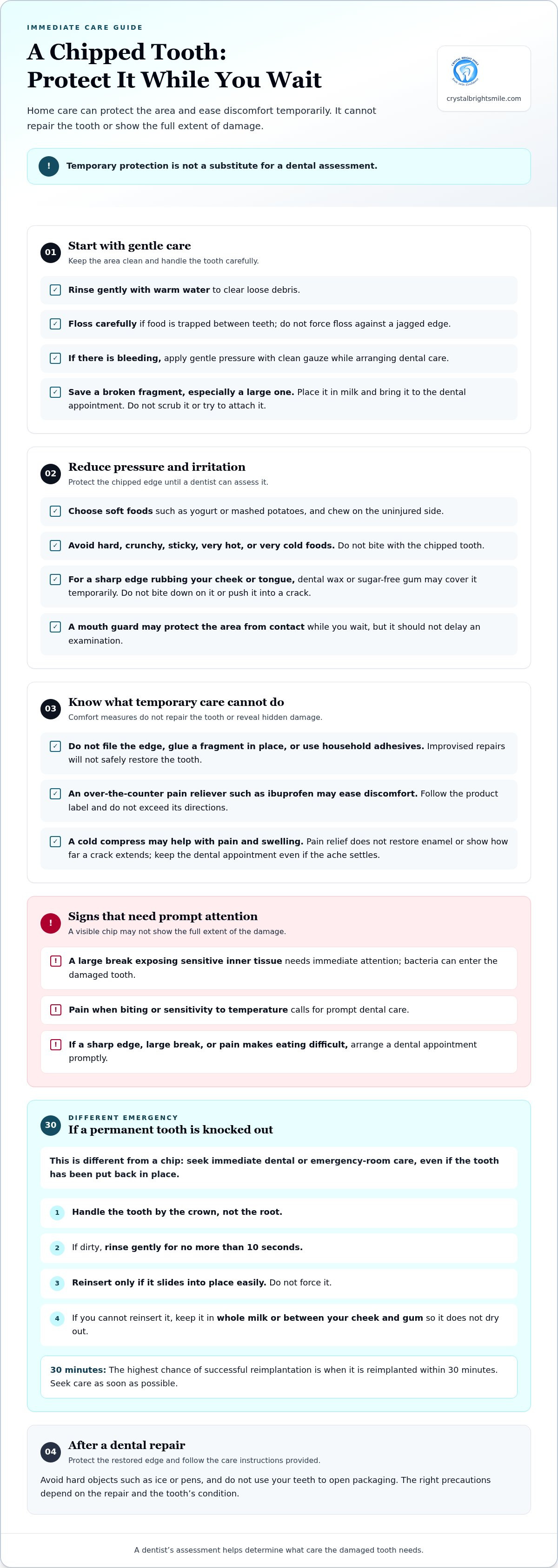
After a chip, focus on keeping the area clean and reducing pressure. Rinse gently with warm water to clear loose debris. Floss carefully if food is trapped between your teeth, but don’t force floss against a jagged edge. If the injury causes bleeding, apply gentle pressure with clean gauze while arranging dental care.
Save any broken fragment, especially if it’s large. Place it in milk and bring it to your dental appointment; the dentist can assess whether it may be useful. Don’t scrub the piece or try to attach it yourself. Household glue and improvised repairs can irritate tissue and won’t restore the tooth safely.
Choose soft foods, such as yogurt or mashed potatoes, and chew on the uninjured side.
Avoid hard, crunchy, sticky, very hot, or very cold foods that can press on the chip.
Cover a sharp edge temporarily with dental wax or sugar-free gum if it’s rubbing your cheek or tongue.
A temporary cover can reduce irritation, but it doesn’t repair the tooth. Don’t bite down on the material or push it into a crack. A mouth guard may also protect the area from contact while you wait, but it shouldn’t delay an examination. A large break that exposes sensitive inner tissue needs immediate attention, since bacteria can enter the damaged tooth. Pain when biting or sensitivity to temperature also calls for prompt care.
A knocked-out permanent tooth is different from a chip and needs immediate dental or emergency-room care, even if it’s been put back in place. Handle it by the crown, not the root. If it’s dirty, rinse it gently for no more than 10 seconds. Reinsert it only if it slides into place easily; don’t force it. If you can’t reinsert it, keep it in whole milk or between your cheek and gum to prevent it from drying out. The highest chance of successful reimplantation is when it’s reimplanted within 30 minutes, so seek care as soon as possible.
After a dental repair, protect the restored edge by avoiding hard objects such as ice or pens. Don’t use your teeth to open packaging. Follow the care instructions provided after the procedure, since the right precautions depend on the repair and the tooth’s condition.
If a sharp edge, a large break, or pain makes eating difficult, arrange a dental appointment promptly. Getting a dental evaluation helps determine what care the damaged tooth needs.
Over-the-counter pain relief
An over-the-counter pain reliever such as ibuprofen may ease discomfort after a tooth chips. Follow the product label, and don’t exceed its directions. Pain medicine can help you feel more comfortable, but it won’t restore enamel or show how far a crack extends. Keep your dental appointment even if the ache settles. A chip may need assessment even when pain is mild, because visible damage doesn’t reveal the tooth’s full condition.
A cold compress can help reduce pain and swelling around the injured area. Hold it against the outside of your cheek for 15-minute intervals, then remove it. Avoid placing ice directly on the tooth, where cold may intensify sensitivity. If biting hurts or temperature sensitivity persists, tell the dentist; those symptoms can guide the assessment. Pain relief is temporary, not a substitute for finding the cause.
A salt-water rinse is another self-care option after a chip. Mix one teaspoon of salt into a cup of warm water, swish for 30 seconds, then spit it out. The rinse can clear the mouth and is suggested as a measure to reduce infection risk. Don’t use hot water, which may aggravate sensitivity in exposed inner tooth layers. A rinse won’t close the chip or remove the need for dental care.
Choose soft foods, such as scrambled eggs or oatmeal, while chewing feels uncomfortable. Chew on the opposite side and avoid biting directly into food with the injured tooth. Extremely hot or cold items can trigger sensitivity, so let soup cool and skip ice-cold drinks. These changes limit pressure and temperature exposure until a dentist can examine the damage.
After a repair, pay attention to discomfort or a change in how your bite feels. A dentist checks how your teeth come together because uneven contact can create pressure or discomfort. If a restored tooth feels high when you close your mouth, or chewing remains painful, contact the dental office for guidance. Don’t try to reshape bonding or another restoration at home.
The repair also affects appearance. Tooth-colored composite bonding can rebuild a chipped area, while the dentist’s choice depends on the damage and the tooth’s condition. If the repaired edge looks or feels different, describe the specific concern at follow-up, such as a rough surface or an altered bite. Clear details help the dentist assess the restoration and your comfort together.
Use pain relief to stay comfortable, not to postpone care. A large break, pain when biting, or sensitivity to hot and cold calls for prompt attention. Arrange a dental appointment to have the chipped tooth assessed and discuss suitable care.
How Do Dentists Fix a Broken Tooth?
A dentist starts by examining the tooth, checking your bite, and assessing how far the damage extends. Dental X-rays may help when the break is severe or hidden damage is suspected. A chipped edge differs from a broken tooth: a large fracture, crack, or root injury can affect more than the visible surface. The repair depends on the tooth’s condition and how much structure remains.
For a small break, the dentist may smooth a jagged edge or rebuild it with composite resin. If a large fracture weakens the tooth, a crown can cover and protect it. A crown restores the tooth’s shape while covering its damaged structure. A front tooth may sometimes be restored with a veneer, particularly when the damage is limited and the tooth can support that approach.
If a fracture exposes the pulp, the inner tissue may be damaged or infected. Root canal therapy can remove affected pulp before a crown protects the remaining tooth. A crack extending below the gum line may make the tooth impossible to restore, and extraction may be needed. If a severe break leaves a tooth missing, replacement options depend on the person’s dental condition and clinical needs.
While waiting for an appointment, protect your cheek and tongue from a sharp edge. Dental wax can temporarily cover the rough spot; sugar-free gum may also provide a short-term cover. Keep either material in place gently, and don’t push it into a crack. Avoid filing the tooth, applying household glue, or trying to cement a broken piece yourself. These actions can injure nearby tissue or complicate treatment.
For discomfort, an over-the-counter pain reliever such as ibuprofen may help when used according to its label. A cold compress on the cheek in 15-minute intervals can ease pain and swelling. Choose soft foods, and avoid biting with the injured tooth. These steps protect the area, but they don’t repair a fracture or determine whether the pulp is involved.
Seek prompt dental attention if a break exposes inner tissue, pain occurs when biting, or hot and cold trigger sensitivity. Those signs can point to damage beyond the edge. Even if a temporary cover makes eating more comfortable, arrange an examination so the dentist can assess the tooth and recommend a suitable repair. A dental evaluation for a broken tooth can clarify whether smoothing, bonding, a veneer, a crown, or another treatment fits the damage.
Composite bonding for a chipped tooth
Composite bonding rebuilds a chipped area with tooth-colored resin shaped directly on the tooth. The dentist applies the material, contours it to restore the tooth’s outline, then hardens it with a special light. For a small chip involving only enamel, the repair can often be completed in one office visit. A small front-tooth chip is one example where bonding may provide a conservative cosmetic repair.
Bonding is most suitable for a clean break without a further crack. Before choosing it, the dentist examines the tooth and checks whether damage extends beyond the visible edge. A chip that exposes inner nerves, weakens the tooth, or causes pain when biting may need more than added composite. The important distinction is the tooth’s condition, not simply how noticeable the chip looks.
During the repair, the dentist selects a resin shade, places the composite, and shapes it to blend with the surrounding tooth. A special curing light hardens the material so it can become part of the tooth’s restored contour. A chipped front tooth may not need a numbing agent for bonding. The dentist bases that decision on the tooth and planned treatment.
Bonding can provide a focused repair without covering the entire tooth. A veneer may be considered when a front tooth needs more coverage than bonding provides. Porcelain veneers are customized and attached with special cement. A crown covers the entire tooth and may be recommended when damage is extensive. These options aren’t interchangeable; the amount and location of damage guide the choice.
Composite bonding isn’t permanent. With proper care, it can last around 10 years, though the tooth and restoration need protection. Avoid biting hard objects such as ice or pens, which can damage a repaired edge. If the bonded area feels rough, looks different, or changes how your teeth meet, tell the dentist rather than trying to reshape it yourself.
Home care can shield a sharp edge temporarily, but it can’t reproduce a dentist’s shaped, cured composite repair. Don’t use household glue or attempt to attach a fragment. The practical takeaway: bonding may suit a small, uncomplicated chip, while a deeper crack or extensive damage calls for a different plan. A dental examination identifies which repair fits the tooth’s condition, appearance, and function.
For a chipped tooth, schedule an evaluation for dental bonding and discuss whether composite is appropriate for the damage.
Crystal Bright Smile: Dental Implants
Crystal Bright Smile provides dental implants for patients replacing a missing tooth after severe damage or extraction. An implant replaces the tooth’s root and crown, unlike a crown-and-bridge replacement, which restores the visible tooth without replacing its root. If a chipped tooth can be preserved, an implant isn’t the repair; the dentist considers treatment for the natural tooth instead.
For a missing tooth, implant recommendations depend on an examination, your dental condition, goals, and clinical needs. Crystal Bright Smile is located in Tujunga, California, and serves patients in nearby Sunland, La Crescenta, Montrose, Shadow Hills, and Lake View Terrace. Contact Crystal Bright Smile to discuss an appointment and next steps.
Take the Next Step Toward a Confident Smile
The choice between fixing a chipped tooth at home and seeing a dentist is about more than appearance. A professional assessment can help you make an informed decision about protecting your tooth and feeling comfortable with your smile. Share any concerns about function, appearance, or future care so your treatment plan reflects your needs and goals.
Crystal Bright Smile offers dental implants, Invisalign, and porcelain veneers. These treatments address different needs, and recommendations depend on your examination, dental condition, goals, and clinical needs. If a chip has left you unsure what to do next, contact the team to discuss an evaluation and possible care.
Contact Crystal Bright Smile to take your next step toward a smile that feels like you.
Frequently Asked Questions
What should I do if I chip my tooth?
Arrange a dental assessment, even if the chip seems small or painless. Until then, keep the area clean and avoid testing the edge with your tongue or fingernail. If you saved a fragment, bring it along. Note what caused the chip, such as biting a hard object or an impact, and tell the dentist whether your bite feels different. Those details can help guide the examination.
Can a Cosmetic Dental Professional Fix It in One Visit?
Yes, a small chip limited to enamel may be smoothed or restored with composite bonding in one appointment. A cosmetic dentist first checks the tooth’s condition and shape, then determines whether a simple repair can address both appearance and function. A deeper break or damage affecting inner tissue may need additional treatment, so the number of visits depends on what the examination reveals.
What Treatment Options Are Available for Chipped Teeth?
Options include smoothing a minor rough edge, composite bonding for a small missing area, a veneer for a front tooth needing broader coverage, or a crown for extensive damage. If the break reaches the pulp, root canal therapy may be needed before a crown. Factors that guide the choice include chip depth, tooth location, remaining structure, and whether the tooth hurts during biting.
When Should You Seek Immediate Care?
Seek prompt dental care for a large break, visible inner tissue, pain when biting, or sensitivity to hot and cold. These signs can indicate damage beyond the enamel surface. A small cosmetic chip without pain may be less urgent, but still needs assessment. If an injury knocks out a permanent tooth, seek dental or emergency-room care immediately, even if the tooth has been reinserted.
When should I see my healthcare provider?
See a dentist after a tooth chips, because an examination can identify damage you can’t judge from its appearance. Contact a dental office promptly if the tooth becomes painful, reacts strongly to temperature, or feels uneven when you close your mouth. If the chip followed a significant blow to the face, share that context during the appointment so the dental team understands how the injury happened.
What should you do immediately after chipping a tooth?
Rinse gently with warm water, then check whether a fragment has come loose. Save a large piece in milk and take it to the appointment. Choose soft foods and avoid biting with the damaged tooth. If the edge catches your lip or tongue, cover it temporarily with dental wax. Don’t use household glue or try to reshape the tooth with a file.
How can dental wax or temporary filling material protect a chipped tooth?
Dental wax can temporarily cover a sharp edge, reducing rubbing against your cheek or tongue. Press a small amount gently over the rough spot without forcing it into a crack. Sugar-free gum can serve as another short-term cover if wax isn’t available. These materials protect nearby soft tissue, but they don’t stabilize a fracture or replace a dentist’s assessment and repair.
When does a chipped tooth need urgent or emergency dental care?
A large break exposing sensitive inner tissue, pain when biting, or strong temperature sensitivity calls for prompt dental attention. A knocked-out permanent tooth requires immediate dental or emergency-room care, even if it has been put back in place. If you’re unsure how deep a break is, avoid chewing on that side and seek an assessment rather than relying on pain alone to judge the injury.

Comments