


How to Get Ready for Dental Implant Surgery in Tarzana

Preparing for dental implant surgery starts well before your appointment. Share your medical and medication history, follow your dental team’s preoperative instructions, and find out whether bone grafting or sedation is part of your plan. For patients in Tujunga, Sunland, La Crescenta, Montrose, Shadow Hills, and Lake View Terrace, Crystal Bright Smile provides these steps to help make the process clear.
It’s natural to want to know what will happen and what to do beforehand. Your consultation helps shape a plan around your oral health, treatment goals, and clinical needs, rather than relying on a one-size-fits-all checklist.
Learn what an implant evaluation may involve, whether bone grafting could affect timing, and how sedation may change instructions about eating, drinking, transportation, or routine medications. Follow the medication directions provided specifically for your procedure. With the key steps clear, you can prepare calmly and focus on your care.
Table of Contents
What Should I Know Before Having Dental Implant Surgery?
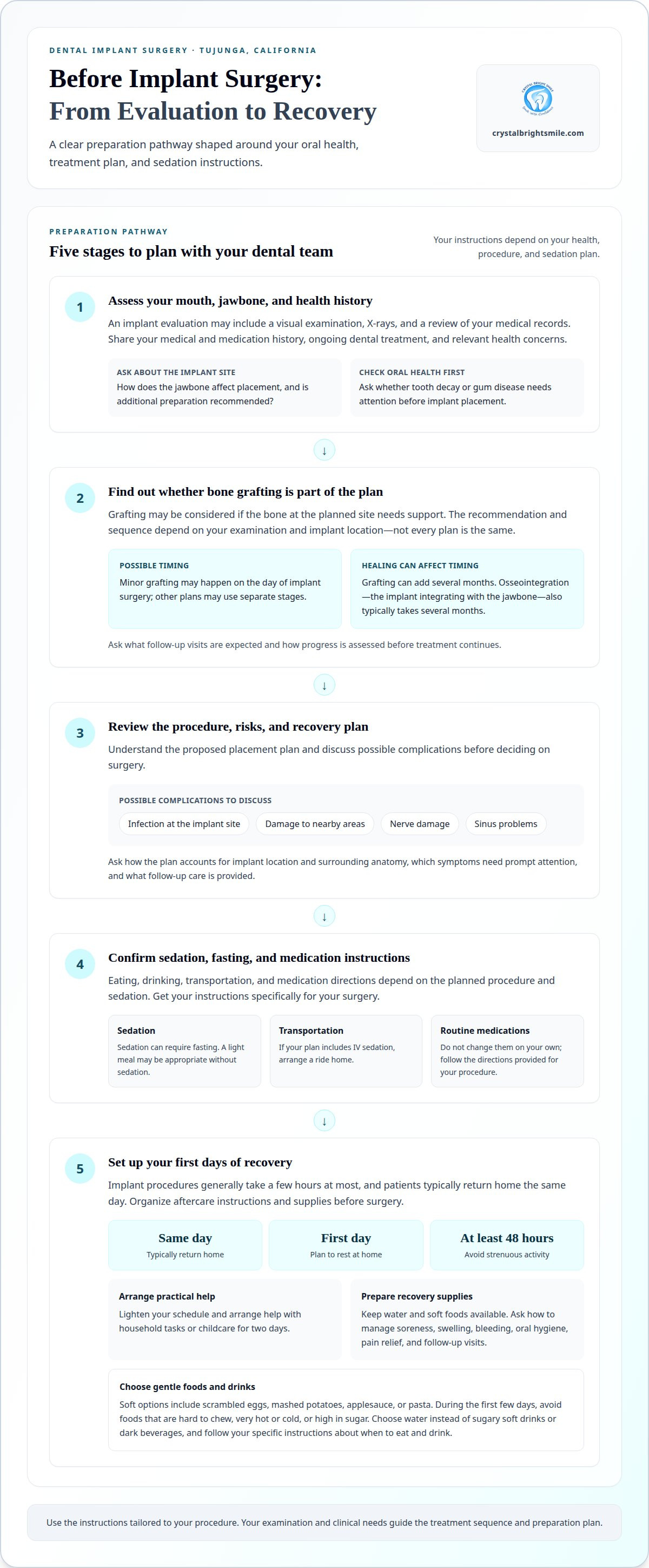
Prepare by understanding the implant placement plan, possible complications, and recovery arrangements. Your preoperative instructions should reflect your health, treatment, and sedation plan.
Compare Surgeons and Verify CredentialsCompare implant surgeons serving Tujunga and nearby communities by reviewing implant-specific training, relevant experience, the proposed placement plan, and follow-up care. Verify licenses and specialty credentials through official records. Ask how the plan accounts for your oral health and what recovery support is provided. Look for clear explanations of the procedure and its risks, rather than promotional claims or promises of a particular result.
Review Surgical Risks and ComplicationsDiscuss possible complications before deciding on surgery. These can include infection at the implant site, damage to nearby areas, nerve damage, or sinus problems. Ask how the planned placement accounts for the implant’s location and your surrounding anatomy. Share health concerns that could affect healing, and make sure you understand which symptoms after surgery need prompt attention.
Plan for Outpatient Surgery and RecoveryArrange your day around getting home and resting. Implant procedures generally take a few hours at most, and patients typically return home the same day. Plan to rest at home on the first day after surgery. Lighten your schedule around the procedure and arrange help with household tasks or childcare for two days. Avoid strenuous activity for at least 48 hours, following your surgical team’s directions.
Gather Recovery Instructions and SuppliesBefore surgery, organize your written aftercare instructions and recovery supplies. Ask how to manage soreness, swelling, bleeding, oral hygiene, and follow-up visits. Some swelling, soreness, or minor bleeding can occur after placement. Keep water and soft foods available, and follow the instructions for pain relief. Use the directions tailored to your procedure, rather than general advice.
Choose recovery-friendly food and drinks. Prepare soft options such as scrambled eggs, mashed potatoes, applesauce, or pasta. During the first few days, avoid foods that are hard to chew, very hot or cold, or high in sugar. Choose water instead of sugary soft drinks, tea, coffee, or other dark beverages. Follow your specific instructions about when to eat and drink after surgery.
Jawbone preparation and bone grafting
Plan jaw preparation around your oral health and the bone available at the implant site. Assessment findings help determine whether grafting belongs in the treatment plan and how it may affect timing.
Review the jawbone assessment. Preparing for dental implant surgery in Tarzana starts with understanding the proposed implant site and your examination findings. An implant evaluation may include a visual examination of your mouth, X-rays, and a review of medical records. Ask how the jawbone at the planned location affects placement and whether additional preparation is recommended. This connects the assessment to your treatment plan.
Address oral health concerns before surgery. Ask whether tooth decay or gum disease needs treatment before implant placement. Existing problems may need attention first, because your overall oral health is part of the treatment plan. Share relevant medical concerns and describe any ongoing dental treatment. Clear answers help you understand what needs to happen before the implant appointment and how those steps relate to the site being prepared.
Understand when bone grafting may be considered. If the bone at the planned site needs support, grafting may be included in jaw preparation. The recommendation depends on your examination and implant location, rather than a standard approach for every patient. Ask which area needs preparation and what the graft is intended to address. Discuss whether grafting and implant placement are planned together or in separate stages.
Discuss whether grafting and placement can happen together. Minor jawbone grafting can be performed on the day of implant surgery. This timing doesn’t apply to every treatment plan; examination findings and the extent of preparation shape the sequence. Ask what will happen during your appointment and how the planned order affects the next stage. Understanding the sequence helps you plan without assuming every case follows the same schedule.
Plan for the effect on treatment timing. Bone grafting can add several months to the treatment process. Dental implant osseointegration, when the implant integrates with the jawbone, also typically takes several months. Preparing for dental implant surgery in Tarzana includes understanding how these healing stages fit your plan. Ask what follow-up appointments are expected and how progress is assessed before treatment continues. Keep the schedule in mind when making personal or work arrangements.
Do you offer sedation for oral surgery?
Sedation and anesthesia planning depends on the procedure and your medical needs. Before surgery, follow your specific instructions about eating and drinking. A light meal may be appropriate without sedation, while sedation can require fasting.
Review Sedation and Anesthesia OptionsAsk which sedation or anesthesia approach is planned for your procedure and what preparation it requires. Discuss comfort, medical concerns, current medications, fasting, and transportation together, since these details affect how you prepare. Sedation and general anesthesia involve different instructions. Get the plan in writing, and don’t assume instructions from another procedure apply to yours.
Plan Transportation After IV SedationArrange a ride home before receiving IV sedation. You won’t be able to drive afterward, so plan for someone else to take you home. Include transportation in your appointment plan rather than deciding after the procedure. Ask what to expect at discharge and whether your ride should remain available while the surgical team explains your instructions.
Follow the exact fasting instructions. Sedation instructions can require fasting for several hours. The stated timeframe can vary: some instructions specify eight hours before the procedure, at least 12 hours, or no food after midnight. These are different directions, not a combined checklist. Follow the written instructions for your own procedure, including whether water is allowed. Don’t substitute the light-meal advice used for procedures without sedation.
Bring breathing equipment when instructed. If you use CPAP or BiPAP and your procedure involves IV sedation or general anesthesia, bring your machine. Mention the device during planning, along with any relevant breathing or sleep concerns. This gives the surgical team information for planning your procedure. Include the machine with your appointment items, and follow any specific directions about its use.
Resolve missing details before surgery day. Check that your instructions clearly cover food, drinks, routine medications, arrival, and transportation. If a detail is missing or conflicts with another instruction, contact the dental team before acting. Don’t fast longer, stop prescribed medication, or change the plan based on advice intended for a different procedure. Keep the final directions accessible on surgery day.
Prepare a simple morning plan. Set out your written instructions, identification, and any requested equipment the evening before. If fasting applies, schedule your last permitted food or drink according to the exact directions you received. If fasting doesn’t apply, follow the advice for your procedure rather than assuming every patient needs the same meal. A clear plan helps prevent confusion before oral surgery.
Initial consultation and oral health assessment
Use the consultation to connect your oral health, medical history, and implant goals with a clear treatment plan. The examination helps identify conditions that may need attention before the implant procedure.
Attend the Initial ConsultationBring a current medication list and be ready to discuss relevant medical concerns. A dental implant examination may include a visual examination of your mouth, X-rays, and a review of medical records. Describe which tooth is missing, any discomfort, and what you hope treatment will address. Ask how each part of the assessment informs the proposed placement and follow-up plan.Use the appointment to understand the sequence, not just the procedure itself. Ask what happens after the examination and whether additional oral health treatment comes first. Clear communication connects your concerns and goals with the clinical findings.
Assess Implant SuitabilityDiscuss implant suitability in relation to your oral health, jawbone, and treatment goals. The examination helps assess the proposed implant site and whether existing conditions affect timing. Tooth decay or gum disease may need treatment before surgery. Ask which findings influence your candidacy and what needs attention before placement can proceed.Share relevant health information rather than focusing only on the missing tooth. A complete picture helps the dentist consider your overall dental condition and plan care around your needs. Implant recommendations depend on your examination and clinical needs, so don’t assume another patient’s plan applies to you.
Complete the Exam and CT ScanComplete the clinical examination and ask which imaging is part of your assessment. An implant examination may include X-rays, a visual review of your mouth, and a review of medical records. These steps help assess the planned location and surrounding oral structures. Ask what each image contributes to placement planning and whether any additional assessment is needed.Don’t assume every consultation includes a CT scan. Ask which imaging has been selected for your case and how its findings affect the plan. Understanding the purpose of each assessment makes it easier to follow the clinical reasoning behind the proposed implant procedure.
Develop the Treatment PlanReview the treatment sequence with the dentist, including any care needed before implant placement. A plan may involve a single implant or All-On-4 implants, depending on your needs. Ask how the option relates to the number and condition of missing teeth, jawbone findings, and your goals. The plan should explain the stages and follow-up appointments.Discuss how your general dentist can be involved in your dental health plan. Before leaving, make sure you understand which findings shaped the recommendation, what treatment comes first, and what happens next. A clearly explained plan helps you make an informed decision without treating another patient’s experience as a prediction of your own result.
Medication instructions before oral surgery
Share your complete health and medication information before surgery, then follow the directions provided for your procedure. Medical conditions, prescribed drugs, oral hygiene, and recovery habits can all affect preparation.
Give the dental team your full medical and medication history. List chronic conditions, other medical concerns, prescription medicines, and over-the-counter products you take. Include recent changes and explain how often you take each medication. This information helps the team plan care around your health. Never stop or change a prescription on your own, even if surgery is approaching.
Follow the specific directions for routine medication. Patients taking routine prescriptions before oral surgery should take them with a sip of water as directed by their physician, unless the surgeon instructs otherwise. Read your preoperative instructions carefully, especially if sedation also requires fasting. If two directions conflict, contact the surgical team before changing your medication or meal schedule.
Ask whether antibiotics are part of your plan. A dentist may prescribe antibiotics before implant surgery for patients with chronic conditions or other medical concerns. This is an individualized decision, not a routine step for every patient. If prescribed, follow the medication instructions and report concerns such as allergies or previous reactions before the procedure.
Maintain a consistent oral hygiene routine before surgery. Brush and floss twice per day well before the appointment, caring for your teeth and gums as usual. A dentist may also recommend antibacterial mouthwash before implant surgery to help keep germs away from the surgical area. Use a rinse only as directed, and share any questions about your existing oral hygiene routine.
Prepare for post-surgical care and activity limits. Don’t brush or floss near the surgical site for a few days unless instructed otherwise. Wait 24 hours after surgery before rinsing with warm salt water. Avoid strenuous activity for at least 48 hours, and follow your own written instructions for returning to exercise and normal routines.
Discuss smoking and alcohol honestly. Avoid alcohol before and immediately after implant surgery, as it can interfere with healing and contribute to complications. Do not smoke for two days after surgery; ask the surgical team for instructions about smoking beforehand. These details matter whether treatment replaces one missing tooth or involves bone grafting.
For personalized guidance about implant preparation and medication instructions, schedule an implant consultation.
Crystal Bright Smile: Dental Implants
Crystal Bright Smile provides dental implants, with treatment planning shaped around each patient’s examination, oral health, goals, and clinical needs. If you’re ready to discuss implant placement, jawbone preparation, or what comes next after an assessment, an implant consultation can help clarify your options and treatment sequence.
At its office in Tujunga, California, Crystal Bright Smile provides implant care with Dr. Souren Rostomyan, a board-certified oral surgeon with experience in implant reconstruction, sinus lifts, and bone regeneration. The team uses CBCT technology and advanced treatment planning to develop care around your individual needs, rather than assuming the same approach suits everyone.
Take the Next Step Toward a Confident Smile
Your next step can begin with a conversation about the smile you want and the concerns you’d like addressed. If you’re in Tujunga or a nearby community, bring your priorities to an appointment and discuss how they fit your dental goals.
Crystal Bright Smile offers dental implants, Invisalign, and porcelain veneers. A consultation can help you explore which option may suit your goals and clinical needs, without assuming one treatment fits everyone.
Ready to talk through your goals? Contact Crystal Bright Smile to start the conversation. You can move forward at a pace that feels right for you.
Frequently Asked Questions
Do I Have Enough Bone?
Appearance or symptoms alone can’t show whether the bone at a planned implant site is suitable. Bone conditions can differ between locations in the same jaw, so the status of one area doesn’t establish whether another can support an implant. Ask which findings shape the recommendation and whether the plan accounts for the specific location being treated.
Do I need a referral from my dentist?
Contact Crystal Bright Smile to arrange an implant assessment. If your general dentist has evaluated the area, bring any referral, relevant dental records, or notes about prior treatment. These details can help the implant team understand your dental history and coordinate care. If you don’t have a referral, mention that when arranging your appointment.
Will I be able to return home after surgery?
Dental implant placement is generally planned as outpatient care, with home recovery afterward. Discharge arrangements depend on the procedure and sedation plan. Before your appointment, decide who will help you get settled and keep your written aftercare instructions easy to find. If your plan includes sedation, follow the team’s specific directions for leaving the office and getting home safely.
How should I prepare for dental implant surgery?
Make a short appointment checklist: bring identification, your current medication list, relevant dental records, and written questions. Note any recent health changes so the team has an up-to-date picture before treatment. You can also plan a calm first day at home by setting aside a comfortable place to rest and keeping your post-surgery instructions within reach.
What dental scans and preoperative tests are needed for implants?
The assessment may use an oral examination and dental imaging, with the exact tests selected for your treatment plan. Bring copies of previous dental images if you have them, especially if they show the area being considered. Tell the dentist about earlier procedures near that site. This history can help the team decide what further assessment is useful for planning.
What anesthesia and sedation options are available for dental implants?
The approach depends on the procedure and your medical needs. Discuss whether IV sedation or general anesthesia is planned, and ask how that choice changes your preparation. Make sure you understand the instructions for eating, drinking, and routine medication before surgery. Don’t rely on directions from a previous dental appointment, since this procedure’s plan may differ.
What should I arrange for transportation and recovery after implant surgery?
Plan your ride and home setup before surgery day. If sedation is part of your procedure, arrange for someone else to take you home and help you understand the discharge instructions. At home, keep your written care directions, phone, water, and approved recovery supplies nearby. Preparing these practical details in advance can make the transition from appointment to rest more manageable.
What preoperative instructions should I expect for an implant appointment?
Expect instructions tailored to your planned procedure, health history, and sedation approach. They may cover food and drink, routine medications, arrival details, and what to bring. Read the directions before appointment day and keep them accessible. If your health changes or instructions seem to conflict, contact the dental team for clarification instead of guessing or applying advice meant for another procedure.

Comments