


How to Secure a Loose Dental Crown Temporarily at Home

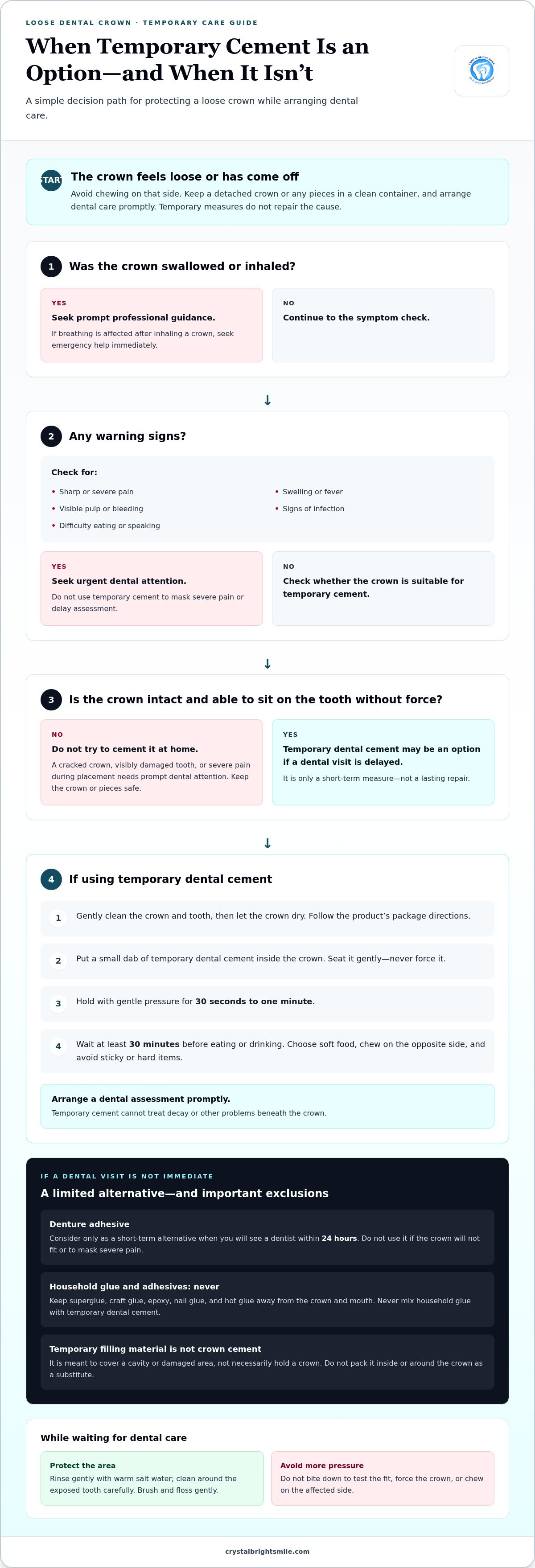
If you’re wondering how to fix a loose dental crown at home temporarily, over-the-counter dental cement may help as a short-term measure when you can’t see a dentist right away. It isn’t a lasting repair: a loose crown needs prompt dental attention. Sharp pain, swelling, fever, or visible pulp call for urgent care. Don’t use household glue or other adhesives.
A wobbly crown may seem like a small problem, but it can point to weakened bonding or an issue with the tooth underneath. Protect the tooth without forcing the crown or delaying dental care.
Learn when temporary dental cement may be appropriate, how to handle a loose crown, and which warning signs need prompt attention. We’ll also cover common causes, including everyday wear and grinding, and practical habits that can help reduce future problems.
Table of Contents
When is a loose crown considered an urgent dental issue?
Contact a dentist promptly about a loose crown and arrange an appointment as soon as possible. If you swallow or inhale the crown, seek dental care promptly.
Check the Crown and ToothExamine the crown and exposed tooth in a mirror under good light. Check whether the crown is intact or has a crack, sharp edge, or missing piece. Look for a broken tooth or visible soft area. Don’t force a crown that resists movement, and avoid chewing on it while you inspect it.If the crown is fractured, place every piece in a clean container for your dentist. The dentist may be able to repair or reattach it. Don’t test the fit by biting down: pressure can shift the crown or irritate the exposed tooth.
Recognize Risks Beneath a Loose CrownArrange dental care promptly, even if the crown is still partly in place. A wobbly crown can signal weakened bonding or a problem beneath it. The natural tooth under a crown can develop decay, although the crown itself cannot get a cavity. Decay, a failing root canal, or tooth damage may need treatment before the crown can be secured.Watch for sharp or severe pain, swelling, fever, visible pulp, bleeding, or signs of infection. These symptoms call for urgent dental attention, as do difficulty eating or speaking. If the crown comes off while you’re chewing, stop and check whether it may have been swallowed or inhaled. Seek immediate care if so.
Gently rinse your mouth with warm salt water, then carefully clean around the exposed tooth. Brush and floss gently without pulling at the crown or loosening it further. If the crown is detached, rinse it carefully and let it dry before handling it. Gently clean its inner surface, as trapped food or debris can interfere with temporary measures.Don’t use household glue or other adhesives on the crown. Avoid chewing on the affected side while the tooth is exposed. A loose crown won’t tighten by itself, so cleaning and careful handling are temporary protections, not a repair.
If the crown won’t stay in place, dental wax can cover a sharp edge or sensitive exposed area. Use a small amount and press it gently over the area to create a protective barrier. Wax may shield the tooth and reduce sensitivity while you wait for dental care, but it won’t secure the crown or treat decay underneath.Use wax only as a temporary measure, and avoid chewing on that side. If it irritates the area or the tooth remains exposed, don’t keep adding material to force a covering. Contact a dentist and explain whether the crown is partly attached or fully detached.
Call a dentist promptly and describe the crown’s condition and any symptoms. Report sharp pain, swelling, fever, visible pulp, bleeding, signs of infection, or difficulty eating or speaking. These details help the office understand the urgency. Don’t wait for a loose crown to stabilize on its own.If breathing is affected after you inhale a crown, seek emergency help immediately. A swallowed crown also requires prompt professional guidance, particularly if pain or difficulty swallowing follows. Keep any remaining pieces and bring them to your dental appointment so the dentist can assess the damage and the underlying tooth.
Can I apply dental cement on a loose crown at home?
Over-the-counter dental cement may temporarily reattach an intact crown if you can’t see a dentist right away. Never use household glue or other non-dental adhesives on a crown.
Make sure the crown is intact and can sit on the tooth without force. Don’t try temporary cement if the crown is cracked, the tooth looks damaged, or placement causes severe pain. Those signs need prompt dental attention, not a home repair. Keep the crown safe and avoid chewing on that side while arranging care.
Choose Temporary Dental CementUse a temporary dental cement made for dental repairs, following its package directions. Clean the crown and tooth gently, then let the crown dry before applying cement. Place a small dab inside the crown and seat it gently, without forcing it. Hold it with gentle pressure for 30 seconds to one minute. Temporary cement is not a permanent fix.If using denture adhesive as a short-term alternative, do so only when you’ll see a dentist within 24 hours. Don’t use it to mask severe pain or a crown that won’t fit.
Avoid Household Glues and AdhesivesKeep superglue, craft glue, epoxy, nail glue, and hot glue away from your crown and mouth. Household adhesives aren’t dental cement and can make professional removal harder. They may also touch your gums or tooth as you position the crown. Don’t use any household adhesive just because the crown feels loose or you want it to stay in place.Never mix household glue with temporary dental cement. If you’ve already applied glue, don’t pull or pry at the crown. Contact a dentist for guidance.
Consider Temporary Filling MaterialTemporary filling material is meant to cover a cavity or damaged area, not necessarily to hold a crown in place. Don’t pack it inside the crown or around the tooth as a substitute for crown cement. Material in the wrong spot can prevent the crown from seating properly. Use only a product intended for your situation, and follow its directions.If the crown doesn’t fit comfortably, stop. Forcing it down can irritate the tooth or gums.
After applying temporary dental cement, wait at least 30 minutes before eating or drinking. Keep food soft, chew on the opposite side, and avoid sticky or hard items that could pull the crown loose. Contact a dentist promptly for a proper assessment and repair. Temporary cement or adhesive only protects the tooth briefly; it can’t treat decay or other problems beneath the crown.
Immediate steps for a loose crown
Act promptly to protect the exposed tooth and keep the crown safe. These steps can help limit irritation while you arrange dental care.
Act When a Crown Falls OffPick up the crown and place it in a clean, closed container. Bring it to your dental appointment, as the dentist may be able to repair or reattach it. Don’t wrap it in a tissue, where it could be lost. If it breaks, save the pieces too.Rinse your mouth gently with warm salt water. Carefully clean the inside of the crown, then let it dry before trying a temporary measure. Don’t scrub the exposed tooth or use household glue. If the crown is intact and fits easily, you may gently place it back without forcing it.
Seek Immediate Dental CareContact a dentist immediately for severe pain, bleeding, signs of infection, or difficulty eating or speaking. Sharp pain, swelling, fever, or visible pulp also call for urgent dental attention. Tell the office whether the crown is partly loose or has fallen off, and describe each symptom clearly.If you swallowed or inhaled the crown, seek immediate care. A crown can be swallowed while chewing, and inhaling it can pose an urgent risk. Don’t wait for a routine appointment if breathing is affected or you suspect it entered your airway.
Protect the exposed tooth while waiting for care. Rinse with warm salt water made with ½ teaspoon of salt in 8 ounces of water, twice daily. Brush and floss gently around the area, taking care not to dislodge a crown that remains attached. If the tooth feels sharp or sensitive, dental wax can cover it temporarily.
Choose soft foods and liquids until the crown is secured. Chew on the opposite side, and avoid sticky or hard foods that can pull at the crown or stress the exposed tooth. Choose a soft meal instead of crunchy snacks, for example, and keep food away from the affected area while chewing.
For discomfort, use ibuprofen or acetaminophen according to the package instructions. If you have an underlying health condition or concerns about a medicine, consult a pharmacist. If a crown falls off, arrange a dental visit within a few days to help prevent tooth shifting and support proper recementation.A loose crown won’t tighten on its own. A dentist needs to assess the underlying tooth and determine whether the crown can be recemented or needs another repair. Keep the crown and any fragments ready for your appointment.
Preventing future crown problems
Daily care and mindful eating can reduce avoidable stress on a crown. Build these practical habits into your routine.
Prevent Crown Damage and LossAvoid chewing ice, hard sweets, and sticky foods that can crack or pull at a crown. The Cleveland Clinic recommends avoiding hard or sticky foods and keeping regular dental visits. If you grind your teeth, ask about a nightguard to reduce pressure on your crown. Clenching and grinding can strain dental work over time.Don’t use your teeth to open packages or bite hard objects. These habits can damage a crown, even when it feels secure. If a crown feels loose, shifts while you eat, or looks broken, arrange dental care promptly rather than waiting for it to fall out.
Maintain Crown CareBrush twice daily and floss around the crown once a day. Clean gently along the gumline, where plaque can collect around the crown’s edge. Slide floss out through the side rather than lifting it between the teeth. This helps avoid pulling upward on a crown that may already be loose.Keep up with regular dental visits so your dentist can examine the crown and surrounding tooth. A crown itself can’t develop a cavity, but decay can affect the natural tooth underneath. Early attention to changes in fit or comfort can help identify problems before the crown comes loose.
Notice changes while brushing and eating. Pay attention if the crown feels different, moves, or catches floss. Don’t repeatedly push or wiggle it to test the fit. If it shifts, stop chewing on that side and contact a dentist promptly. A crown should feel secure during ordinary use.
Protect the crown during meals by choosing foods that don’t require forceful biting. Cut firmer foods into smaller pieces, and chew evenly when the crown feels comfortable. Avoid sticky treats that cling to dental work. These adjustments reduce unnecessary pulling and pressure while chewing.
Keep realistic expectations about crown lifespan. With good care, a dental crown may last 15 to 30 years, but wear and underlying tooth health affect its durability. If a crown becomes loose or falls out, don’t try to make it permanent with household glue. Contact a dentist immediately for guidance, especially if the tooth becomes painful or the crown is broken.
Causes of crown loosening
A crown can loosen if its cement weakens, the tooth changes, or repeated pressure affects the fit. Identifying a possible cause helps explain why simply reattaching it may not solve the problem.
Consider whether the crown’s cement has weakened over time. Dental crown cement may weaken over 5-15 years of normal use. Everyday wear can gradually reduce how securely the crown stays attached. If an older crown becomes loose, the bond may be part of the issue, but the underlying tooth still needs assessment before a dentist decides whether to reattach it.Don’t assume age alone explains a loose crown. It can come loose earlier if hard or sticky foods pull at it, or if the underlying tooth changes. A dentist checks the crown’s fit and the tooth’s condition before deciding on a repair.
Consider whether hard or sticky foods may have stressed the crown. Biting a hard sweet can put a sharp load on one spot, while sticky food can tug as you chew. Everyday chewing also contributes to wear. These forces may weaken the bond or damage the crown, especially if it already feels unstable.Grinding and clenching put repeated pressure on teeth. If you grind at night, the extra force can affect crowns as well as natural teeth. Ongoing pressure without a nightguard can loosen dental work. Tell your dentist if you wake with jaw tension or notice grinding, as these details help explain the pattern.
Pay attention to changes in the tooth beneath the crown. Decay can affect natural tooth structure under a crown, even though the crown itself cannot develop a cavity. As the tooth changes, the crown may lose the support or fit it needs. A loose crown can therefore signal more than a cement problem.A failing root canal may also contribute to a loose crown. Pain isn’t the only clue, so report changes in fit, discomfort, or chewing. The dentist needs to examine the crown and underlying tooth to tell weakened cement apart from decay, damage, or another problem.
Think about what happened before the crown shifted. A recent hard bite, persistent grinding, or gradual loosening can each point to a different possible cause. Note when the crown began moving and whether chewing triggers pain. These observations help your dentist assess what may have weakened the bond or changed the tooth’s support.Arrange dental care rather than repeatedly trying to reattach a crown that keeps loosening. Temporary placement won’t correct decay, a failing root canal, or ongoing grinding pressure. Addressing the underlying cause is essential to restoring a stable fit and reducing the chance that the crown will come loose again.
Crystal Bright Smile: Dental Implants
Crystal Bright Smile can assess a loose crown and discuss restorative options based on the tooth’s condition. If the natural tooth can be preserved, treatment may focus on the crown or another restoration. If it cannot be restored, a dental implant may be considered as a replacement. Recommendations depend on an examination, your dental condition, goals, and clinical needs.
A loose crown alone doesn’t mean you need an implant. First, determine why it shifted and whether the underlying tooth can support a restoration. Crystal Bright Smile provides dental crowns and implants in Tujunga, California, serving nearby communities including Sunland, La Crescenta, Montrose, Shadow Hills, and Lake View Terrace.
Contact Crystal Bright Smile to arrange an examination and discuss your next steps.
Take the Next Step Toward a Secure Smile
Knowing how to fix a loose dental crown at home temporarily can help protect the tooth while you arrange care, but lasting confidence starts with addressing why the crown shifted. Don’t let a temporary measure delay an evaluation. A clear plan can help you understand whether the crown can be restored or another approach is needed.
Crystal Bright Smile offers dental implants, Invisalign, and porcelain veneers. Recommendations depend on your examination, dental condition, goals, and clinical needs. If your crown feels unstable, book an appointment to discuss the tooth and suitable next steps.
Contact Crystal Bright Smile for help and take a practical step toward a healthier, more confident smile.
Frequently Asked Questions
Should a permanent crown wiggle?
No. A permanent crown shouldn’t move during normal speaking or eating. If it feels unusually high when your teeth meet or your bite suddenly feels different, mention that during your dental assessment. These sensations can help distinguish a fit concern from general sensitivity. Don’t try to adjust the crown yourself, as changing its position can make it harder to assess accurately.
What Happens If You Ignore a Loose Crown?
Leaving a loose crown unassessed can allow the fit problem or its cause to continue. A shifting crown may eventually come off, and a dentist then needs to assess both the restoration and the supporting tooth. If you’re delaying care because symptoms seem mild, note whether the movement changes over time and share that timeline at your appointment.
What does it mean when your crown is wobbly?
A wobbly crown means its fit isn’t stable. For a clearer picture, note when you first noticed movement, whether it happens while biting or at rest, and whether the crown’s appearance has changed. Don’t repeatedly move it to test the sensation. These observations can help guide an examination of the crown and the tooth supporting it.
What is a safe temporary fix for a crown that's come loose?
A temporary measure should protect the area without forcing the crown into a position that feels wrong. If you’re considering how to fix a loose dental crown at home temporarily, first check whether the crown is intact and sits naturally. If it doesn’t, leave it out rather than pressing harder. A dentist still needs to assess the fit and determine the lasting repair.
What should you do immediately if a dental crown becomes loose?
Note when the looseness began and what you were doing, such as biting a hard item or eating sticky food. Share that context when arranging dental care. If the crown is still attached, avoid repeatedly checking its movement with your tongue. Keeping track of changes in comfort or fit can make your appointment more focused.
How can you temporarily reattach a loose dental crown safely at home?
Temporary reattachment is only a bridge to professional care, not a permanent repair. Knowing how to fix a loose dental crown at home temporarily also means knowing when not to try: don’t reattach it if the crown is damaged, won’t sit naturally, or causes severe pain. Keep it safe and arrange an examination so the dentist can assess the crown and supporting tooth.
Can you use temporary dental cement for a loose crown, and how do you apply it?
Temporary dental cement may be a short-term measure when the crown is intact and suitable for reseating. Read the product directions fully before starting, and don’t add more material to compensate for a poor fit. If the crown rocks, sits unevenly, or feels wrong after placement, stop instead of making repeated adjustments. A dentist needs to assess the result and plan lasting care.
How should you clean and store a loose crown until a dentist visit?
Handle a loose crown over a clean surface, such as a folded towel, to reduce the chance of dropping it. After gently rinsing it, place it in a small, clean, covered container and keep it somewhere easy to remember. Bring it to your appointment even if it looks worn or damaged; its condition can help the dentist assess possible repairs.

Comments