


Periodontal Treatment for Bad Breath in Tarzana

Persistent bad breath can signal a gum-health problem, not just a need for fresher breath. Effective periodontal treatment at Crystal Bright Smile may help when odor is linked to gum inflammation or bacteria around the teeth. Professional cleaning removes buildup, while scaling and root planing clean below the gumline. An evaluation can also consider other possible causes, including dry mouth or certain medications.
Brushing, flossing, and mouthwash can support a fresh-feeling mouth, but they may not remove hardened tartar or explain recurring odor. If you’re considering periodontal treatment for bad breath, a professional evaluation at our Tujunga office can help identify what may be behind it.
This guide explains how gum care may address gum-related odor, what an evaluation can involve, and which daily habits support gum health between professional visits. Understanding possible causes can help you have a more focused conversation about care.
Table of Contents
Scaling and root planing
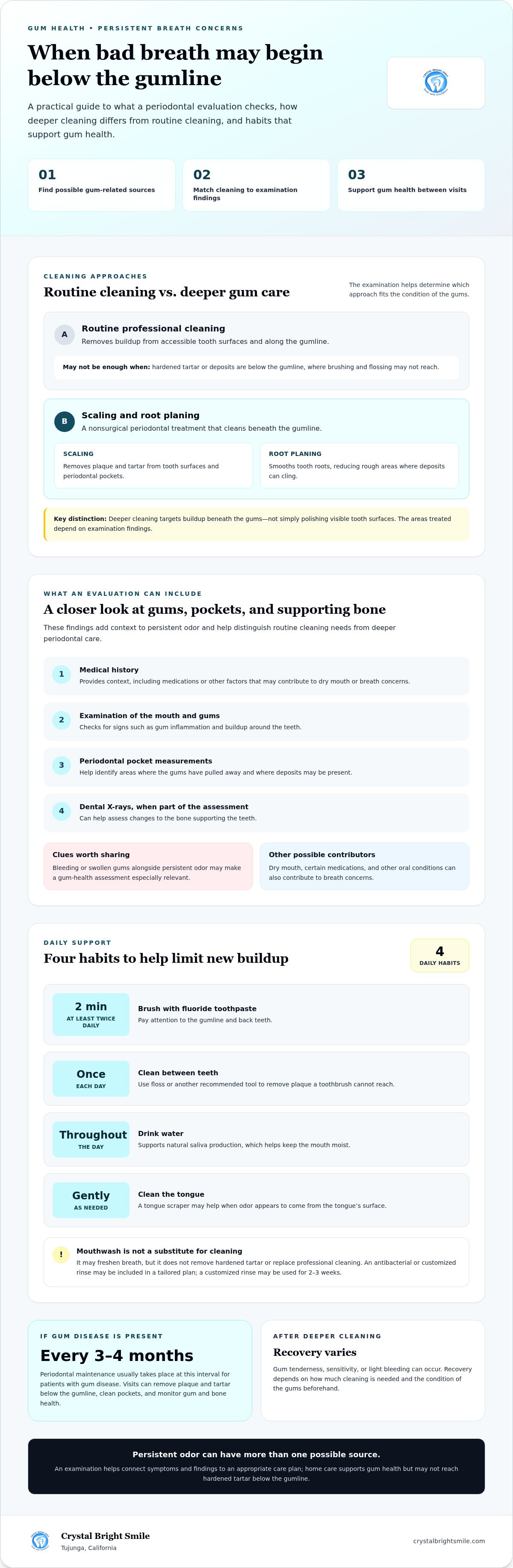
Scaling and root planing is a nonsurgical periodontal treatment that cleans beneath the gumline. Scaling removes plaque and tartar from tooth surfaces and periodontal pockets. Root planing smooths the tooth roots, reducing rough areas where deposits can cling. These steps target places a toothbrush and floss may not reach, especially when gum pockets have formed.
A dental evaluation helps determine whether this deeper cleaning fits the condition of your gums. The clinician examines your mouth and measures periodontal pockets to find areas affected by buildup. For example, tartar below the gumline calls for a different approach than plaque on an exposed tooth surface. Gum disease can also develop without pain, so symptoms alone may not reveal its extent.
During treatment, the clinician works along affected teeth to remove deposits and clean root surfaces. The focus is buildup beneath the gums, not simply polishing visible tooth surfaces. The extent and location of deposits determine which areas need attention. If you’re considering periodontal treatment for bad breath in Tarzana, an examination can help determine whether gum-related bacteria may be causing the odor.
Scaling and root planing may be part of care for chronic bad breath when bacteria are trapped below the gumline, but it does not address every possible cause. Dry mouth, certain medications, and other oral conditions can also contribute, so identifying the source matters when choosing care.
After treatment, follow your dental professional’s instructions for cleaning treated areas at home. Daily brushing and cleaning between teeth help limit new plaque, while recommended maintenance visits allow the gums to be monitored. If odor or gum symptoms continue, note what has changed and when it occurs. This information can guide further evaluation instead of relying only on mouthwash or mints.
Before the procedure, ask which areas need scaling and root planing and what home-care routine to follow afterward. The answers should relate directly to examination findings, such as pocket measurements and deposits below the gumline. This makes the treatment plan specific to the areas needing care and gives you clear steps to support gum health between visits.
How Periodontal Treatment Improves Bad Breath?
Short-term effects of periodontal treatment can include gum tenderness, sensitivity, or light bleeding. Recovery varies depending on how much cleaning is needed and the condition of the gums beforehand.
Professional cleaning can reduce odor when plaque and bacteria collect along the gumline or inside periodontal pockets. It can also reach areas that brushing and flossing may miss. Tongue scraping may help when the tongue contributes to odor. These steps target possible sources rather than simply masking symptoms with mints or gum.
Daily habits help limit new buildup between professional visits. Follow a consistent routine:
Brush for two minutes at least twice daily with fluoride toothpaste, paying attention to the gumline and back teeth.
Clean between teeth once a day with floss or another recommended tool to remove plaque where a toothbrush cannot reach.
Drink water throughout the day to support natural saliva production, which helps keep the mouth moist.
Clean the tongue gently with a tongue scraper when odor appears to come from its surface.
Choose home-care tools for the areas your routine misses. A water flosser can help clean between teeth, while a tongue scraper targets residue on the tongue. Mouthwash may freshen breath, but it doesn’t remove hardened tartar or replace professional cleaning. An antibacterial rinse may be part of a tailored plan; a customized rinse may be used for 2-3 weeks to reduce unwanted bacteria.
Notice what affects your breath. For example, persistent odor with bleeding gums may point to gum inflammation, while a dry-feeling mouth may suggest reduced saliva. Certain medications and medical conditions can also contribute. Share these details during an evaluation so the assessment considers more than oral hygiene alone.
Keep brushing carefully in the morning and before bed, and replace your toothbrush regularly. If odor continues despite daily cleaning, arrange an evaluation to look for gum disease or another source. A professional dental cleaning can help remove buildup that home care cannot reach, while an examination helps guide next steps. Consistent hygiene supports oral health, but advanced gum problems may need deeper professional care.
For early gum infections, care may include better at-home hygiene or more frequent hygiene visits. Moderate gum infections may require deeper cleaning combined with regular hygiene. Bad breath can signal bacterial buildup or gum inflammation, so addressing halitosis may be part of periodontal care.
Professional cleanings and periodontal evaluation
A periodontal evaluation examines gum health and helps distinguish routine cleaning needs from deeper periodontal care. PPO dental insurance may cover deep cleanings or gum therapy for halitosis when treatment is medically necessary.
Periodontal Evaluation and Maintenance
A dental evaluation can include reviewing your medical history, examining your mouth, measuring gum pockets, and taking dental X-rays to assess bone loss. Each step adds context: pocket measurements show where gums have pulled away, while X-rays help assess supporting bone. Together, these findings help determine whether gum disease may contribute to persistent odor.
For patients with gum disease, periodontal maintenance usually takes place every three to four months. These visits remove plaque and tartar below the gumline, clean periodontal pockets, and monitor gum and bone health. A dentist may also use antimicrobial agents during maintenance to reduce bacteria and support healing.
Periodontal Treatment Versus Routine Cleaning
A routine cleaning focuses mainly on tooth surfaces above the gumline. Periodontal treatment addresses deeper pockets where plaque, tartar, and bacteria collect. This distinction matters when bleeding gums or persistent bad breath occur alongside signs of gum inflammation. A dental professional evaluates your mouth to determine which areas need attention.
Preventive exams and routine cleanings still play an important role. Comprehensive dental exams are recommended every six months, while professional teeth cleanings are recommended every six to 12 months. These visits help monitor changes and remove buildup before it hardens into tartar. Flossing between teeth each day supports that care, but cannot remove tartar once it forms.
Cleaning Below the Gumline
Plaque can harden into tartar, creating rough surfaces where bacteria can multiply. Once deposits form below the gumline, brushing and flossing at home cannot remove them. Professional periodontal cleaning reaches these areas and removes buildup from periodontal pockets, where bacteria may contribute to inflammation and odor.
After cleaning, maintenance visits help remove new deposits and track changes in the gums. Regular checkups also give the dental team a chance to review symptoms, home-care habits, and medical factors that may affect oral health. If odor persists despite cleaning, an evaluation can guide the next step, including whether deeper therapy is appropriate or another source needs attention.
Causes of halitosis and identifying its source
Persistent bad breath can result from gum disease, dry mouth, or other oral and medical causes. Identifying the source helps match the next step to the problem.
Common Causes of Persistent Bad Breath
Oral bacteria can produce sulfur compounds that create unpleasant breath. Plaque and tartar give bacteria places to collect, while gum disease can form pockets around teeth. Inflammation may occur without pain, so odor can be an early clue worth discussing during a dental evaluation.
Other possible causes include tobacco use, mouth breathing, and odorous foods such as garlic, onions, and spices. A cracked or infected tooth can also harbor odor-causing bacteria. Notice whether your breath changes after particular foods or whether odor accompanies bleeding gums, then share those details with the dental team.
Medical Causes and Treatment Options
Dry mouth reduces saliva, which normally helps clear food particles and bacteria. Certain medications and medical conditions can also contribute to persistent odor. Diabetes and digestive disorders are possible systemic causes. If dry mouth began after starting medication, mention that timing during an evaluation.
Care depends on the suspected cause. If gum inflammation or tartar is present, a dental professional can assess whether periodontal therapy is appropriate. Medical treatment may address a relevant condition, such as prescribed antibiotics for pharyngitis or proton pump inhibitors for GERD. These medicines treat specific conditions, not every case of halitosis.
Evaluating Other Possible Causes
A useful assessment considers oral and medical factors together. The dental professional can examine your gums and teeth for inflammation, pockets, tartar, cracked teeth, or infection. Sharing information about medications, dry-mouth symptoms, tobacco use, and food triggers gives a clearer picture than focusing on odor alone.
If the tongue appears to be the source, tongue scraping may be considered as part of oral care. If dental findings do not explain chronic odor, medical conditions or medications may warrant attention. Note when symptoms occur, such as after waking or following a meal, and bring that pattern to your appointment.
Before treatment, an evaluation should distinguish a symptom from its cause. For example, gum bleeding alongside persistent odor may point to gum inflammation, while dry mouth after starting medication suggests another factor to discuss. A periodontal procedure can address gum-related buildup, but it will not resolve odor caused by every medical or lifestyle factor.
Periodontal care in Tarzana
Tarzana patients with persistent breath concerns can have a periodontal evaluation to understand whether gum disease may be involved. Symptoms, gum measurements, and dental findings help determine the next steps.
Finding Tarzana Periodontal Care
At your appointment, describe specific changes such as bleeding during brushing, swollen gums, or persistent odor. Ask how the examination will assess gum pockets and supporting bone, and how those findings relate to your symptoms. A clear explanation connects clinical findings with the recommended care.
Periodontists complete three years of specialty training beyond the four years required for general dentistry. This distinction can help you understand a provider’s training when considering periodontal care. The appropriate treatment still depends on examination findings, gum condition, and individual clinical needs.
Periodontist Treatment for Gum Disease and Bad Breath
Periodontal care can address gum disease and bacterial buildup that may contribute to bad breath. During an evaluation, discuss whether gum inflammation, periodontal pockets, or tartar could be related to the odor. The findings help determine whether deeper cleaning or another form of care is appropriate.
Reviews can offer patient perspectives on communication and appointments, while credentials describe education and specialty training. Look for recurring themes rather than relying on one comment. At your visit, ask the provider to explain the examination results, treatment options, and how progress will be monitored.
For a more useful appointment, bring a brief history of your symptoms, changes in oral hygiene, and relevant medical details. Mention whether odor occurs alongside bleeding gums or other noticeable changes. This context helps the dental professional assess possible gum-related causes and explain a practical care plan.
Common signs worth mentioning include red gums, bleeding while brushing or flossing, bad breath, and loose teeth. These symptoms do not establish a diagnosis, but noting when they occur can help a dental professional decide what to examine. Adults in the United States: almost half have some form of periodontal disease, so gum concerns are not unusual. That prevalence does not show whether a particular person has the condition. Gum disease can begin with gingivitis and, if untreated, may progress to periodontitis. Early-stage gingivitis can typically be reversed without damage, so raise changes promptly rather than waiting for discomfort.
During your visit, discuss factors that may affect gum health, including poor oral hygiene, smoking, hormonal changes, diabetes, some medications, and certain illnesses. Smoking is a significant risk factor for gum disease, so mentioning tobacco use gives the clinician relevant context. Do not assume any one factor is the cause; ask how it relates to your examination and symptoms. If findings suggest gingivitis, ask which daily-care changes and professional care are appropriate, and what signs should prompt follow-up. If deeper disease is found, request an explanation of its extent and the options for managing it. Track changes in bleeding, gum appearance, breath, or tooth stability and report them at later appointments.
Crystal Bright Smile: Dental Implants
Crystal Bright Smile offers dental implants for patients considering replacement of missing teeth, not as a treatment for gum-related bad breath. Persistent odor calls for an evaluation of its source first; active gum concerns need attention before restorative goals are considered.
At Crystal Bright Smile’s Tujunga, California office, an examination can help connect your dental condition and goals with suitable next steps. Dental implant recommendations and candidacy depend on your examination, clinical needs, and oral health. If you’re also interested in Invisalign, porcelain veneers, or teeth whitening, discuss those goals during treatment planning.
Take the Next Step Toward Fresher Breath
Persistent breath concerns can feel personal, but seeking an evaluation is a practical step toward understanding them. This article addresses periodontal treatment for bad breath in Tarzana; Crystal Bright Smile’s office is in Tujunga, California, serving nearby communities including Sunland, La Crescenta, Montrose, Shadow Hills, and Lake View Terrace.
The right approach depends on clinical findings and the source of the odor. Share your symptoms and oral health concerns at an appointment so the dental team can discuss appropriate next steps. Continue your daily oral hygiene while arranging care.
For an evaluation at its Tujunga office, contact Crystal Bright Smile. A thoughtful first step can help you move forward with greater clarity and confidence.
Frequently Asked Questions
How do I know if my bad breath is coming from my gums?
Bad breath alongside bleeding, swollen, or tender gums can point to a gum-related cause. Notice whether odor persists after brushing and cleaning between your teeth, and whether you also see redness or other gum changes. These clues do not establish the cause on their own. A dental examination can assess your gums and teeth and help distinguish gum disease from dry mouth, an infected tooth, or another contributor.
Is your gum disease over if the bleeding stops?
No. Bleeding stopping does not prove gum disease has resolved, because gum disease can occur without pain or obvious symptoms. Keep brushing gently and cleaning between your teeth, then attend the recommended dental follow-up. A professional can assess gum condition and pocket measurements instead of relying on bleeding alone. For example, gums that no longer bleed may still need monitoring if earlier findings showed periodontal pockets.
What Causes Halitosis?
Halitosis can result from oral bacteria, plaque, gum disease, dry mouth, certain medications, or medical conditions. Garlic, onions, and spices may also leave lingering odors, while tobacco use and mouth breathing can contribute. Consider the pattern: odor after a particular meal differs from persistent odor with dry mouth or gum symptoms. Sharing these details helps a dental professional assess possible causes.
What are the current treatments available for bad breath?
Treatment depends on the source. Professional cleaning can remove deposits, while deeper periodontal care may address buildup below the gumline. Tongue cleaning and daily brushing and flossing support home care. If dry mouth, medication, or another medical condition contributes, the appropriate response may involve addressing that factor with the relevant healthcare professional. Mints and mouthwash can temporarily freshen breath but may not resolve its underlying cause.
What periodontal conditions can cause bad breath?
Gingivitis and periodontitis can contribute to odor when inflammation and bacteria affect the gums. Periodontal pockets create spaces where bacteria and debris can collect, making home cleaning more difficult. Bleeding during brushing, swollen gums, or loose teeth can accompany gum disease, but symptoms vary. An examination helps determine whether gum changes are present and whether periodontal care suits the findings.
How do dentists diagnose gum disease-related halitosis?
Dentists look for gum inflammation, plaque, tartar, and changes around the teeth, then consider those findings alongside symptoms and health history. Pocket measurements help assess spaces between gums and teeth; dental X-rays can show supporting bone. Mention dry mouth, medication changes, tobacco use, and when odor occurs. This context helps distinguish gum-related halitosis from other oral or medical causes.
What periodontal treatments help eliminate bad breath?
For odor associated with gum disease, treatment may include professional periodontal cleaning or scaling and root planing, followed by ongoing maintenance when needed. The goal is to address bacterial deposits and gum inflammation, not simply cover odor. Daily brushing and cleaning between teeth support professional care. If the assessment points to dry mouth, an infected tooth, or another cause, the treatment plan should address that source instead.
What should patients expect during scaling and root planing?
Scaling and root planing cleans deposits from tooth surfaces and below the gumline, then smooths root surfaces. The dental professional first assesses your gums and identifies areas needing treatment. Ask which areas will be treated and what home-care steps to follow afterward. Share relevant medical history and medications before the procedure, as these details help inform safe, personalized planning.

Comments