


Questions to Ask About Veneer Costs and Your Smile Plan

The shade you love is only one part of a veneer plan; cost, tooth preparation, and bite fit matter just as much. The most useful questions to ask your dentist before getting veneers cover the full treatment scope, including what affects the estimate and whether other dental needs should be addressed first. The price depends on the case and is given after a quote request; factors include the number of teeth treated, material, preparation, and any preceding care.
It’s natural to want a brighter, more even smile and a clear understanding of the process before deciding. Ask how your dentist will choose a result that suits your features, assess your bite, and select a natural-looking shade. This guide covers cost and insurance, shade matching, bite considerations, and cosmetic experience, so you can arrive at a consultation prepared to discuss your options.
Table of Contents
1. Q: What is the cost of dental veneers?
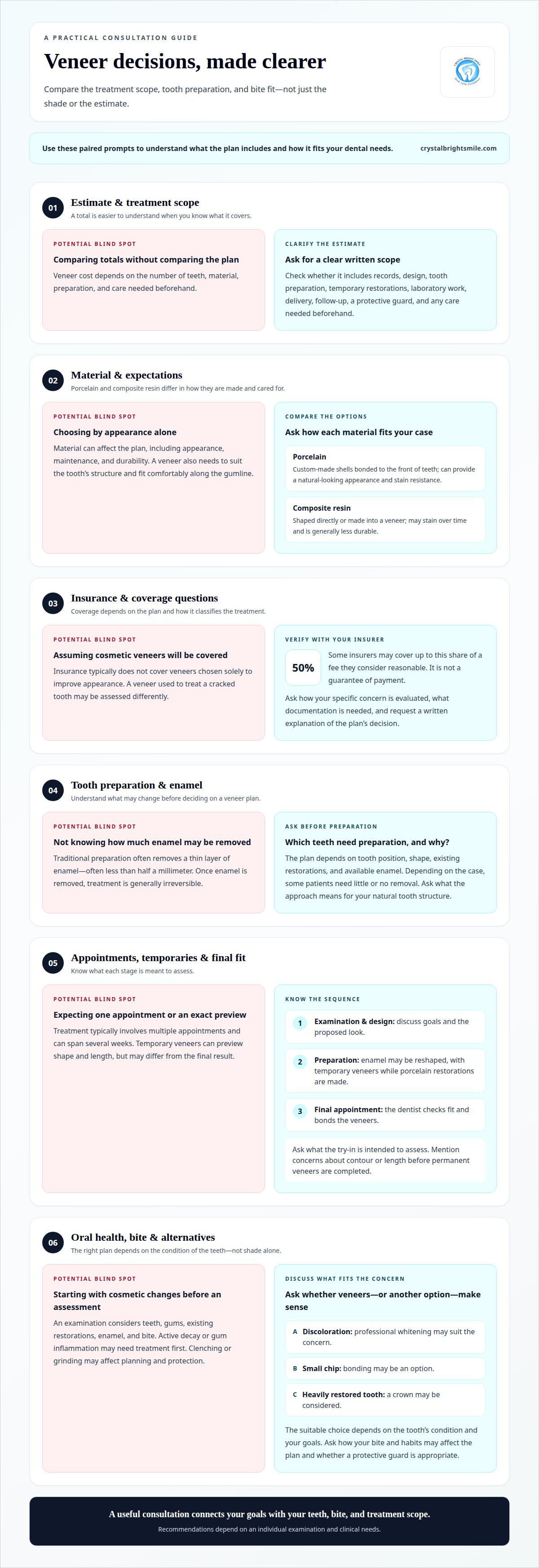
The cost depends on the treatment plan, including the number of teeth, veneer material, preparation, and any care needed beforehand. Crystal Bright Smile provides costs based on the planned treatment. Ask for an estimate that explains the proposed procedures and scope, rather than comparing totals without knowing what treatment is included.
Two common veneer types are porcelain and composite resin. Porcelain veneers are custom-made shells bonded to the front of teeth, while composite resin is shaped directly or made into a veneer. Porcelain can provide a natural-looking appearance and stain resistance; composite resin may stain over time and is generally less durable.
Start with oral health, not shade selection. A dental examination assesses your teeth, gums, existing restorations, enamel, and bite. Active decay or gum inflammation may need treatment first. Ask whether your teeth are suitable for veneers and whether existing fillings or damage affect the plan.
Veneer treatment typically involves multiple appointments, with the sequence depending on your case. An initial visit may include an examination and a discussion of your goals and design. Preparation may involve reshaping enamel, followed by temporary veneers while porcelain restorations are made. At the final appointment, the dentist checks the fit and bonds the veneers.
The process from consultation to final placement can span several weeks. Ask what each appointment involves, when temporary veneers will be placed, and what the try-in is intended to assess. Temporary veneers can preview shape and length, but may differ from the final result. If the contour or length feels wrong, mention it before the permanent veneers are completed.
Clarify what the estimate covers. Ask whether it includes records, design, tooth preparation, temporary restorations, laboratory work, delivery, follow-up, a protective guard, and any care needed beforehand. Find out which steps are included and which may affect the plan. A clear scope makes the estimate easier to understand than a total without details.
Also ask whether another treatment could address your concern. Professional whitening may suit discoloration, while bonding can repair some small chips. A crown may be considered for a heavily restored tooth, while a healthy tooth may not need restoration. The right option depends on the tooth’s condition and your goals, so discuss alternatives before deciding.
2. Are veneers a covered insurance benefit?
Dental insurance typically doesn’t cover veneers chosen solely to improve appearance. Coverage may be possible when a veneer treats a cracked tooth, because the treatment has a restorative purpose. Some insurers may cover up to 50% of a fee they consider reasonable. That figure isn’t a guarantee of payment; coverage depends on the plan’s rules and how it classifies the treatment.
Before scheduling treatment, ask your insurer how it evaluates veneers for your specific concern. A cracked front tooth, for example, may be assessed differently from healthy teeth receiving veneers to change their color. Ask whether the plan needs documentation of the tooth’s condition and what information is required for review. Request a written explanation so you can compare the proposed treatment with your benefits.
Insurance is only one part of the decision. A dental examination assesses whether your teeth and gums are healthy enough for veneers. Active decay or gum disease should be addressed first. The assessment also considers enamel, existing restorations, tooth position, bite forces, and oral hygiene. A heavily restored tooth may call for a crown instead, while a healthy tooth might not need restoration.
Ask how the proposed material fits your dental needs and goals. Porcelain and composite veneers differ in appearance, maintenance, and durability. A veneer must also suit the tooth’s structure and sit comfortably along the gumline. Poor contours or excessive thickness can irritate gums and make cleaning harder. Discuss how brushing, flossing, and routine dental visits help care for treated teeth.
Veneers require ongoing care and are not permanent. Their condition can be affected by gum changes, decay, fractures, and shifts in your bite. Ask what follow-up care the plan includes and whether a guard is appropriate if you clench or grind. These details help you understand the continuing commitment, not just the initial placement.
Clarify how insurance decisions affect your treatment choices, not your oral health priorities. If decay or gum inflammation needs attention first, address it before cosmetic work. Then compare the proposed veneer plan with alternatives suited to your concern, such as whitening for discoloration or bonding for a small chip. An individualized porcelain veneer consultation can help connect your goals with your dental condition and treatment options.
3. Appointment preparation and shade matching
Traditional veneer preparation removes a thin layer of enamel, often less than half a millimeter. Depending on tooth position and the planned correction, some patients need little or no removal. Once enamel has been removed, treatment is generally irreversible because the prepared tooth cannot simply be left uncovered.
Ask the dentist to explain which teeth need preparation and why. The plan should account for each tooth’s position, shape, existing restorations, and available enamel. For example, adding material to a tooth that already projects forward may create bulk, while reshaping a prominent tooth can make room for a balanced contour. One of the questions to ask your dentist before getting veneers is how much enamel the plan removes and what that means for your natural tooth structure.
No-prep or minimal-prep veneers preserve more natural tooth structure, but are suited to cases needing modest changes. They may not be appropriate if adding material would make teeth look too thick or alter the gumline. Ask what the proposed design will change and how the dentist has assessed your bite and tooth position. A “no-prep” label alone doesn’t show whether the approach suits your smile.
Shade matching is a collaborative design step. Tell the dentist whether you want subtle brightness or a more noticeable change, and discuss how the selected shade will coordinate with untreated teeth. Photographs, scans, impressions, and previews can help communicate color, length, shape, and surface character. They guide planning, but a preview doesn’t guarantee an identical final appearance.
If whitening is part of your smile goals, plan it before selecting a veneer shade. Whitening can change the shade of natural teeth and may affect the number or design of veneers planned. Avoid whitening strips right before shade matching. Limiting coffee, tea, and red wine for a day or two before the appointment may also help reduce temporary staining.
Ask how the dental lab receives your shade and design information and what happens if the color needs refinement. Temporary veneers can give you an early view of shape and length, though they may not match the final restorations exactly. If the shade or contour feels wrong, tell the dentist promptly, before permanent veneers are made. Early feedback gives the dental team a chance to consider refinements.
Before the consultation ends, make sure you understand the preparation plan, preview process, and shade-selection steps. Bring reference photos if they help describe your preferences, but use them to explain your goals, not as a promise of an identical result. Clear decisions about enamel, color, and contour help keep the treatment plan focused on your natural smile.
4. Bite evaluation and habits that can increase risk
A veneer’s edge meets opposing teeth when you bite, so the dentist should assess contact during biting and jaw movement. Ask where the edges will sit and how the planned shape fits your bite. Clenching or grinding adds repeated force that can stress porcelain veneers and affect their surface or appearance. Mention these habits before treatment, even if they mostly happen during sleep.
Active decay, gum disease, or a significant bite problem generally needs attention before veneers are placed. These issues affect the tooth structure supporting the restoration and can complicate planning. Ask how the examination evaluates your bite, gum health, and existing dental work. If you grind your teeth, ask whether a nightguard belongs in your care plan after placement.
Everyday habits matter, too. Chewing ice, biting nails, chewing pens, or opening packages with your teeth puts force on veneer edges. Hard candies and raw carrots can also create unwanted pressure. Cut firm foods, such as apples, into pieces instead of biting directly with your front teeth. Sticky foods, including caramel, can pull against restorations, so ask about practical food choices during follow-up appointments.
Temporary veneers need extra care while the final restorations are being made. Your dentist may advise avoiding very hard or sticky foods that could dislodge a temporary. Once permanent veneers are bonded, ask how to protect them during sports. A mouthguard helps shield teeth from impact during athletic activity. For people who clench or grind, a nightguard serves a different purpose by limiting direct tooth contact.
After placement, porcelain veneers shouldn’t change how you chew or speak once you’ve adjusted to them. If your bite feels uneven, a tooth hits first, or speech feels different, tell the dentist rather than trying to adjust your bite yourself. Follow-up appointments provide an opportunity to assess fit and comfort. Keep brushing and flossing, and avoid using your teeth as tools. These daily habits help care for veneers and the natural teeth around them.
Before treatment, ask how the bite assessment will guide veneer shape, edge position, and material choice. Discuss your habits, from nighttime grinding to nail biting, and ask which changes matter for your plan. Even a small change to tooth shape requires careful bite evaluation. Understanding these details helps you weigh your aesthetic goals alongside function and ongoing care.
5. Dentist’s smile-design philosophy and cosmetic dentistry experience
A thoughtful smile plan balances appearance with dental health. Ask how the dentist translates your goals into decisions about tooth shape, shade, and proportion. For example, explain whether you prefer a subtle refresh or a brighter, more noticeable change. The conversation should connect your preferences to your teeth, facial features, and clinical needs, rather than treating a reference photo as a ready-made design.
Cosmetic dentistry experience matters because veneer planning involves both aesthetic judgment and clinical assessment. Dr. Vera Akob is a cosmetic dentist trained at the USC School of Dentistry, with a focus on personalized, patient-centered care. Ask how she incorporates your priorities into the treatment plan and what examination findings influence the proposed design. Treatment recommendations depend on your dental condition, goals, and clinical needs.
Ask what you can review during the design process before final placement. Photographs, scans, impressions, and previews can help communicate shape, length, shade, and surface character. A preview can guide discussion, but it can’t promise an identical final appearance. If you like a reference image’s softer edges or brighter shade, describe those features specifically, then ask how they might translate to your smile.
Ask how the plan considers your smile as a whole. Find out which teeth show when you speak, how the proposed shade relates to untreated teeth, and whether existing dental work affects the design. A balanced result may involve decisions about symmetry and proportion, not simply matching every tooth to one color. Ask the dentist to explain the reasoning behind the planned number and placement of veneers.
Cosmetic experience also means having clear conversations about trade-offs. Ask what the proposed treatment changes, what it leaves untouched, and which alternatives might address your concern. Whitening may suit discoloration, while bonding may address a small chip. If veneers are recommended, discuss preparation, maintenance, and how your bite affects the plan. These details help clarify both the visual goal and the care involved.
Before committing, summarize your priorities and ask the dentist to reflect them back. If natural-looking shape matters more than maximum brightness, say so plainly. Ask what decisions remain open before the dental lab fabricates the final restorations, and how you can share feedback during the process. A cosmetic consultation can turn those preferences into a personalized plan; schedule a cosmetic consultation to discuss your smile goals and dental needs.
Crystal Bright Smile: Dental Implants
Crystal Bright Smile can help you explore smile treatment options, including dental implants when a missing tooth is part of your concerns. Implants address tooth replacement, while porcelain veneers focus on the appearance of existing teeth. The right direction depends on an examination, your dental condition, and your goals.
For cosmetic concerns, a personalized plan may also consider teeth whitening or Invisalign alongside veneers. Each option addresses different needs, so discuss what you hope to change and how your oral health shapes the recommendation. Crystal Bright Smile serves patients in Tujunga, Sunland, La Crescenta, Montrose, Shadow Hills, and Lake View Terrace, with treatment planning based on individual clinical needs.
Make Your Next Smile Decision With Confidence
Before you commit, make a short list of priorities: what you want to change, what you want to preserve, and what would make the result feel like you. The questions to ask your dentist before getting veneers can open a clearer conversation about your preferences and the clinical choices behind them. You don’t need every answer in advance. A focused discussion can help you understand your options and choose a next step that fits your goals.
Crystal Bright Smile offers porcelain veneers, Invisalign, and dental implants, with recommendations shaped by your examination, dental condition, and treatment goals. If you’re ready to talk through your smile plan, contact Crystal Bright Smile to arrange a conversation. Take the next step at your pace, with your priorities at the center.
Frequently Asked Questions
What is the cost of dental veneers?
The cost depends on the treatment plan and is provided after a quote request. Factors include how many teeth are treated, the material selected, preparation needs, and any dental care required beforehand. Ask for an itemized estimate that separates planned procedures and follow-up from optional services. For example, clarify whether a proposed protective guard or temporary restorations appear in the written scope.
Are there any downsides to getting veneers?
Yes. Veneers can involve enamel removal, and prepared teeth generally need ongoing coverage. They can also chip, fracture, or need replacement, while changes in gums or bite may affect their appearance over time. If you hope to correct one dark tooth, for example, ask whether whitening or bonding could meet that goal with less alteration to the tooth.
How long will they last?
Porcelain veneers can last 10 to 15 years or longer with proper care, though their lifespan varies with oral hygiene, bite forces, and maintenance. Treat them as restorations that need routine attention, not as permanent or maintenance-free. If a veneer feels loose or its edge changes, arrange a dental assessment rather than waiting for a routine cleaning.
If a patient is a bruxer (grinds teeth), will they be able to have veneers if desired?
Grinding doesn’t automatically rule out veneers, but it should be part of treatment planning. Repeated force can stress restorations, so tell the dentist about daytime clenching, nighttime grinding, or jaw soreness. A nightguard may be recommended to protect your teeth. Ask how grinding affects the proposed veneer design and what protection might fit your habits.
Can veneers be repaired?
Some minor veneer chips may be repaired with resin selected to match the restoration. A completely broken veneer generally needs replacement rather than repair. The right response depends on the damage and the tooth beneath it. If you notice a rough edge or visible chip, avoid testing it by biting hard foods and arrange an assessment to determine the next step.
What is an E-max porcelain veneer, and is it strong?
E-max veneers are made from lithium disilicate-reinforced porcelain. The material’s listed strength is 350-450 MPa. Strength alone doesn’t determine whether it suits a particular tooth: placement, bite forces, tooth condition, and design also matter. Ask how the material’s appearance and functional properties fit your treatment plan, especially if you clench or have a heavy bite.
Can I see some examples from your previous patients?
Ask whether the dentist can discuss relevant veneer cases while respecting patient privacy. A useful comparison shows details related to your goals, such as changes to tooth length, shape, or shade. Ask what an example can and can’t tell you about your own treatment. Another person’s smile is a reference for discussion, not a promise of identical results.
Are veneers a covered insurance benefit?
Plans typically exclude veneers used only for cosmetic changes, though coverage may be considered when treating a cracked tooth. Some insurers may cover up to 50% of a fee they consider reasonable. Before treatment, ask how your plan classifies the specific tooth and what records it needs. An insurer’s allowance may differ from the total treatment estimate.

Comments