


Repair a Broken Denture Near Me in Sunland

Denture repair has no single turnaround time. If you need to repair a broken denture near you in Sunland, timing depends on what is damaged, whether the tooth or base needs attention, and the work required. A dental assessment helps determine the next steps.
A cracked base or damaged denture tooth can make eating and speaking difficult and affect your confidence. It’s understandable to want to know what happens next and when you may be able to use your denture comfortably again.
This guide explains what affects repair timing, what to expect at a denture visit, and how a dentist assesses damaged teeth and cracked bases. You’ll also learn how a broken or poorly fitting denture can irritate your gums and what information helps shape a repair plan. Knowing what to expect can make the next step more manageable as you work toward returning to your routine.
Table of Contents
How long does a denture repair take?
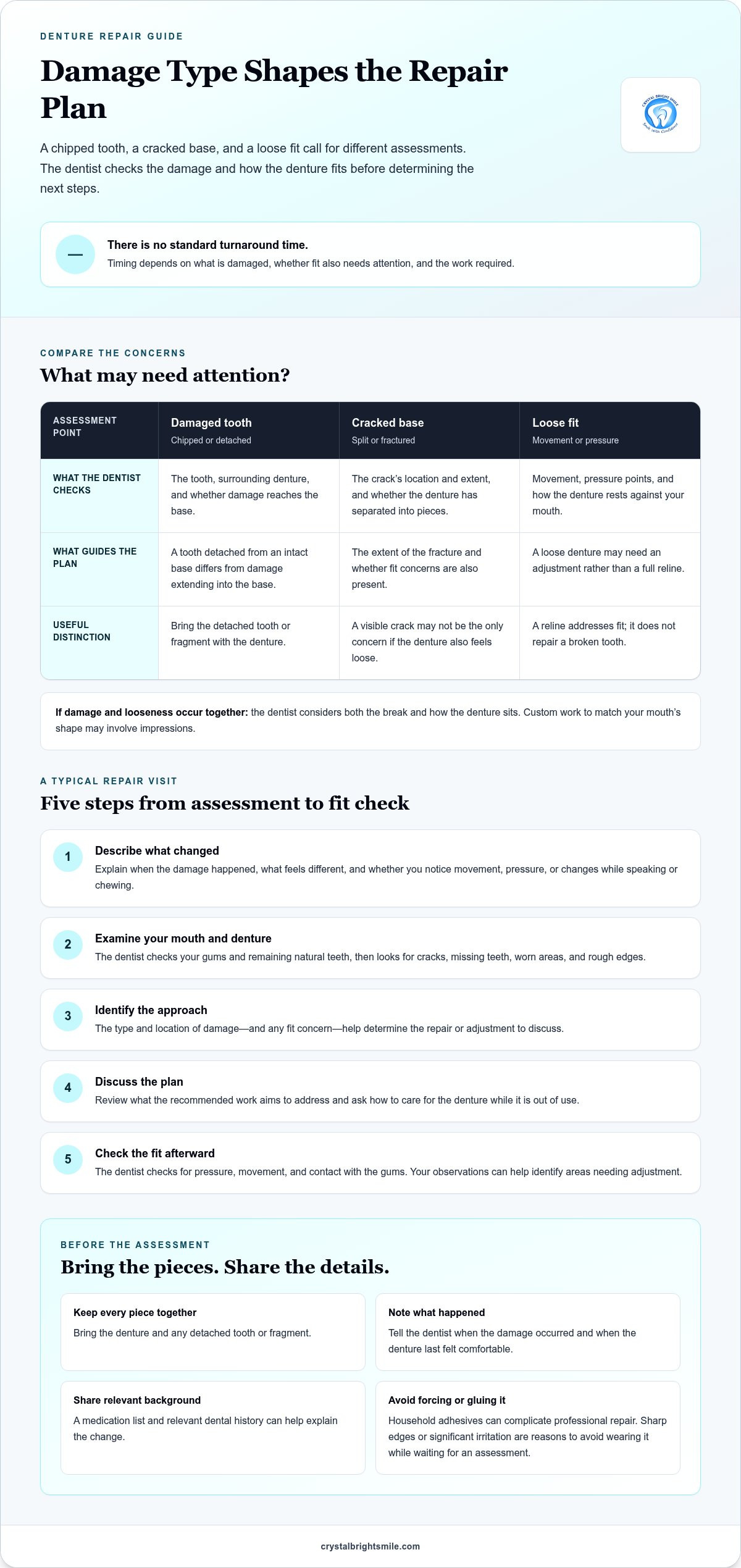
There’s no standard turnaround for denture repair. A chipped tooth, a split base, and a loose fit each require different work. The dentist first identifies the damage and checks how the denture fits. This assessment helps determine the repair steps and timing.
A small chip may need a different repair from a fracture across the denture base. The location and extent of the damage matter, as does whether the denture has separated into pieces. Bring every piece, including any detached tooth. This helps the dental team assess the damage and determine what comes next.
A reline addresses fit, not a broken tooth. Changes in the gums or jaw can create space between the denture and the tissues supporting it. During a reline, the denture’s inner surface is adjusted to improve how it sits. The work depends on the denture’s fit and condition.
A loose denture may need an adjustment rather than a full reline. The dentist checks for movement and pressure points, then identifies where correction is needed. For example, a denture that shifts while chewing may need a different adjustment from one that rubs a single spot on the gum. Continuing to wear a poorly fitting denture can cause discomfort and gum irritation.
A denture may need both repair and a reline. If it has a cracked base and feels loose, fixing only the visible crack may not solve the fit problem. The dentist considers both the damage and how the denture rests against your mouth. Impressions may be used when custom work is needed to match your mouth’s shape.
After a repair or reline, the dentist should assess the fit in your mouth. They can check for pressure, movement, and contact with the gums, then make adjustments if needed. Mention any difference you notice while speaking or chewing. These observations help distinguish a repair issue from a fit concern.
Dental insurance may cover some denture costs. Available payment plans and financing depend on the practice and individual eligibility, so review coverage and payment arrangements before treatment begins.
Until your assessment, don’t force a broken denture into place or try to glue it yourself. Household adhesives can complicate professional repair, and sharp edges may irritate gum tissue. Keep the denture and loose pieces together, and tell the dentist when the damage occurred. This information helps guide restorative care.
Denture repair visit steps
A denture repair visit typically starts with an assessment of your mouth and an examination of the denture to identify the work needed. The dentist considers gum health and any remaining natural teeth. Bring the denture and every broken piece to show what changed and where the damage occurred.
Describe the problem. Explain when the denture cracked, which tooth came loose, or what feels different. Mention specific effects, such as movement while speaking or pressure on one side. These details help focus the examination.
Assess your mouth and denture. The dentist checks your gums and remaining teeth, then inspects the denture for cracks, missing teeth, worn areas, and rough edges. A denture that appears repairable still needs a fit assessment before its repair plan is clear.
Identify the treatment approach. The type and location of damage guide the next step. A detached denture tooth differs from a fracture through the base. If looseness is also present, the dentist considers fit alongside the visible break.
Discuss the plan. The dentist explains the recommended repair or adjustment and what it aims to address. Ask how to care for the denture while it’s out of use, and share any concerns about chewing, speech, or sore areas.
Check the fit afterward. Once the repair work is complete, the dentist checks how the denture sits against your gums. Describe any pressure or shifting you notice. That feedback helps identify areas that may need further adjustment.
Some cases also call for impressions. If the denture needs a custom reline to improve its fit, an impression can capture the shape of the tissues supporting it. The dentist’s examination helps determine whether this step is appropriate.
Bring a list of medications and relevant dental history, and note when the denture last felt comfortable. These details can help explain whether the change was sudden or gradual. Avoid wearing a denture with sharp edges or one that causes significant irritation while waiting for an assessment.
If the exam finds broader tooth loss or a denture that no longer suits your needs, the conversation may include other restorative options. Dental implants support replacement teeth, but candidacy depends on your examination, dental condition, goals, and clinical needs. For an appointment about denture concerns, use the denture care contact page.
A denture consultation typically includes an examination of your mouth and an assessment of your gums and any remaining teeth.
Replacing missing or damaged denture teeth
A missing or chipped denture tooth can affect appearance, speech, and chewing. Have it assessed promptly, even if it doesn’t hurt. Timely attention can help prevent further damage or infection. Bring the denture and any tooth fragment you’ve saved.
The dentist examines the damaged area and the surrounding denture. A tooth that has come away from an intact base presents a different repair question from damage that extends into the base. The dentist also checks whether nearby teeth are loose, chipped, or affected by a crack. These findings help guide the repair plan.
Help the dentist by explaining what happened. Say whether the tooth broke while eating, after a fall, or during cleaning. Mention any change in your bite or speech. For example, if food now catches on one side, that detail can help focus the assessment.
Keep every piece. Store a detached tooth or fragment with the denture, and bring both to the appointment.
Note the change. Describe when you first noticed the damage and whether it has changed since.
Avoid home repairs. Household glue or filing can alter the surface and complicate professional work.
Protect your mouth. Don’t wear a sharp or unstable denture if it rubs your gums.
Whether to repair or replace the denture depends on the tooth’s condition and how securely it can be restored. The dentist considers the damaged tooth, surrounding denture material, and condition of the base. If the base is cracked, replacing only the tooth may not solve the whole problem, and a broader repair plan may be needed.
Fit matters after a repair. A replacement tooth should work with the denture’s position and contact with your gums. If the appliance feels different afterward, describe the exact spot or movement. Changes in chewing, speech, or pressure can help the dentist determine whether an adjustment is needed.
Continue cleaning the denture gently according to your usual care instructions, but don’t scrub a loose tooth or cracked area. Avoid biting hard foods with the damaged section. These steps can limit added strain before the dentist assesses the denture.
Bring the denture even if the tooth is completely missing. Its remaining shape, surrounding teeth, and base help the dentist assess what can be repaired. A prompt appointment is especially useful if the break creates a sharp edge, makes chewing difficult, or irritates your gums. Clear details help the dentist identify the damage and choose an appropriate next step.
Same-day denture repair availability
Same-day repair depends on the damage, the denture’s condition, and the repair process needed. A loose tooth on an otherwise intact denture differs from a split base or damage in several areas. The dentist needs to assess the denture and your mouth before deciding what work is appropriate.
Timing also depends on the practice’s schedule and the steps required to complete the repair. An examination can show whether the damage is limited or affects the denture’s fit. If more than a straightforward repair is needed, the process may take more than one visit. A same-day assessment does not necessarily mean same-day completion.
Call ahead, describe the damage, and ask about appointment timing. Explain whether the denture has a missing tooth, visible crack, or sharp edge. Ask what to bring and keep every loose piece together. Clear details help the office understand your concern before the visit.
At the appointment, the dentist examines the denture and checks your gums and remaining teeth. A small break, damaged base, and fit problem each call for a different assessment. Point out any area where the denture presses or rubs. If it shifts while speaking, describe the movement.
For Sunland residents, Tujunga is nearby when looking for dental care. Crystal Bright Smile is in Tujunga and serves patients from Sunland, La Crescenta, Montrose, Shadow Hills, and Lake View Terrace. Describe the damage when arranging your visit so the team understands your concern.
Before calling: Note where the denture broke and whether pieces are missing.
Before traveling: Ask whether an assessment is available and what the visit involves.
At the visit: Bring the denture, loose fragments, and details about discomfort or fit changes.
After assessment: Follow instructions for wearing or storing the denture during repair.
A broken denture can affect chewing and irritate your gums, so don’t force it into place. Avoid household glue, which can complicate repair and create rough surfaces. If an edge rubs your mouth, leave the denture out until you receive care. Protecting your oral health matters more than keeping a damaged appliance in use.
Same-day service is about timing, not a particular repair method. The plan depends on the denture’s condition and fit and the work required. Share these details when arranging an appointment, then use the dental assessment to understand the next steps for restoring function and comfort.
Same-day dentures may feel uncomfortable for a few days after placement. Soreness usually eases within the first week as recovery from tooth extraction progresses.
Cracked or broken denture base repairs
A crack can weaken the denture base and change how it rests against your gums. The dentist assesses the damage, fit, and surrounding teeth before recommending repair or replacement.
Cracked Base Repair
A denture base may be repairable when damage is limited and the appliance remains suitable for use. The dentist examines the crack’s location, checks whether the pieces align, and assesses how the denture sits in your mouth. A split near a tooth or along a high-pressure area may need a broader repair plan.
Don’t press broken pieces together or keep wearing a base that shifts. Movement can irritate your gums, create sore spots, and make chewing difficult. Bring every fragment to your appointment. The pieces help show the shape of the break and whether the base can be restored while maintaining a comfortable fit.
Repairing Teeth and Clasps
A chipped or detached denture tooth may be repairable, depending on the damage and the condition of the base. Partial dentures can also have a bent or broken clasp, which helps hold the appliance around remaining natural teeth. The dentist checks the tooth attachment, clasp, and nearby material together.
Tell the dentist if the clasp no longer holds the partial denture securely or presses against a natural tooth. Even a slightly bent clasp can affect stability. Don’t try to bend it back yourself, as changing its shape may alter the fit or put extra pressure on the denture.
Repair or Replacement Decisions
A broken denture may need replacement if the damage is extensive, repeated repairs can’t restore its function, or the fit remains poor. The dentist considers the base’s condition, how well it sits, and whether it can be repaired without leaving the appliance unstable. The decision depends on the denture and your oral health.
A localized crack or a single detached tooth may be repairable, while damage across several areas can change the options. Bring the denture even if it has separated into pieces. Its condition and fit help the dentist compare repair with replacement.
Denture adhesive may help with retention, but it won’t repair a cracked base, broken tooth, or damaged clasp. Home repair kits and household glue can alter the denture’s surface or fit, irritate your gums, and complicate professional repair. Don’t use them to join broken pieces. Keep the appliance safe and bring it to your dental visit.
For an assessment of a damaged denture and its fit, schedule a dental appointment.
Crystal Bright Smile: Dental Implants
Crystal Bright Smile offers dental implants for patients considering options beyond denture repair or replacement. Implants can support replacement teeth. The right approach depends on your dental condition, goals, and clinical needs.
At its Tujunga, California, office, Crystal Bright Smile uses personalized treatment planning to consider your needs and explain possible next steps. An examination helps determine whether implants may suit your situation. You can discuss your questions, priorities, and treatment options before deciding.
If a damaged denture has you considering a longer-term tooth replacement option, contact Crystal Bright Smile at (818) 352-8200 or visit crystalbrightsmile.com to arrange an appointment.
Choose a Next Step That Fits Your Smile
A damaged denture can raise bigger questions about comfort, confidence, and what you want for your smile. If you’re looking to repair a broken denture near you in Sunland, use your next dental visit to discuss both the immediate problem and your longer-term goals.
Crystal Bright Smile offers dental implants, Invisalign, and porcelain veneers. These treatments address different needs, and recommendations depend on your examination, dental condition, goals, and clinical needs. Discussing your priorities can help clarify what makes sense for you, whether you want to focus on your denture or consider another treatment.
Take the next step at your pace. Contact Crystal Bright Smile to discuss your dental needs and explore a personalized path toward feeling more comfortable and confident with your smile.
Frequently Asked Questions
What happens if I leave a broken denture unrepaired?
Wearing a broken denture can irritate your gums, create sore spots, and make chewing difficult. A loose or sharp part may rub the same area repeatedly, and continued use can strain damaged sections. If the break changes how the denture sits, it may also affect comfort while eating or speaking. Stop using it if it causes pain or cuts your mouth, and arrange dental care.
Where can I get a broken denture repaired near Sunland, California?
Crystal Bright Smile is located at 7738 Foothill Blvd, Tujunga, CA 91042, and serves nearby Sunland. The practice provides dentures and emergency dental care. If you need denture care near Sunland, contact the Tujunga office at (818) 352-8200 to arrange an appointment. The dentist can assess the denture and your oral health, then discuss appropriate care for your situation.
Which Sunland-area dentists or denture labs offer same-day denture repair?
Crystal Bright Smile in Tujunga offers same-week appointments, but that does not mean denture repair can be completed the same day. Timing depends on the damage and work required. Contact the office to arrange a visit and describe the break. The practice serves Sunland from its Tujunga location, where the team can assess your denture and mouth.
How long does denture repair take, and is emergency or walk-in service available?
Repair timing depends on the type and extent of damage. A cracked base may require different work from a detached tooth. Crystal Bright Smile provides emergency dental care and offers same-week appointments. Arrange a visit before going to the office, and explain whether the denture is painful, unstable, or impossible to wear. This helps the team understand your immediate concern.
What should I bring to a denture repair appointment?
Bring the denture, any fragments, and a list of changes you’ve noticed since it broke. If it’s a partial denture, bring it along with any removable pieces that came loose. Note whether it shifted during a meal, rubbed a particular spot, or affected your speech. These details help the dentist understand how the damage affects daily use and what you need from a repair.
What should I do if a broken denture is causing pain or cannot be worn?
Stop wearing a denture that causes pain, has a sharp edge, or won’t stay in place. Forcing it can increase irritation or create sore areas. Contact Crystal Bright Smile about emergency dental care and explain that you can’t wear the appliance. Keep the denture and loose pieces together for your visit. If the discomfort changes, note what makes it worse so you can describe it clearly.

Comments