


Same-day partial dentures in Sunland: candidacy and fit

A same-day denture can serve during healing, but it may not be the final fit. A same-day partial denture in Sunland can replace one or more missing teeth when some natural teeth remain; a full denture replaces an entire arch. Immediate dentures are typically temporary after extractions because gums change as they heal, so follow-up adjustments may be needed.
It’s natural to want a clear idea of who can wear a partial denture and how it may feel day to day. Candidacy depends on your oral health, the pattern of missing teeth, and the condition of the teeth that would support the appliance.
This guide explains how same-day partials differ from full dentures, what a dentist considers when planning treatment, and how impressions, fitting, and adjustments work. It also offers practical guidance on eating during healing, so you can better understand what to expect.
Table of Contents
Candidacy after extractions or for replacing existing dentures
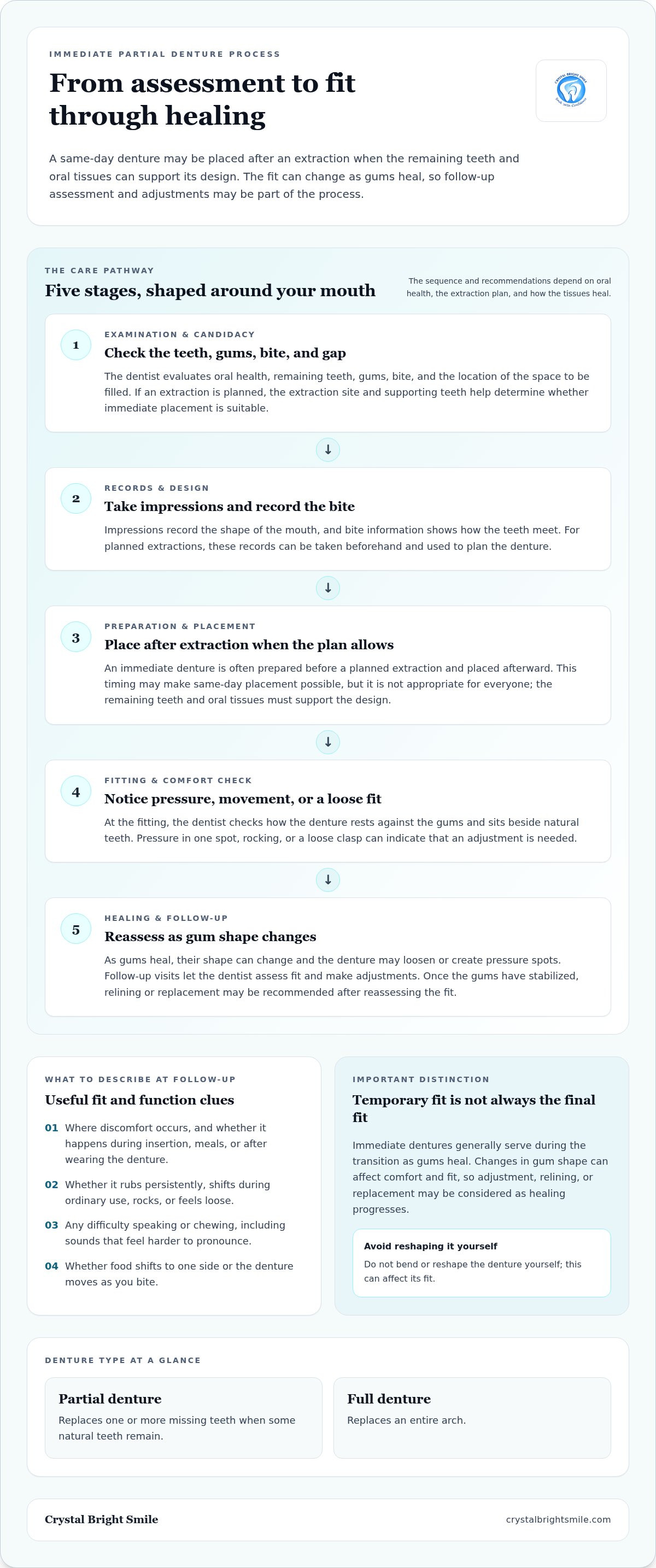
Can a same-day partial denture be placed after a tooth extraction? Yes, it may be fitted after an extraction when the remaining teeth and oral tissues can support the design. For planned treatment, the denture is often prepared before the extraction and placed afterward. Whether this approach suits you depends on the tooth being removed and the condition of the surrounding mouth.
A dental examination helps determine which teeth the partial must replace and what will hold it in place. The dentist assesses your remaining teeth, gums, bite, and the location of the gap. For example, replacing one missing tooth beside stable natural teeth raises different design considerations from replacing several teeth across the arch. The plan should reflect your oral condition.
If an extraction is planned, preparation can take place beforehand. The dentist takes impressions and records how your teeth meet, then uses that information to plan the denture. Preparing in advance can make placement immediately after extraction possible. It doesn’t mean every patient can receive a partial that day: the extraction site and supporting teeth still affect the plan.
Healing changes gum shape, so an immediate denture is generally a temporary solution during that transition. As tissues settle, the fit may loosen or create pressure spots. Follow-up visits let the dentist assess comfort and make adjustments. A reline or replacement may be recommended once the gums have stabilized and the fit can be reassessed.
If you’re replacing an existing denture, candidacy depends on why it no longer works. A cracked base, worn teeth, a changed bite, or a loose fit may call for different treatment. Bring the denture to your examination so the dentist can assess its condition alongside your gums and remaining teeth. If the underlying support has changed, simply copying the old shape may not solve the problem.
When several teeth need removal, extractions may be planned in stages. Spacing the procedures across appointments can help manage comfort and healing, while the denture plan accounts for each stage. The sequence matters: teeth that remain temporarily may affect the partial’s fit and support. Share which teeth are scheduled for removal and discuss how the design may change as treatment progresses.
A same-day partial denture in Sunland may be an option when missing teeth need replacement and suitable natural teeth remain for support. An examination helps connect the extraction plan, impressions, and expected adjustments into one sequence. Ask how the temporary fit will be reviewed and what changes may follow healing. This clarifies the practical steps before treatment begins.
Consultation, impressions, fitting, and adjustments
A consultation helps match the denture design to your mouth and daily needs. Immediate dentures are temporary, and their fit can change as gums heal; adjustments can address pressure, looseness, or difficulty speaking and chewing.
Consultation and Impressions
At the first visit, the dentist evaluates your oral health and outlines a treatment plan. The examination considers your gums, remaining teeth, bite, and the spaces the partial must fill. Impressions record your mouth’s shape, while bite information helps guide how the denture meets opposing teeth. Share which activities are most affected, such as speaking clearly or chewing on one side.
These details help connect the design to practical function, rather than appearance alone. For example, a partial replacing front teeth may affect speech differently from one replacing back teeth. If you’re exploring denture care, bring up comfort concerns and your priorities during the consultation.
Fitting and Comfort Adjustments
At the fitting, the dentist checks how the denture rests against your gums and sits beside your natural teeth. Pressure in one spot, rocking, or a loose clasp can indicate that an adjustment is needed. Describe exactly where and when you feel discomfort. This helps distinguish a local pressure point from a broader fit issue.
Some initial discomfort is common, and adjustments as your mouth heals can improve comfort. Don’t try to reshape or bend the denture yourself; doing so can affect its fit. Note whether the issue occurs while inserting it, during meals, or after wearing it. These details help the dentist refine the fit.
Speech and Chewing Adjustments
A new denture can feel unfamiliar against your tongue and cheeks. If certain sounds are harder to pronounce, note the words or sounds that cause trouble. Speaking aloud at home can help you identify patterns to describe at a follow-up. The dentist can assess whether the denture’s position or shape affects your speech.
Chewing may also feel uneven at first. Notice whether food shifts to one side or the denture moves as you bite. These details help the dentist assess function and make targeted adjustments. Changes in speech or chewing are useful observations, not a reason to force the denture into place.
Follow-Up Visits and Denture Adjustments
Follow-up visits let the dentist assess the fit as your mouth heals. Changes in gum shape can affect an immediate denture, so pressure spots or looseness may develop after the initial fitting. Contact the dental office if the denture causes persistent rubbing, shifts during ordinary use, or makes speaking or chewing difficult. Address a fit issue before it disrupts daily activities.
There’s no single wear period that applies to every temporary denture. Fit depends on healing and changes in the gums; adjustments may be needed when those changes affect comfort or function. As the gums stabilize, relining or replacement may be recommended to maintain fit. At each visit, describe what has changed since the previous fitting, including sore areas or movement.
Definition of same-day or immediate dentures
Immediate dentures are prepared before planned extractions and placed on the extraction day. Their main drawback is that the fit can change: healing gums may lead to discomfort or looseness and a need for adjustments, relining, or replacement. The temporary fit isn’t necessarily the long-term solution.
Immediate Denture Definition
An immediate denture is made in advance so it can replace missing teeth when planned extractions take place. A partial replaces some teeth while natural teeth remain; a full denture replaces an entire arch. “Same-day” describes when the denture is placed, not necessarily when it is made. Preparing in advance lets the dentist plan its shape and placement around the extraction.
That distinction matters when comparing treatment plans. A denture placed immediately can cover the gap during healing, but gum changes may alter how it fits. Consider whether your priority is having teeth in place right after extraction or waiting for a later fit. Your oral condition and treatment plan help determine which approach suits you.
When Immediate Dentures May Be Recommended
A dentist may consider immediate dentures when planned extractions will leave visible or functional gaps. The evaluation includes the teeth being removed, the natural teeth that will remain, and the gum areas that need to heal. For example, a partial denture’s design depends on which teeth can support it after extraction. The extraction plan and denture design need to work together.
Immediate placement may also be discussed if you want a replacement ready for the extraction visit. Preparing before the procedure gives the dental team time to plan the shape. It doesn’t make every case suitable: the number and location of missing teeth, remaining support, and oral condition all affect the decision.
Benefits of Immediate Tooth Replacement
One clear benefit is continuity: an immediate denture can replace teeth on the day of planned extractions instead of leaving the space empty while a denture is prepared later. Traditional treatment may leave patients without teeth for several days to a week while they wait for new dentures. For someone concerned about a visible gap, that difference can matter.
A temporary denture can provide a replacement while gums heal. Its usefulness depends on fit and comfort, which can change as tissues settle. Think of it as one step in the treatment sequence, not automatically the final restoration. Dental implants are another tooth-replacement option and require their own treatment planning.
Immediate Versus Traditional Dentures
The key difference is timing. Immediate dentures are prepared ahead of planned extractions for placement that day. With traditional dentures, placement follows a waiting period while the new denture is prepared. Timing can affect whether a person has a visible gap during the transition, but it doesn’t determine which option suits their mouth.
Healing is another distinction. An immediate denture’s fit may change as gums recover, so follow-up adjustments may be part of the process. Once gums stabilize, relining or replacement may be recommended. A traditional denture is made after the waiting period, while an immediate denture prioritizes placement around extraction day. Compare the trade-offs with your dentist, including the temporary fit, expected adjustments, and planned long-term restoration.
Eating during the adjustment and healing period
Your first meals with temporary dentures may feel unfamiliar, so begin with soft foods. Choose manageable bites, eat slowly, and notice any pressure or movement. For example, cut soft fruit or cooked vegetables into small pieces. These simple choices can make eating feel more controlled while you adjust.
Start with foods that need little chewing, then expand your choices as comfort improves. Soft foods cut into small pieces are a practical first step. Avoid hard foods and hot liquids while adjusting to temporary dentures, then reintroduce them gradually. A crunchy snack or steaming drink can wait until eating feels more comfortable.
Eat deliberately. Take smaller bites and pause to notice whether the denture shifts or presses on your gums. If chewing feels uneven, choose softer textures and avoid forcing a bite on the uncomfortable side. These observations help you describe what’s happening at a follow-up, such as movement while chewing bread or soreness after a meal.
Healing and eating are connected: gum changes can affect denture fit, and a changing fit can make meals harder. If a sore spot develops or the denture moves while eating, note where it happens and what food triggered it. Share those details at an adjustment visit. A custom denture should be assessed in your mouth, not judged only by how it looks outside it.
After meals, remove food debris from the denture and clean it daily with a soft-bristled brush. Toothpaste can be too abrasive for denture surfaces, so use a denture brush instead. Careful cleaning helps keep the appliance ready for its next use. Follow the cleaning instructions provided for your denture, especially while extraction sites are healing.
Give yourself time to adapt. You may need to adjust your bite and speaking habits as you get used to temporary dentures. A quiet meal at home can be easier than a rushed lunch out. As eating becomes more familiar, confidence can grow without expecting every food to feel effortless at once.
Use this simple progression as a guide, while following your dentist’s care instructions:
Begin with soft foods in small pieces.
Notice pressure, movement, or discomfort as you chew.
Reintroduce harder foods and hot liquids gradually.
Clean the denture with a soft-bristled brush after eating.
Comfort is the cue to progress, not a deadline. If chewing remains difficult or your temporary denture rubs, arrange a fit assessment rather than trying to reshape it yourself. Adjustments can address pressure points as your mouth heals. Each meal can offer useful feedback about fit and function, rather than a reason to rush the transition.
Same-day full and partial dentures
A full denture replaces an entire arch, while a partial replaces one or more missing teeth when natural teeth remain. The design depends on the spaces to fill and the teeth available for support.
Types of Same-Day Partial Dentures
Partial dentures replace selected missing teeth while preserving remaining natural teeth. Traditional and Valplast partial dentures are options; their design and material affect how each appliance fits around supporting teeth. A same-day partial for someone in Sunland still needs to suit that person’s mouth. Ask which teeth will support it and how planned extractions could affect that support.
“Same-day” describes placement timing, not one specific denture type. An immediate partial is prepared before planned extractions and placed on extraction day. When planning the appliance, the dentist considers the gap, remaining teeth, bite, and appearance. A partial replacing one missing tooth may need a different design from one replacing several teeth.
Dentists Offering Same-Day Partial Dentures in Sunland
Sunland patients can discuss partial dentures with the team at Crystal Bright Smile in nearby Tujunga. The treatment plan should reflect an examination: the dentist assesses the extraction plan, remaining teeth, gums, and bite before recommending a design. These details help determine whether the partial can function alongside the natural teeth that remain.
At an appointment with Crystal Bright Smile in Tujunga, ask how the dentist plans the extraction and fitting sequence, and how follow-up care will address changes in fit. The practice serves patients in Sunland, Tujunga, La Crescenta, Montrose, Shadow Hills, and Lake View Terrace.
Making and Fitting a Partial Denture in One Day
A dentist may place a partial on extraction day if it has been prepared in advance. That differs from making and fitting a new denture from start to finish during one appointment. Preparation includes examining the mouth, recording its shape, and planning the appliance around teeth scheduled for removal.
Healing can change the gums, so the initial fit may need later adjustment. You may begin with soft foods while adapting to the appliance. Ask what will happen at placement and how the dentist will assess the fit afterward. This clarifies the sequence instead of assuming every step happens during one visit.
Insurance Coverage for Same-Day Partial Dentures
Dental insurance coverage for partial dentures depends on the terms of your individual plan. Benefits, eligibility, and limits vary, so don’t assume that same-day placement changes what a plan covers. Review the policy’s denture provisions and ask how it handles related treatment, such as an extraction or later adjustment.
Before proceeding, clarify which parts of the treatment plan may be eligible for coverage and what documentation the insurer requires. A plan may treat the denture and related procedures separately. For a personal review of denture needs and fit, schedule a denture examination.
Crystal Bright Smile: Dental Implants
Crystal Bright Smile offers dental implants if you’re considering an alternative to a removable partial denture. An implant-supported restoration may be part of a tooth-replacement plan, but candidacy depends on your examination, dental condition, goals, and clinical needs.
At its Tujunga, California office, Crystal Bright Smile can review your missing teeth and discuss whether implants fit your priorities. Your plan may also compare an implant-supported restoration with a removable denture, including the treatment steps involved. A personalized assessment can clarify which options suit your mouth and desired function.
For an examination and a conversation about dental implants, contact Crystal Bright Smile or visit crystalbrightsmile.com.
Choose a Tooth-Replacement Plan That Fits Your Goals
Next, consider how tooth replacement fits your broader oral-health goals. If you’re weighing a same-day partial denture in Sunland against another approach, focus on the function you want, your remaining teeth, and the treatment steps you’re comfortable pursuing. An examination can help clarify which direction fits your clinical needs.
Crystal Bright Smile offers dental implants, Invisalign, and porcelain veneers. These treatments address different concerns and aren’t interchangeable; recommendations depend on your examination, dental condition, goals, and clinical needs. Discussing your priorities can help shape a personalized plan without rushing your decision.
Ready to discuss your options? Contact Crystal Bright Smile to take the next step toward a plan that feels right for you.
Frequently Asked Questions
What Are Same-Day Dentures?
Same-day dentures are immediate dentures planned for placement on the day of scheduled tooth removal. “Same-day” refers to placement, not necessarily fabrication. A partial replaces selected missing teeth while natural teeth remain; a full denture replaces an entire arch. For example, if only a few teeth are being removed, the plan may focus on filling those spaces while preserving support from the teeth that remain.
How long will the procedure take?
There isn’t one fixed appointment duration for every same-day denture procedure. The time depends on whether extractions are included, how many teeth are involved, and the fitting steps needed. Because the denture is generally prepared before planned extractions, fabrication doesn’t necessarily happen during the placement appointment. Ask how your treatment sequence divides preparation, extraction, placement, and later fit checks.
What is the process for getting a same-day partial denture?
The process generally moves from examination and treatment planning to impressions, denture preparation, and fitting around the planned extraction. At your consultation, share which teeth are scheduled for removal and whether you already wear a partial. Bring your existing appliance if you have one. It gives the dentist a useful comparison when discussing what the new design needs to replace.
How do same-day partial dentures compare with traditional partial dentures?
The main difference is when the replacement is placed in relation to tooth removal. An immediate partial is arranged for placement on extraction day, while traditional denture treatment can involve waiting for the new denture. Consider whether having a replacement in place right away matters to you and whether you’re prepared for a temporary fit that may change during healing.
What should I ask a Sunland dentist before booking a same-day partial denture?
Ask which remaining teeth would support the partial, how the extraction plan affects its design, and what follow-up adjustments may be needed. If you already wear a denture, ask how its fit and condition inform the new plan. Also discuss what to expect at placement and how healing could affect the appliance. Residents of Sunland and nearby communities can use these questions to clarify the treatment sequence.

Comments