


Single Dental Implant Recovery: Healing, Food and Activity

The first few days are only the beginning of recovery after a single dental implant. What is the recovery like for a single dental implant? Expect early tenderness and swelling, often most noticeable during the first one to three days, followed by gum healing that typically takes about two weeks. The implant also needs time to integrate with the jawbone, so the final crown is usually placed after three to six months.
It’s natural to want to know when you can eat comfortably, return to your routine, and feel like yourself again. Recovery after a single dental implant extends beyond the first few days: early care protects the area as short-term symptoms settle, while deeper healing continues even after your mouth feels better.
This guide explains what to expect, from the first days after placement to the months of bone healing. You’ll also find practical guidance on soft foods, smoking, exercise, and signs that warrant a call to your dental office, so you can approach recovery with a clearer plan.
Table of Contents
What Does the Dental Implant Recovery Timeline Look Like?
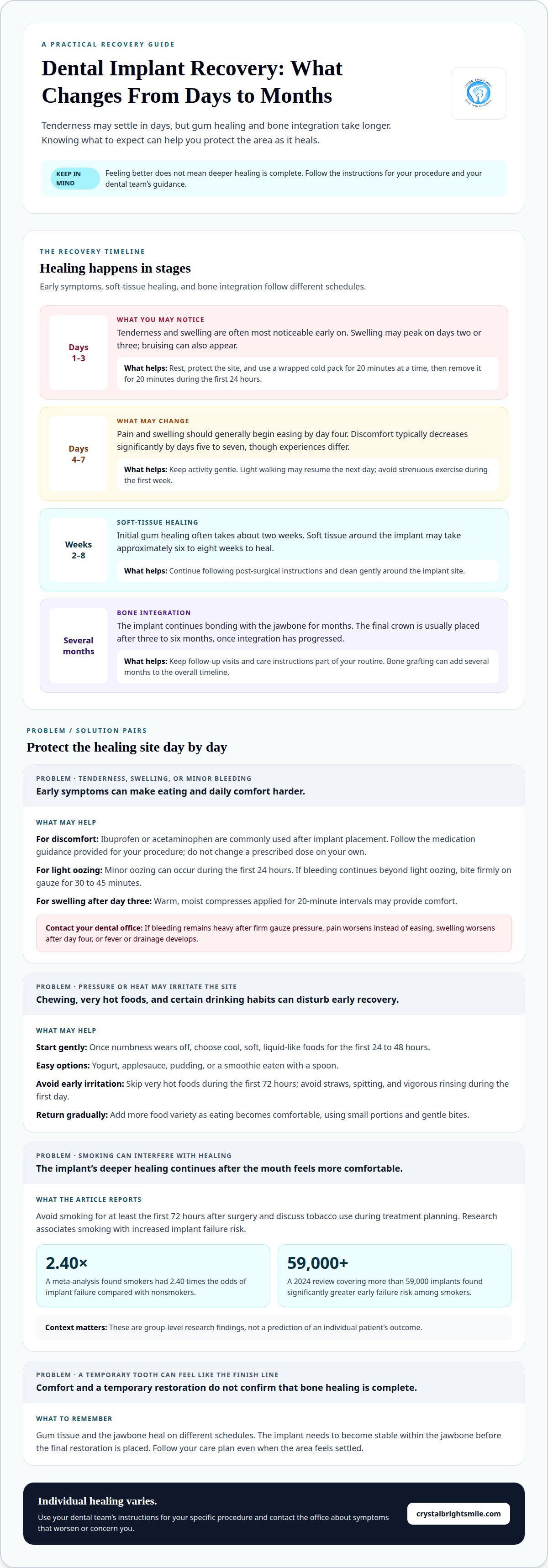
After implant surgery, tenderness and swelling are often strongest during the first three days. Gum healing takes about two weeks, while the implant continues integrating with the jawbone for several months.
First-Week Pain and Swelling
First-week discomfort usually means tenderness and swelling around the implant site as the surgical tissues begin to heal. These symptoms can affect chewing and daily comfort, so notice whether they improve over time. Swelling often peaks on days two or three. By day four, pain and swelling should generally be easing, though each person’s experience differs.
During days one to three, the implant site may feel sore, and bruising can appear near the surgical area. By days five to seven, discomfort typically decreases significantly. The first week is focused on soft-tissue healing and symptom management, not completing the implant’s full healing process. A temporary tooth or restoration, if used, doesn’t mean the implant has finished bonding with the jawbone.
Feeling better after the first week doesn’t mean deeper healing is complete. Soft tissue around an implant takes approximately six to eight weeks to heal, while bone integration continues for months. The final crown is usually placed after three to six months, once integration has progressed. If bone grafting is part of treatment, it can add several months to the overall recovery timeline.
Managing Pain and Bleeding
Pain management combines rest, medication guidance, and care for the implant site. Over-the-counter medicines such as ibuprofen or acetaminophen are commonly used after implant placement, but follow the instructions provided for your procedure and medication. Minor oozing can occur during the first 24 hours. If bleeding continues beyond light oozing, bite firmly on gauze for 30 to 45 minutes.
Protect the area during the first day: avoid spitting, straws, and vigorous rinsing, which can disturb the healing site. Take prescribed medication only as directed, and don’t change the recommended dose on your own. If bleeding remains heavy after applying firm gauze pressure, or pain worsens instead of easing, contact the dental office for guidance.
Cold Compresses and Bruising
A cold compress can help manage early facial swelling after implant surgery. During the first 24 hours, apply an ice pack for 20 minutes, then remove it for 20 minutes before repeating. Wrap the pack rather than placing ice directly against skin. This approach helps limit prolonged cold exposure while offering a practical way to ease swelling.
Bruising and puffiness may be more visible around days two or three, when swelling often peaks. After day three, warm, moist compresses applied for 20-minute intervals may provide comfort. Keep watching the trend: swelling should begin to subside, not keep increasing. Contact the dental office if swelling worsens after day four, or if fever or drainage develops.
Smoking and implant healing
Recovery has two timelines: visible gum healing and slower integration with the jawbone. Smoking matters throughout both, because it is associated with a higher risk of early implant failure.
Gum Healing and Bone Integration
Gum healing closes and strengthens the tissue around the implant, while osseointegration is the implant’s bonding with the jawbone. This distinction matters because your mouth can feel comfortable while healing continues beneath the surface.
The gum tissue typically heals over several weeks, while bone integration continues for months. During that time, follow your post-surgical instructions and clean gently around the implant site. Don’t use comfort as your only measure of healing: the visible area and the bone beneath it progress on different schedules.
This distinction explains why a temporary tooth, when used, doesn’t mean the implant is ready for every bite. The implant must become stable within the jawbone before the final restoration is placed. A single implant can feel settled before deeper healing is complete, so keep follow-up visits and care instructions part of your routine.
Smoking During Initial Healing
Smoking during initial healing exposes the surgical area to smoke while the gum tissue is repairing. Avoid smoking for at least the first 72 hours after surgery, and discuss your tobacco use during treatment planning. This matters because research associates smoking with increased implant failure risk.
A meta-analysis found smokers had 2.40 times the odds of implant failure compared with nonsmokers. A 2024 review covering more than 59,000 implants also found significantly greater early failure risk among smokers. These findings describe group-level risk, not a prediction for an individual patient. They do show why smoking belongs in the healing conversation.
Research also found smokers lost an average of 0.58 mm more bone around implants. Bone condition matters because integration depends on the jawbone supporting the implant. Share your smoking history and follow the surgical instructions for your case. For a tailored discussion, explore implant treatment planning before placement.
Soft-food diet and gradual return to normal foods
After implant surgery, choose cool, soft foods that are easy to manage. Eating gently protects the surgical area from unnecessary pressure while tenderness settles. You can usually eat soft foods once the numbness wears off. If medication leaves you drowsy or affects coordination, rest and follow its instructions before preparing food.
For the first 24 to 48 hours, aim for cool, soft, liquid-like options. Yogurt, applesauce, pudding, and a smoothie eaten with a spoon are practical examples. Skip very hot foods during the first 72 hours. Heat and chewing can make eating uncomfortable, so small portions and gentle bites help keep meals manageable.
Hydration matters, but how you drink matters too. Sip water from a cup instead of using a straw during the first 48 hours after surgery. Suction from a straw can disturb the blood clot at the implant site. Choose water or other suitable drinks that don’t require strong suction, and avoid forceful swishing while drinking.
During days three to seven, continue eating soft foods that need minimal chewing. Scrambled eggs, mashed potatoes, oatmeal, and soft pasta offer variety without requiring firm bites. Chew away from the implant site when possible. If a bite causes discomfort, choose a softer texture at your next meal rather than pushing through it.
From weeks two to four, gradually add semi-soft foods and more variety as you feel comfortable. Cut foods into smaller pieces, take measured bites, and notice whether chewing creates pressure near the implant. By two weeks, many patients can eat most foods comfortably while remaining cautious. Returning to harder foods often takes about two weeks, but progress should follow your comfort and surgical instructions.
The implant’s position matters. If it was placed where your bite naturally applies pressure, don’t test it with a hard or chewy bite. The crown may be temporary during healing, and the implant still needs time to integrate with the jawbone. A comfortable meal doesn’t mean deeper healing is complete.
During months two to six, you may gradually return to normal foods while avoiding anything your surgeon has restricted. Keep meals varied without rushing the transition. For example, move from mashed vegetables to softer cooked pieces, then increase texture as chewing remains comfortable. Follow the instructions for your procedure, especially if bone grafting or other treatment affected the surgical plan.
Does smoking affect dental implant healing?
Smoking is associated with greater risk during implant healing, so tell your dentist about tobacco use and follow your post-surgical instructions. Watch the implant site for changes, especially if symptoms worsen after day four.
Warning Signs During Recovery
Some tenderness, swelling, or light oozing can occur after implant surgery. Pay attention to the direction of change: discomfort and swelling should generally improve during days four to seven. Contact the dental office if pain worsens, swelling increases unexpectedly, bleeding remains heavy or persistent, or drainage appears.
A fever during the first few weeks also deserves attention. Contact your dentist for a temperature above 101°F, particularly if it occurs with drainage or increasing swelling. Don’t wait for several symptoms to appear together. One concerning change, such as bleeding that stays heavy after firm gauze pressure, is enough to seek advice.
Signs of Infection or Implant Problems
Fever, drainage, worsening pain, and increasing swelling need professional assessment, not a home diagnosis. They may indicate a healing complication, but symptoms alone don’t establish infection or implant failure. A dentist can examine the tissue and implant site, then decide whether treatment or closer follow-up is needed.
You can’t reliably confirm early implant failure by looking at the gum tissue. Osseointegration, the bond between the implant and jawbone, continues for months after your mouth begins feeling better. If the implant seems to move, your bite suddenly feels different, or pain keeps increasing, avoid testing it by chewing and contact the dental office.
Signs of Healthy Recovery
A healing trend is more useful than one isolated symptom. During days four to seven, swelling and tenderness should generally ease rather than worsen. Soft-tissue healing continues as the area recovers. These changes suggest progress, but they don’t show that bone integration has finished.
Keep your scheduled follow-up appointment, even if the area feels comfortable. The first post-surgical follow-up typically takes place one to two weeks after surgery. At that visit, the dentist can assess the tissue and review your healing. Continue gentle cleaning as instructed, and avoid smoking during early recovery.
Smoking matters beyond the first few days because osseointegration continues after visible symptoms fade. Tell your dentist about any tobacco use, follow the instructions for your procedure, and mention changes in chewing function or at the implant site. Prompt attention to worsening symptoms helps distinguish expected healing from a concern that needs examination.
Exercise and activity restrictions
Plan for a gradual return to movement after implant surgery. Rest during the first day, then use your recovery timeline and symptoms to guide activity.
Avoiding Strenuous Activity
Strenuous activity includes exercise or physical effort that raises your exertion soon after surgery. Avoid it during the first week, since increased effort can aggravate the surgical area or bleeding.
Light walking can typically resume the next day if you feel steady. Keep the pace easy and choose a short, level route rather than a workout. If swelling or discomfort increases, stop and rest. Your treating dentist’s instructions take priority, especially if your procedure involved additional treatment.
Activities and Habits to Avoid
During the first 24 hours, make rest the priority and avoid physical tasks that leave you breathless. If anesthesia was used, wait at least 24 hours before driving or operating heavy machinery.
Avoid smoking during early healing, and wait through the first week before strenuous exercise. Don’t assume that eating normally means intense activity is safe. Chewing comfort and exercise readiness follow different parts of recovery.
For example, feeling comfortable at a meal on day three doesn’t mean a vigorous run is appropriate. Choose calm routines, such as reading or desk work, while symptoms settle. If your job involves physical exertion, plan a gradual return instead of resuming every task at once.
Resuming Regular Activities
Regular activities often resume within a few days after a single implant, but strenuous exercise takes longer. Many patients return to work within one to three days. The right pace depends on your job’s demands and how the surgical area feels.
Start with ordinary, low-effort tasks, then build up as comfort allows. Take a short walk before trying a longer route, and return to light household routines before demanding physical work. Stop if activity brings on renewed bleeding, increased swelling, or worsening pain, and contact the dental office about these changes.
By the sixth week, patients can resume nearly all normal activities, though bone integration may still be underway. Feeling ready for daily movement doesn’t mean the implant has completed biological healing. Keep follow-up appointments and follow the activity instructions provided for your surgery.
Planning implant treatment? Schedule a dental implant appointment to discuss your recovery and activity plan.
Crystal Bright Smile: Dental Implants
Crystal Bright Smile in Tujunga serves patients from Sunland, La Crescenta, Montrose, Shadow Hills, and Lake View Terrace with dental implant treatment for missing teeth. An examination helps assess whether an implant fits your dental condition, goals, and clinical needs, and informs a treatment plan tailored to you.
Use a consultation to discuss the healing timeline, food and activity guidance, and any concerns about smoking or recovery. Planning ahead can help you understand each stage of treatment, including healing before the final crown is placed. Recommendations depend on your examination and oral health.
Take the Next Step Toward a Confident Smile
If you’re wondering what recovery is like for a single dental implant, use that question to start a conversation about comfort, function, and your smile goals. Understanding the recovery process can also help you decide how treatment fits your needs.
Crystal Bright Smile offers dental implants, Invisalign, and porcelain veneers. Recommendations depend on an examination, your dental condition, goals, and clinical needs. Discussing your priorities can help shape a treatment plan that suits you.
Take the next step at your own pace. Contact Crystal Bright Smile to start a conversation about your smile goals. A clearer plan can help you move forward with confidence.
Frequently Asked Questions
What Happens on the Day of Implant Surgery?
The dentist places the implant post in the jawbone during a surgical appointment. Placement generally takes around one to two hours per implant. Afterward, you’ll receive instructions for caring for the area and managing early recovery. Plan for a calm day rather than scheduling errands or demanding tasks immediately afterward. If you receive anesthesia, follow the specific instructions about driving and other activities.
Do You Go Without Teeth While Your Implants Heal?
Not necessarily. A temporary tooth or restoration may be part of your treatment plan, but it isn’t automatic for every single implant. The approach depends on the tooth being replaced, your bite, and the implant’s stability after placement. Before surgery, ask how the visible space will be managed during healing so you can plan for work, meals, and social occasions.
When Can You Eat, Work, and Exercise Normally?
These activities resume on different schedules. Start with food that’s easy to chew, then increase texture as the area feels comfortable. Many patients return to work within one to three days, depending partly on job demands. Light walking can often resume the next day, while strenuous exercise should wait through the first week. A physically demanding shift isn’t the same as desk work, so plan accordingly.
Can I eat normally after getting a dental implant?
Eating usually returns gradually, not all at once. Start with foods that don’t require firm biting, then add texture as chewing feels comfortable. For example, move from soft cooked vegetables to firmer pieces instead of testing the implant with crunchy food. Avoid putting strong pressure directly on the surgical area, and follow any food restrictions for your procedure.
How long after the implant do you get the crown?
The final crown is commonly placed after three to six months, once the implant has integrated with the jawbone. This interval gives the implant time to gain support before it carries normal chewing forces. You may have a temporary restoration during healing, but it isn’t the final crown. Bone grafting or more complex treatment can extend the overall timeline.
How long does it take for a dental implant to fuse with the bone?
Bone integration generally takes three to six months after placement. During osseointegration, the jawbone bonds with the implant surface to support the eventual crown. Your mouth may feel comfortable before this process is complete, so comfort alone doesn’t show that integration has finished. Keep follow-up appointments and don’t treat the implant as a fully restored tooth until your dentist clears the next stage.
What is the dental implant recovery timeline day by day?
On day one, rest and protect the surgical site. Swelling often peaks on days two or three. During days four to seven, tenderness and swelling should generally improve. The first week focuses on gum healing and managing symptoms; by about two weeks, initial soft-tissue healing is typically complete. Bone integration continues for months, even after everyday discomfort fades.
How much pain and swelling is normal after a single dental implant?
Tenderness and swelling are often most noticeable during the first one to three days, with swelling commonly peaking around days two or three. Symptoms should generally start improving during days four to seven. Contact the dental office if pain worsens, swelling increases unexpectedly, bleeding is heavy or persistent, or you notice fever or drainage. These changes need professional assessment, not guesswork at home.

Comments