


Urgent Dental Care in Tarzana for Pain and Dental Emergencies

Severe tooth pain, swelling, a knocked-out or broken tooth, or a lost filling or crown can require urgent dental attention. Urgent dental care in Tujunga can help assess the problem and determine what treatment may ease pain or protect the tooth. Even mild tooth, jaw, or gum pain deserves attention if it lasts more than two days.
When pain strikes, it’s natural to want relief quickly and wonder whether the problem can wait. This guide explains which symptoms may signal a dental emergency, what to do while arranging care, and how to find help near Tujunga. You’ll also learn how a dentist can address severe pain and lost restorations, so you can decide on a clear next step.
Table of Contents
What Are Dental Emergencies?
A dental emergency is an urgent mouth problem, such as severe pain, infection, or a missing tooth. Unlike a routine visit, emergency treatment first focuses on assessing the immediate problem and limiting further harm.
Emergency Care Versus Routine Dentistry
Routine dentistry includes planned exams and cleanings, while emergency care addresses problems that need prompt attention. Depending on the practice, emergency dental treatment may be arranged without prior scheduling. A chipped tooth after an impact, painful swelling, or a knocked-out tooth calls for a different response than a routine checkup.
In Tujunga, seek dental advice if minor tooth, jaw, or gum pain lasts more than two days. This can help distinguish brief discomfort from pain that deserves assessment. A dentist can examine the area, identify possible causes, and decide whether treatment should address infection, damaged tissue, or a missing tooth fragment.
Emergency Treatment Options
Treatment depends on the problem found during an examination. A dentist may treat an infection, remove an infected tooth, or replace missing tooth fragments. If pain or infection is present, a dentist may prescribe pain medication or antibiotics to support recovery. Because these options address different problems, diagnosis comes before treatment.
For example, severe pain with swelling may need assessment for infection, while a broken tooth may need care for the damaged area. Emergency treatment addresses the urgent problem, but follow-up may still be needed to complete treatment or monitor healing. The tooth’s condition and the cause of symptoms guide the next steps.
When to Seek Emergency Care
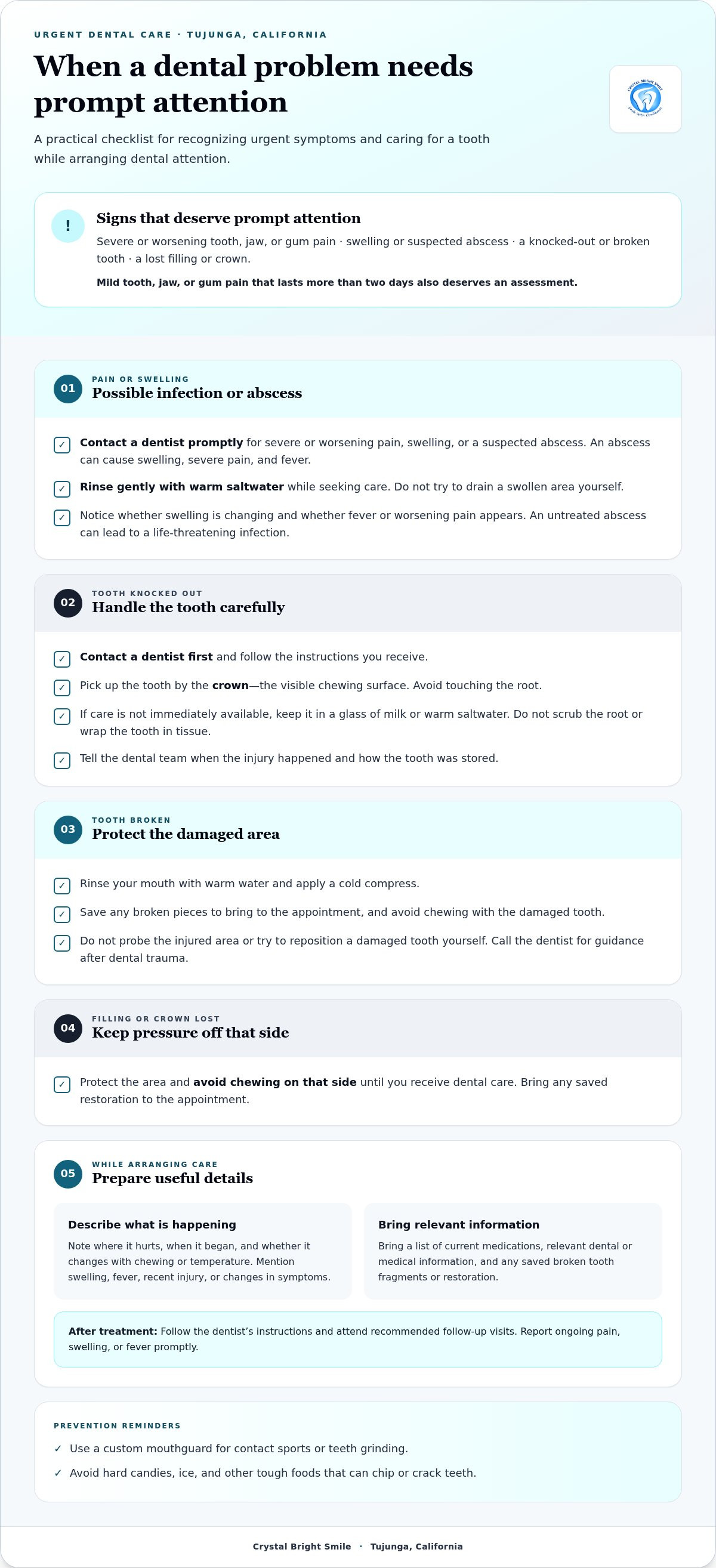
Contact a dentist promptly for severe or worsening pain, swelling, a suspected abscess, or a knocked-out tooth. An abscess can cause swelling, severe pain, and fever. Delaying care may allow infection to spread or cause permanent damage to teeth or gums, potentially leading to more complex treatment.
A dental injury also needs timely attention, even if the pain initially seems manageable. If a tooth is knocked out, hold it by the crown, not the root, and contact a dentist for instructions. If the problem involves trauma, call before travelling to get guidance for the specific injury.
What should I bring to an emergency dental appointment in Tarzana? Bring a list of current medications, relevant dental or medical information, and any saved broken tooth fragments or restoration. Describe when symptoms began, what changed, and what steps you’ve taken. These details help the dental team understand the problem and assess the affected area.
After emergency treatment, follow the dentist’s instructions and attend recommended follow-up visits. A procedure that relieves immediate pain may not resolve the underlying problem. Track changes such as ongoing pain, swelling, or fever, and report them promptly to the dental team.
Prompt attention can help limit the effects of infection and damage to teeth or gums. Preventive care can also reduce the risk of some emergencies: use a custom mouthguard for contact sports or teeth grinding, and avoid hard candies, ice, and other tough foods that can chip or crack teeth.
Severe tooth, jaw, or gum pain
Severe or persistent pain can make eating, speaking, or resting difficult. Note where it hurts, when it began, and whether swelling or fever accompanies it.
Abscesses and Dental Infections
A dental abscess can cause swelling, severe pain, and fever. Pain that continues despite over-the-counter medication may point to a serious infection or gum disease. Contact a dentist promptly rather than relying on temporary relief.
An untreated tooth abscess can lead to a life-threatening infection. Rinse gently with warm saltwater and seek immediate dental care. Don’t try to drain the swollen area yourself. Note whether the swelling is changing and whether fever or worsening pain has appeared. These details help the dental team assess the problem.
Knocked-Out Tooth Care
If a tooth is knocked out, contact a dentist first and follow the instructions you receive. Pick it up by the crown, the visible chewing surface, and avoid touching the root. If you can’t receive care immediately, keep the tooth in a glass of milk or warm saltwater until dental care is available.
Handle the tooth carefully during transport. Don’t scrub the root or wrap the tooth in tissue. Tell the dental team when the injury happened and how the tooth was stored. Those details help them understand the situation and plan an examination.
Jaw or gum pain can accompany a tooth injury or infection. For a toothache, gently use dental floss to remove trapped food particles. Don’t force the floss into a sore or swollen area. If pain remains severe, worsens, or comes with swelling, arrange dental attention promptly rather than assuming food was the only cause.
A broken tooth needs careful handling, even if the exposed area doesn’t hurt right away. Rinse your mouth with warm water, apply a cold compress, and save any broken pieces to bring to the appointment. Avoid chewing with the damaged tooth, since pressure can aggravate the injury.
While waiting after dental trauma, call the dentist for instructions. Describe whether the tooth is loose, displaced, or broken, and mention any bleeding or swelling. These details help the team advise you on what to do next. Avoid probing the injured area or trying to reposition a damaged tooth yourself.
For severe pain, a lost tooth, or a broken tooth, prompt assessment helps identify the cause and the appropriate next step. If you need help addressing an urgent dental problem, explore emergency dental care and contact the practice for an appointment.
Immediate treatment and pain relief
When dental pain starts, focus on clear steps rather than guessing at the cause. Note which tooth or area hurts, when the pain began, and whether it changes with chewing or temperature. Record any swelling, fever, or recent injury. These details help the dentist assess the problem and decide what needs attention first.
If you use an over-the-counter pain medicine, tell the dental team its name and when you took it. Severe pain that continues despite over-the-counter medication may signal a serious infection or gum disease. Don’t take more than the product directions allow, and don’t place aspirin directly on your gums, as it can irritate gum tissue.
Call a dental office and describe your symptoms plainly. For example, explain whether the pain is constant or comes and goes, and whether swelling or a broken tooth is involved. Mention recent dental treatment, if applicable, and any medicine you’ve taken. Clear details help the office understand the urgency and give relevant instructions while you arrange care.
During an emergency visit, the dentist examines the affected area and identifies a likely cause before selecting treatment. Pain can stem from different problems, including infection or tooth damage, so relief depends on what the examination reveals. Ask what the immediate treatment addresses and whether another visit is needed to complete care.
After diagnosing a dental emergency, a dentist may prescribe pain medication or antibiotics to aid recovery. These medicines serve different purposes, and antibiotics may be considered when infection is involved. Follow the directions provided for any prescription, and tell the dentist about other medicines you take. Don’t use leftover antibiotics or someone else’s prescription.
Keep track of symptoms after treatment. Note whether pain changes, swelling develops, or you’re able to follow the care instructions. If a prescribed medicine causes concern or symptoms worsen, contact the dental office for guidance. Describe specific changes rather than saying only that you feel better or worse.
Immediate relief is only one part of managing an urgent dental problem. Treatment that eases pain may not resolve the underlying cause, so follow the dentist’s directions for any recommended review or additional care. Before leaving, make sure you understand the next step, how to take prescribed medication, and which symptoms to report. A simple written note can help you remember the plan at home.
Lost fillings and crowns
A lost filling or crown needs prompt attention, even if discomfort seems manageable. The restoration no longer covers its original place, so arrange dental care and describe what came loose. Until then, protect the area from chewing pressure and avoid trying to make a permanent repair at home.
If a filling falls out, rinse gently with warm water to clear loose debris. A small piece of sugarless gum can temporarily cover the opening while you wait for emergency dental treatment. Use only enough to cover the space, and don’t push it deeply into the opening. This is a temporary measure, not a replacement for dental care.
A lost crown is different because the entire cap has come away. If you still have it, keep it in a clean container and bring it to the appointment. Don’t force it back into place. A dentist can examine the tooth and crown, then decide whether a dental crown or another restoration suits the tooth’s condition.
Until professional care is available, avoid chewing on the side with the missing filling or crown. Choose foods that don’t put pressure on that area, and take smaller bites using the other side. If eating causes pain, stop chewing on that side rather than testing it repeatedly.
Use these steps while arranging care:
Note whether a filling or crown came out, and when you noticed it.
Save the crown or any loose restoration, and bring it with you.
Temporarily cover an open filling area with a small piece of sugarless gum.
Avoid chewing on the affected side until dental care is available.
When you contact a dentist, explain whether the restoration is completely missing or feels loose. Mention any discomfort, sensitivity, or difficulty chewing. These details help the team understand what changed and prepare to assess the affected tooth.
At the appointment, the dentist examines the tooth and any remaining restoration. The tooth’s condition, the shape of the opening, and whether the crown is intact help guide a recommendation. A filling may suit one situation, while a crown may be considered for another. The examination determines the appropriate approach.
After treatment, follow the care instructions and ask what to do if the restoration feels loose again. Note any new discomfort or changes while eating, then report them to the dental office. A clear follow-up plan helps you understand how to protect the restored tooth during everyday activities.
Finding urgent dental care in Tarzana
For urgent dental care near Tujunga, Sunland, La Crescenta, Montrose, Shadow Hills, and Lake View Terrace, first match the problem to the care you need. Severe tooth pain, a lost restoration, or a dental injury calls for a dentist’s assessment. A severe facial emergency may require emergency-room care instead. Some local practices offer same-day appointments for urgent cases, but availability varies by practice and schedule.
Where is the nearest emergency room for severe dental or facial emergencies? The nearest emergency room depends on your exact starting point in our service areas like Tujunga, Sunland, or La Crescenta, and your current route. Use a live map to locate nearby emergency departments and get directions. For a severe facial emergency, don’t delay seeking emergency medical care.
Call a dental office serving Tujunga or nearby communities such as Sunland, La Crescenta, Montrose, Shadow Hills, or Lake View Terrace. Explain whether you have severe pain, swelling, a broken tooth, or a lost crown. Mention when the issue began and whether it’s getting worse. These details help the office understand the urgency and advise you about arranging an assessment.
Ask directly whether the practice can see urgent cases that day. Local practices may offer same-day appointments, but availability depends on the office and its schedule. If the office can’t see you promptly, ask what next step it recommends for your symptoms. Keep the conversation focused on the problem, not only the appointment time.
Before travelling, gather identification, a list of current medications, and relevant dental or medical information. If a crown or broken tooth fragment came loose, bring it in a clean container. Write down when the pain began and any changes, such as swelling or difficulty chewing.
Plan the route before leaving. Check the destination, travel time, and entrance details using current directions. If pain affects your concentration, ask someone else to drive. For a dental injury, call the dental office first for instructions while you prepare to travel.
At the appointment, describe your symptoms clearly and answer questions about the affected tooth or area. The dentist’s examination helps determine whether the problem involves infection, damage, or a lost restoration. Ask what the recommended next step addresses, whether more care is needed, and which symptoms should prompt another call.
Choose care based on the emergency: a dentist assesses urgent dental problems, while severe facial emergencies call for emergency medical care. For dental concerns in Tujunga, Sunland, La Crescenta, Montrose, Shadow Hills, Lake View Terrace, and surrounding areas, contact Crystal Bright Smile about urgent dental care and share your symptoms with the office.
Crystal Bright Smile: Dental Implants
Once urgent concerns are addressed, Crystal Bright Smile can help you explore dental implants as a longer-term option for replacing a missing tooth. An implant isn’t a substitute for emergency assessment. A dentist must first evaluate pain, infection, or injury and recommend necessary care.
Implant recommendations and candidacy depend on your examination, dental condition, clinical needs, and goals. If you’ve lost a tooth, an evaluation can help determine whether an implant is appropriate and what treatment planning involves. Crystal Bright Smile also offers crowns and bridges, which may be considered as other restorative options depending on your case.
Take the Next Step Toward Comfortable Care
Choosing care is also an opportunity to make a clear plan for your oral health beyond the immediate concern. If a missing tooth or another restorative need remains after urgent treatment, Crystal Bright Smile offers dental implants. The practice also offers Invisalign and porcelain veneers for patients considering changes to alignment or appearance. Recommendations and candidacy depend on an examination, your dental condition, goals, and clinical needs.
If you’re looking for urgent dental care in Tarzana, focus on communicating your symptoms and the outcome you hope to achieve. Clear information helps guide the conversation, whether you need attention for a current problem or want to discuss a future treatment option. You deserve care that addresses your needs with a thoughtful, personalized plan.
Contact Crystal Bright Smile to discuss your dental concerns and next steps. A calm, informed conversation can help you move forward with confidence.
Frequently Asked Questions
Which dental clinics in Tarzana offer urgent or same-day appointments?
Some local dental practices offer same-day appointments for urgent cases, but openings depend on each office’s schedule. Crystal Bright Smile provides emergency dental care at its office in Tujunga, California, not Tarzana. When contacting a practice, describe the problem and ask about its earliest suitable appointment. For severe facial emergencies, seek emergency medical care rather than waiting for a dental appointment.
What are the opening hours of emergency dentists in Tarzana, including evenings and weekends?
Emergency dentists set their own schedules, so there is no shared evening or weekend timetable for Tarzana. Check the specific practice’s current hours before travelling, and call to ask how it handles urgent calls outside those hours. If a dental problem becomes severe after a practice closes, explain your symptoms when you call. Severe facial emergencies need emergency medical attention.
Which Tarzana dental clinics accept walk-ins or provide after-hours emergency care?
Walk-in policies and after-hours arrangements vary by dental office. Call before travelling and explain whether you have pain, swelling, a lost restoration, or an injury. Ask what steps to take and where to go. Don’t assume a practice accepts unscheduled arrivals. If the emergency involves severe facial injury, seek emergency medical care instead of relying on a dental walk-in.
Which urgent dental clinics in Tarzana accept Medi-Cal or major dental insurance plans?
Medi-Cal acceptance and participation in major dental plans depend on the individual practice and plan. Crystal Bright Smile offers insurance options and flexible financing. To discuss coverage, call the office with your plan name and member information, and ask how the proposed treatment relates to your benefits. Coverage, eligibility, and financing options vary, so don’t assume a particular procedure or payment arrangement is covered.
What symptoms require immediate emergency dental care rather than a routine appointment?
Seek prompt dental attention for severe or worsening tooth pain, a knocked-out or broken tooth, or swelling that may signal an abscess. An abscess can involve severe pain, swelling, and fever; delaying care risks a spreading infection. A knocked-out tooth also needs urgent assessment. Severe facial emergencies are different from routine dental problems and require emergency medical attention.
What should I do at home for a severe toothache, knocked-out tooth, or broken tooth before seeing a dentist?
For a toothache, gently floss to clear trapped food, but don’t put aspirin directly on your gums. Hold a knocked-out tooth by its crown and keep it in milk or warm saltwater while arranging care. For a broken tooth, rinse with warm water, apply a cold compress, and save any fragments. Tell the dentist when the problem began and what you’ve done.
How can I find an urgent dentist near Tarzana who is accepting new patients today?
Call dental practices and say you’re a new patient with an urgent problem. Describe your symptoms, when they began, and any changes. Ask whether an appointment is available today and what information to bring. Local practices may offer same-day urgent appointments, though openings vary. If you have severe facial trauma, seek emergency medical care rather than waiting for a dental appointment.

Comments