


What Foods Can I Eat With Temporary Veneers? Soft Food Choices

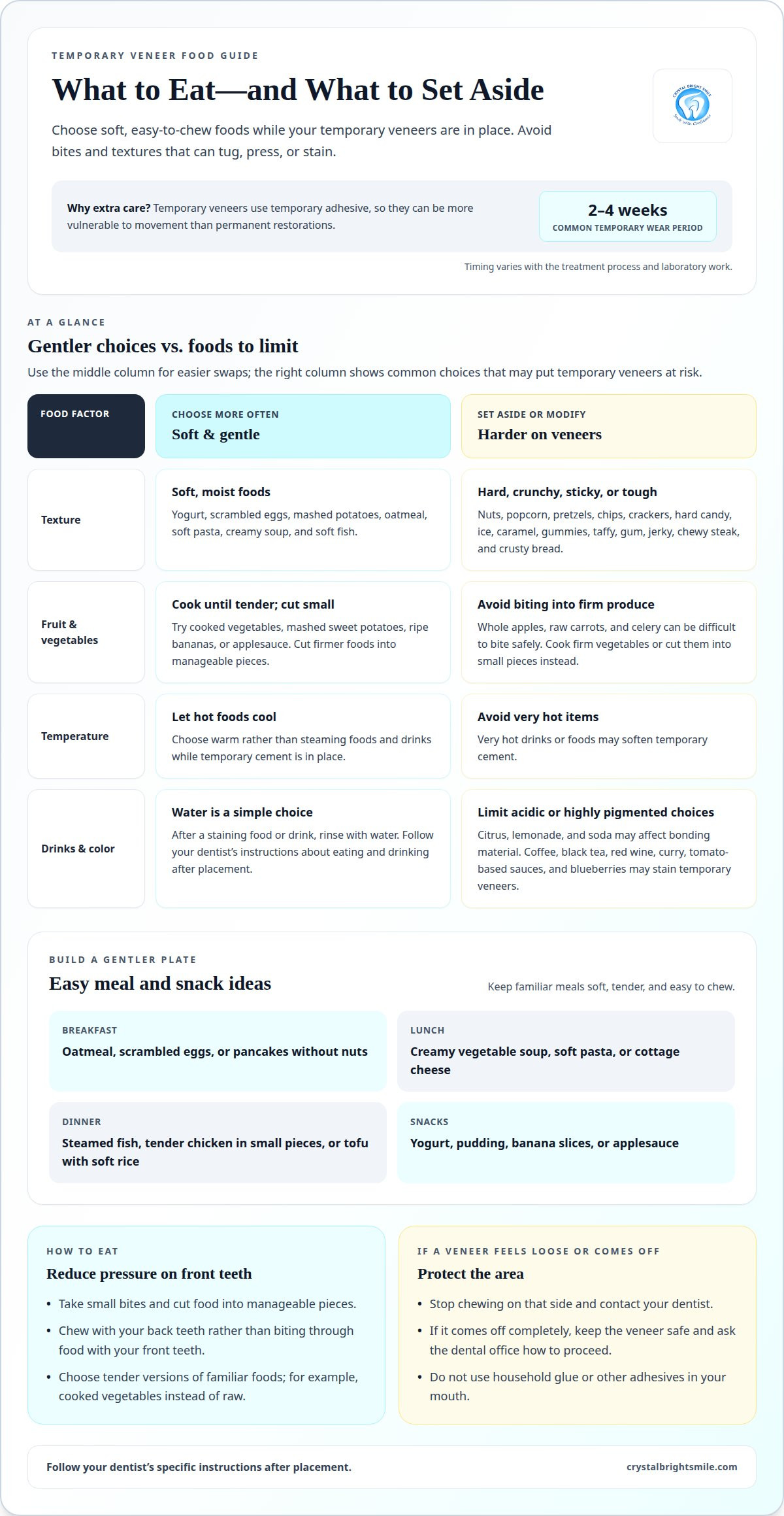
Soft, easy-to-chew foods are the safest choices while you’re wearing temporary veneers. If you’re wondering what foods you can eat with temporary veneers, try yogurt, eggs, mashed potatoes, pasta, soft fish, oatmeal, bananas, and creamy soups. Avoid hard, crunchy, sticky, and tough foods that could damage or loosen the veneers.
It’s natural to want to enjoy meals without worrying about your smile. Temporary veneers are less secure than permanent ones, so a little extra care at the table can help protect them until your final veneers are ready.
Learn which foods are comfortable choices, what to avoid, and how smaller bites and back-tooth chewing can reduce pressure on your veneers. These simple adjustments can make mealtimes easier while you care for your smile.
Table of Contents
1. What Are Temporary Veneers?
Temporary veneers are thin acrylic or resin shells attached to teeth with temporary adhesive. They protect prepared teeth and preview the shape and appearance planned for permanent veneers. Because the adhesive is temporary, the shells can be more vulnerable to movement than permanent restorations. Everyday choices, such as biting a crisp apple or sipping lemon soda, can put extra stress on them.
Take extra care with acidic foods and drinks. Citrus fruits, lemonade, and soda may affect the bonding material holding a temporary veneer in place. This doesn’t mean every acidic bite will dislodge a veneer, but limiting these items reduces avoidable exposure. Choose water or a non-acidic drink instead, and follow your dentist’s instructions about eating after placement.
Color can also affect the appearance of temporary veneers, particularly acrylic ones. Coffee, black tea, red wine, curry, and tomato-based sauces are highly pigmented and may leave stains. Dark drinks repeatedly wash over the veneer, while sauces may cling to its surface during a meal. If you have a staining food or drink, rinse with water afterward. Avoid very hot drinks as well, since heat may soften temporary cement.
Other colorful foods, including blueberries, may stain teeth or veneer surfaces over time. Carrots aren’t dark-colored, but raw carrots are hard and may put pressure on a temporary shell. Cook them until soft, cut them into manageable pieces, and avoid biting directly with your front teeth. These small adjustments help protect the temporary bond while keeping meals varied.
If a temporary veneer comes loose while you’re eating, stop chewing on that side and contact your dentist. Don’t use household glue or other adhesives, which aren’t intended for use in your mouth. If the veneer comes off completely, keep it safe and ask the dental office how to proceed.
Temporary veneers are commonly worn for two to four weeks while permanent veneers are made. The exact schedule depends on the treatment process and laboratory work.
After placement, follow your dentist’s instructions about when to resume eating. Once cleared to eat, start with soft foods, take small bites, and avoid very hot drinks that could affect temporary cement.
2. Foods to avoid with temporary veneers
You can eat with temporary veneers, but it’s best not to eat exactly as usual. Their temporary bond can be strained by hard bites, sticky textures, and forceful chewing. Choose softer versions of familiar meals, and set aside foods that crack, pull, or require prolonged chewing.
Hard, crunchy foods can put concentrated pressure on a veneer. Avoid nuts, popcorn, pretzels, chips, crackers, hard candies, and ice. Raw carrots, celery, and whole apples can also be difficult to bite safely. Cook firm vegetables until tender or cut them into small pieces instead of biting them with your front teeth.
Sticky foods can tug at the temporary adhesive. Skip caramels, taffy, gummies, toffee, and chewing gum while wearing temporary veneers. Tough or chewy foods, such as beef jerky and well-done steak, may also strain the shells with repeated chewing. Choose tender meat, cut into small pieces, instead.
Crunchy: popcorn, pretzels, chips, and crisp raw vegetables.
Sticky: caramel, gummies, taffy, and chewing gum.
Tough: jerky, chewy steak, and crusty bread.
Very hot: steaming drinks or foods that may affect temporary cement.
Dark foods and drinks need care for a different reason. Coffee, tea, red wine, curry, tomato sauce, and blueberries can discolor temporary veneers. Acidic choices such as citrus and soda may also affect the temporary bonding material. Limiting these items helps preserve the veneers’ appearance and bond during meals.
Permanent veneers are more secure than temporary ones, but hard foods can still chip or fracture them. With permanent veneers, avoid chewing ice, hard candies, or popcorn kernels, and don’t bite directly into hard foods. Cut apples and raw vegetables into pieces, then chew with your back teeth to reduce direct pressure on front veneers. Coffee, tea, red wine, and blueberries may stain over time, so rinse with water afterward.
You can still enjoy a variety of meals with a few thoughtful swaps. Replace crunchy toast with soft bread, raw carrots with cooked vegetables, and sticky candy with a soft snack. These practical choices make eating gentler without making every meal complicated.
If you’re unsure how a particular food fits your temporary veneer care, get personalized veneer guidance before risking a loose or damaged shell.
3. So, Why Do I Need a Soft Food Diet?
Temporary veneers have a temporary bond, so forceful biting can put unnecessary stress on them. Softer meals require less pressure from your front teeth and are easier to manage while wearing the shells. You don’t need to skip meals. Choose tender textures during this part of your dental treatment, and follow your dentist’s instructions after the procedure.
After getting temporary veneers, choose foods that are soft, moist, and easy to chew. Try yogurt, scrambled eggs, mashed potatoes, oatmeal, bananas, applesauce, or creamy soup. Let hot foods cool first, and take small bites instead of using your front teeth to tear or bite through food.
Build a satisfying plate from a few gentle options. These examples can help with meals and snacks:
Breakfast: oatmeal, scrambled eggs, or pancakes without nuts.
Lunch: creamy vegetable soup, soft pasta, or cottage cheese.
Dinner: steamed fish, tender chicken in small pieces, or tofu with soft rice.
Snacks: yogurt, pudding, banana slices, or applesauce.
Cooked vegetables add variety without the firm crunch of raw produce. Steam zucchini until tender, mash sweet potatoes, or add soft vegetables to soup. If fruit feels firm, choose a ripe banana or blend fruit into a smoothie. A spoon makes oatmeal, yogurt, and soup easier to eat without biting into a larger portion.
Protein can also fit comfortably into a soft-food routine. Scrambled eggs, soft fish, tofu, and tender chicken don’t require prolonged chewing. Cut chicken into small pieces before eating, and pair it with mashed potatoes or soft rice. Avoid meat that’s chewy or dry, since it can take more effort to chew.
Soft foods work well with permanent veneers, too, but the temporary stage calls for extra care with chewing. Keep portions manageable, chew slowly, and use your back teeth for foods that need more effort. If a meal causes discomfort or a veneer feels loose, stop eating on that side and contact your dentist for guidance. Gentle choices can make everyday eating more comfortable as your treatment progresses.
Other gentle choices include soft bread, noodles, broth, and smoothies, which are listed as suitable for temporary veneers or crowns. Steamed or baked fish offers lean protein and is easy to chew, while bananas require little chewing. Cottage cheese adds a soft option high in protein, phosphorus, and vitamin B; cooked vegetables, eggs, pasta, and rice also fit a veneer-friendly menu.
4. Hard, sticky, and tough foods that may damage temporary veneers
Temporary veneers are held in place with temporary adhesive, so hard bites and pulling motions can strain the bond. A shell may loosen or become damaged if you bite directly into a firm apple or chew hard candy with your front teeth. The risk comes from the force and direction of the bite, not simply from eating a particular food. Choose softer textures and chew carefully with your back teeth.
Hard foods can create a sharp impact against a veneer. Avoid nuts, popcorn kernels, hard pretzels, ice, and crusty bread while wearing temporary shells. Raw carrots and firm fruits can also require a strong front-tooth bite. Cook vegetables until tender, choose ripe fruit, or cut firmer foods into small pieces before eating. Don’t use your teeth to crack, tear, or open anything.
Sticky foods can pull as you chew. Caramel, toffee, taffy, gummies, and chewing gum may cling to a veneer and tug at its temporary bond. Sticky or chewy candy can be especially difficult because it stretches rather than breaking cleanly. Skip these foods until your dentist says you can return to your usual choices. If you want a sweet snack, choose a soft option that doesn’t cling to your teeth.
Tough foods can also put repeated strain on veneers. Beef jerky, chewy steak, and dense crusts take longer to chew, which may increase pressure with each bite. Choose tender meat or fish and cut it into small portions. Soft bread is easier to manage than toasted or crusty bread, while cooked vegetables are gentler than raw carrots or celery.
Food-related concerns can differ with permanent porcelain veneers. They’re more durable than temporary shells, but hard items such as ice, hard candies, and popcorn kernels can still chip or fracture them. Avoid biting into whole apples or firm vegetables; slice them first and chew with your back teeth. Red wine, coffee, tea, and dark berries may stain teeth or veneer surfaces over time, so rinse with water afterward.
Use texture as a quick guide when planning a meal. If a food cracks loudly, stretches when pulled, or takes sustained chewing, choose a softer alternative. A ripe banana instead of a crisp apple, tender cooked vegetables instead of raw carrots, and soft bread instead of crusty toast preserve variety while reducing force on temporary veneers. Follow your dentist’s individual instructions, especially if a veneer feels loose.
5. Cutting food into pieces and chewing with back teeth
Changing how you prepare a meal can reduce pressure on temporary veneers. Instead of biting into a whole apple, sandwich, or piece of chicken, cut it into small, manageable portions first. Then guide each bite toward your back teeth, which are better positioned for chewing. This helps avoid direct force on the front shells and their temporary cement while you eat.
Try this simple routine at mealtimes:
Cut firm foods, such as cooked carrots or chicken, into small pieces.
Place a piece toward the side of your mouth, rather than biting with your front teeth.
Chew slowly with your back teeth, and pause if a veneer feels uncomfortable.
Choose a softer alternative if the food still takes force to break down.
For example, slice an apple instead of biting into it. Cut chicken or turkey into bite-sized pieces, and choose baked or grilled preparations that remain tender. Steam or roast vegetables until soft. If carrots or celery are still crisp, chop them finely or cook them longer. These simple kitchen steps preserve variety without asking temporary veneers to handle a hard bite.
Sticky foods need a different approach. Cutting caramel or taffy into smaller pieces doesn’t remove the sticky texture, which may tug at a temporary shell. Skip those foods rather than trying to make them safer with a knife. Likewise, don’t use your teeth to tear packaging, crack a nut, or hold an object while your hands are busy. Teeth are for eating, not for use as tools.
People with permanent porcelain veneers can also benefit from cutting hard foods before eating. Slicing firm fruits and vegetables reduces the need to bite directly into them. Although permanent veneers differ from temporary shells, hard foods can still put pressure on a restoration. Careful portions and back-tooth chewing are practical habits during cosmetic dental treatment and afterward.
Pay attention to how each bite feels. If a temporary veneer shifts, feels loose, or catches food, stop chewing on that side and contact your dentist. Don’t try to press it back into place by biting repeatedly, and don’t apply household glue. A prompt professional assessment can determine the appropriate next step.
For personalized advice about veneer care and treatment, schedule a porcelain veneer consultation.
Crystal Bright Smile: Porcelain Veneers
Crystal Bright Smile offers porcelain veneers for patients considering a longer-term cosmetic option after temporary veneers. A complimentary cosmetic consultation gives you the opportunity to discuss the changes you’d like and how veneer treatment relates to your dental health and goals. Recommendations depend on an examination, your dental condition, and your individual clinical needs.
Bring questions about the temporary stage, including foods that have been difficult to eat or any veneer that felt loose. Sharing those details can guide a conversation about your smile and possible next steps. Crystal Bright Smile provides personalized treatment planning in Tujunga, serving nearby communities including Sunland, La Crescenta, Montrose, Shadow Hills, and Lake View Terrace.
Make Your Next Smile Decision With Confidence
Knowing what foods you can eat with temporary veneers can make this transition more manageable. Notice what feels comfortable, consider what you’d like to change about your smile, and bring those priorities to your next dental conversation. Your treatment plan should reflect your dental condition, clinical needs, and personal goals.
Crystal Bright Smile offers porcelain veneers, Invisalign, and dental implants for different smile and tooth-replacement needs. The right direction depends on an individual examination and the outcome you hope to achieve. A complimentary cosmetic consultation can help you understand which options fit your situation without rushing your decision.
When you’re ready to talk through your goals, contact Crystal Bright Smile to arrange an appointment. Take the next step at your pace and keep moving toward a smile that feels like yours.
Frequently Asked Questions
What Are Temporary Veneers?
Temporary veneers are interim coverings attached to teeth during veneer treatment, not the final restorations. Because they’re temporary, they may feel different from your natural teeth, especially when you speak or close your mouth. If the fit feels uneven or changes, note when you notice it and tell your dentist instead of repeatedly testing the veneer.
So, Why Do I Need a Soft Food Diet?
A softer menu can make meals more comfortable if your teeth or gums feel tender after dental treatment. It also makes chewing easier without concentrating effort on one spot. Choose foods at a comfortable temperature, and adjust their texture if eating causes discomfort. Follow your dentist’s post-treatment instructions about when and how to return to your usual routine.
What Can You Eat With Dental Veneers?
After your dentist confirms that your permanent veneers are seated and comfortable, you can usually enjoy a varied diet. You don’t need to build every meal around special veneer foods. Keep everyday oral care consistent, and avoid using your teeth to open packages or bite non-food objects. Your dental condition and any sensitivity after treatment can affect which textures feel comfortable at first.
What Will Your Diet Look Like After Getting Veneers?
Your meals may change briefly as your mouth adjusts to treatment. If cold or hot foods feel uncomfortable, choose options closer to room temperature until the sensitivity eases. It may also take time to adjust to how veneers feel when speaking or closing your bite. Pay attention during everyday meals, and mention persistent discomfort or a changed bite to your dentist.
What foods are safe to eat with temporary veneers?
Options include cottage cheese, soft crackers with sliced cheese, and a smoothie made from pureed fruit. These choices offer different textures and can work as snacks or light meals. For a more substantial plate, pair a soft item with another food that doesn’t require forceful chewing. Keep portions comfortable, and choose smooth or tender preparations if a meal feels difficult to manage.
What foods should you avoid with temporary veneers?
Be cautious with foods that combine challenging textures, such as a hard biscuit with sticky filling or fruit with tough skin. A food may seem manageable at first but still require force once you bite through its outer layer. Consider the meal’s texture, not just its name. If a component feels firm, sticky, or difficult to chew, set it aside for now.
Can you eat hard, crunchy, sticky, or chewy foods with temporary veneers?
Avoid these textures during the temporary stage. Mixed foods deserve extra attention: granola, seeded crisp breads, and desserts with toffee pieces can hide hard or sticky parts. Choose a smoother alternative rather than trying to pick around every piece. Once your permanent veneers are placed, follow your dentist’s guidance about returning to foods you’ve been avoiding.
How should you cut and chew food with temporary veneers?
Prepare your plate before eating: remove pits or bones, separate firm pieces, and cut fibrous meat across the grain to make it easier to chew. Use a fork to guide portions instead of tearing food with your teeth. Eat at a comfortable pace and pause if a bite feels unusual. These preparation details make meals easier to manage without testing how much force a veneer can tolerate.

Comments